Reflecto News is an online news platform covering major international political events, global economic developments, and security conflicts. The site provides updates on topics such as Chinese manufacturing dominance, Middle Eastern political tensions, and high profile legal arrests. Readers can access current articles organized by categories like World News, Iran, and USA.
Tech billionaire labels UK a “prison island” as he renews attacks on Britain’s online speech laws
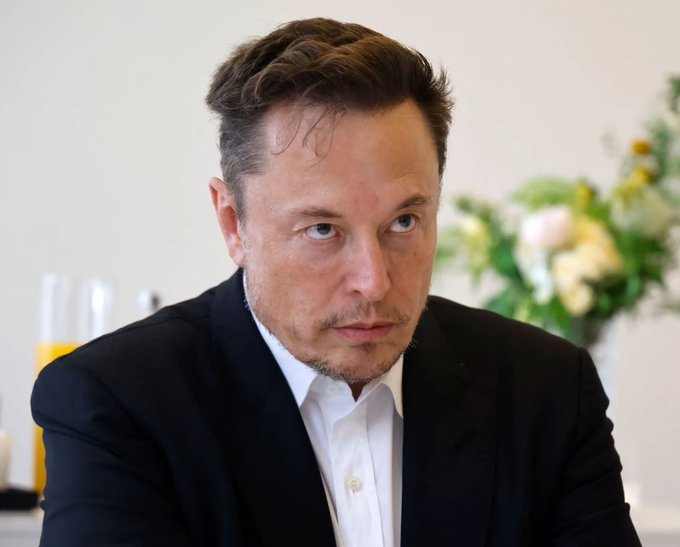
LONDON — Tech billionaire and X owner Elon Musk has demanded the immediate release of what he describes as “thousands of British people” imprisoned for social media posts or expressing their views, labeling the United Kingdom a “prison island” in his latest broadside against the country’s online speech laws .
“The thousands of British people imprisoned merely for social media posts or speaking their mind need to be released! No more prison island!!” Musk wrote in a post on X, responding to activist Tommy Robinson, who had shared footage of large “Unite the Kingdom” gatherings protesting UK immigration policies .
In subsequent posts, Musk declared: “Free the political prisoners in Britain!” and claimed that “the UK has become a prison island,” adding that “retweeting something can get you arrested in the UK” .
The Scale of Arrests: What the Data Shows
Musk’s intervention draws attention to official data that has sparked growing debate about the extent of online speech policing in Britain. According to freedom of information requests obtained by The Times, there were 12,183 arrests in England and Wales in 2023 related to online posts allegedly violating communications laws .
These arrests fall under Section 127 of the Communications Act 2003 and Section 1 of the Malicious Communications Act 1988, which make it illegal to send or share content that is “grossly offensive or of an indecent, obscene or menacing character,” as well as “threatening, or knowingly false” .
Key Statistics
| Metric | Figure |
|---|---|
| Arrests in 2023 for online posts | 12,183 |
| People sentenced in 2023 | 1,119 |
| Total arrests since 2017 | Over 65,000 |
| Prisoners potentially affected | Thousands |
Source: Freedom of information requests by The Times
Jake Hurfurt, head of research investigations at civil liberties group Big Brother Watch, expressed concern about the figures, telling The Times: “Police look to be wasting countless hours on arresting people for posting things online that, while offensive, are not illegal. Heavy-handed use of vague communications offences is a threat to everyone’s freedom to express themselves online” .
The dramatic increase in arrests over recent years has coincided with heightened government scrutiny of social media platforms following widespread rioting that swept British cities in the summer of 2024, which authorities blamed in part on misinformation spread online .
The Legal Framework: Communications Act and Online Safety Act
The laws Musk is criticizing were largely enacted long before the current controversy. The Communications Act 2003, which contains the controversial Section 127, was passed under Tony Blair’s Labour government. However, enforcement has intensified significantly in recent years .
More recently, the Online Safety Act 2023, passed under the previous Conservative government but embraced by Prime Minister Keir Starmer’s administration, has created new criminal offenses for online communications. These include the false communications offense under Section 179 of the Act, which criminalizes sending information known to be false .
Following the 2024 riots, Prime Minister Keir Starmer signaled that his government would seek to toughen the Act further, blaming social media companies for whipping up violence and suggesting that existing penalties for failing to remove harmful content may not be sufficient .
Ofcom, the communications regulator, has been given the power to enforce the new rules. Failure to comply can result in fines of up to 10 percent of annual global turnover—potentially exceeding £10 billion for major platforms—and jail sentences for “senior managers” .
The “Political Prisoners” Claim: Reality vs. Rhetoric
Musk’s characterization of those jailed as “political prisoners” has drawn sharp pushback from legal experts and government officials, who note that the most severe prison sentences have been handed down for serious offenses such as encouraging suicide, inciting racial hatred, or making credible threats of violence.
A Landmark Case: The First Online Safety Act Conviction
In July 2025, a 22-year-old man named Tyler Webb became the first person convicted under Section 184 of the Online Safety Act 2023 for encouraging serious self-harm online. Webb was sentenced to nine years and four months in prison after he repeatedly told a vulnerable 22-year-old woman to cut herself and then to kill herself by hanging during a video call so he could watch .
Webb, who was aware of the woman’s vulnerability and had previously watched her cut herself at his request, told her she had “nothing to live for” and provided methods for her to end her life. The case, prosecuted by the Crown Prosecution Service, represented a “legal first” and demonstrated the government’s willingness to use the new powers for serious offenses .
The Tommy Robinson Connection
Musk’s latest intervention came in response to a post by Tommy Robinson (real name Stephen Yaxley-Lennon), the controversial far-right activist and founder of the English Defence League. Musk has previously called for Robinson’s release from prison, referring to him in earlier posts as a “political prisoner” .
Robinson is currently serving an 18-month prison sentence for contempt of court—not for his political views, but for repeatedly breaching a court order related to a libel case involving a Syrian refugee schoolboy. The order prohibited him from repeating defamatory claims about the boy, which a court had already ruled were false and had a “devastating effect” on the child and his family, forcing them to move home .
Courts have found that Robinson’s actions—including screening a documentary containing the libelous claims in violation of the court order—constituted contempt, a serious legal offense in any jurisdiction. His previous convictions include assault, public order offenses, and mortgage fraud .
The Grooming Gangs Controversy
Musk has also seized on historical child sexual exploitation scandals in northern English towns, criticizing Keir Starmer’s tenure as head of the Crown Prosecution Service (CPS) from 2008 to 2013 .
“Who was the head of the CPS when rape gangs were allowed to exploit young girls without facing justice? Keir Starmer, 2008-2013,” Musk posted .
A series of official reports into the widespread abuse of girls in towns including Rochdale, Rotherham, and Oldham found that police and social workers had failed to protect victims, sometimes avoiding intervention to avoid appearing racist. However, none of the official probes singled out Starmer for blame or found that he attempted to block prosecutions. The CPS under Starmer did successfully prosecute dozens of men, mostly of South Asian Muslim origin, in connection with the scandals .
Robinson, who has long highlighted these grooming cases in his activism, has used them to fuel anti-Muslim sentiment. Musk’s engagement with Robinson on this issue has raised concerns about the amplification of far-right talking points by one of the world’s most influential social media platforms .
Musk’s Feud with the British Government
The tech billionaire’s latest comments are the latest salvo in an escalating war of words with the British government that has spanned more than a year .
Timeline of Tensions
- August 2024: Musk posts that “civil war is inevitable” in the UK as riots grip British cities following the Southport stabbings. UK courts minister Heidi Alexander describes the comment as “pretty deplorable”
- September 2024: Musk claims the UK is “releasing convicted pedophiles in order to imprison people for social media posts.” Police clarify that sex offenders are excluded from early release programs
- October 2024: Robinson is jailed for contempt of court; Musk calls for his release
- January 2025: Musk shares Robinson’s controversial documentary with his millions of followers, demanding the activist be “freed”
- May 2026: Musk labels the UK a “prison island” and calls for release of “thousands” imprisoned for social media posts
Musk’s interventions have reportedly had consequences. In September 2024, it was revealed that he had not been invited to the UK’s major annual investment summit as a direct result of his inflammatory posts about the summer riots, which UK officials viewed as stoking violence .
The British government has also threatened to ban X entirely over concerns that its AI chatbot Grok was producing sexually explicit images of women and children at users’ requests. Musk responded by putting image generation behind a paywall, though critics say this has not fully addressed the problem .
The State Department, under the Trump administration, has weighed in on the dispute, with an official stating that “nothing is off the table” if the UK proceeds with banning X, and suggesting that such a move would be about the government wanting “the ability to curate a public square, to suppress political viewpoints it dislikes” .
The Debate: Free Speech vs. Public Safety
Musk’s intervention has reignited a fierce debate about the balance between free expression and the prevention of harm online.
Arguments for Reform
Free speech advocates argue that existing laws are too vague and have been applied too broadly. The threshold for what constitutes “grossly offensive” is subjective, they say, and the heavy-handed use of such offenses risks chilling legitimate expression .
Toby Young, writing in The Spectator, warned that the Online Safety Act is “authoritarian enough” without further toughening, and that “misinformation is just a euphemism for any point of view the radical progressive left disagrees with” .
Critics also question police priorities. With serious crime including rape having low charge rates, some argue that thousands of police hours devoted to investigating potentially offensive tweets represent a misallocation of resources .
Arguments for Enforcement
Proponents of the current framework argue that online speech can cause real-world harm. The 2024 riots, which resulted in widespread violence and property damage, were fueled in part by false claims spread on social media about the identity of the Southport attacker .
The CPS case against Tyler Webb—the man who encouraged a vulnerable woman to kill herself—demonstrates that the laws are being used to target genuinely dangerous behavior, not merely “offensive” opinions. Webb received nine years for conduct that prosecutors described as persistent, intentional, and potentially fatal .
Government officials maintain that the laws are necessary to protect against hate speech, harassment, and public disorder, and that the vast majority of those arrested do not receive prison sentences—only about 9 percent of those arrested in 2023 were ultimately sentenced .
What Happens Next?
The British government has not yet issued a formal response to Musk’s latest remarks. However, given the ongoing legal threats to X and the prime minister’s stated desire to toughen online safety laws, further confrontation appears likely .
Key developments to watch include:
- The Online Safety Act’s Full Implementation: Ofcom’s enforcement of the Act’s key duties is expected to begin fully in the coming months, potentially leading to major fines for non-compliant platforms
- The X Ban Threat: The UK government has not ruled out banning X if Grok continues to generate prohibited content, a move that would represent an unprecedented escalation
- Free Speech Legal Challenges: Civil liberties groups are expected to challenge the application of communications offenses in court, potentially narrowing their scope
- Musk’s Political Engagement: With Musk becoming increasingly vocal in global politics—including his support for Germany’s AfD and donations to hard-right UK parties—his interventions may have tangible political consequences
Whether Musk’s characterization of thousands of British social media users as “political prisoners” will gain traction remains to be seen. But his platform, with its 200 million-plus users, ensures that the debate over the limits of online speech in Britain will remain in the global spotlight .
Frequently Asked Questions (FAQs)
Q1: How many people have been arrested in the UK for social media posts?
A: According to freedom of information requests, there were 12,183 arrests in England and Wales in 2023 related to online posts. Since 2017, there have been more than 65,000 arrests. However, only a fraction of those arrested (approximately 1,119 in 2023) were ultimately sentenced .
Q2: What laws are being used to arrest people for social media posts?
A: The primary laws are Section 127 of the Communications Act 2003 and Section 1 of the Malicious Communications Act 1988, which criminalize sending content that is “grossly offensive or of an indecent, obscene or menacing character.” The Online Safety Act 2023 has created additional offenses, including sending false information .
Q3: Are people really being imprisoned just for “offensive” posts?
A: While arrests are numerous, actual prison sentences are typically reserved for more serious offenses such as encouraging suicide, inciting racial hatred, making credible threats of violence, or repeatedly violating court orders. One notable case involved a man who encouraged a vulnerable woman to kill herself and received nine years .
Q4: Who is Tommy Robinson, and why has Musk called for his release?
A: Tommy Robinson (Stephen Yaxley-Lennon) is a far-right activist and founder of the English Defence League. He is serving an 18-month sentence for contempt of court after violating a court order prohibiting him from repeating defamatory claims about a Syrian refugee schoolboy. His previous convictions include assault, public order offenses, and mortgage fraud .
Q5: What is the UK government’s position on Musk’s claims?
A: The government has not formally responded to Musk’s latest remarks. However, Prime Minister Keir Starmer has indicated he wants to toughen online safety laws, and the government has threatened to ban X over concerns about AI-generated explicit content. Officials have previously described Musk’s comments about UK riots as “pretty deplorable” .
Q6: Is the UK the only country arresting people for social media posts?
A: The UK has the highest reported number of arrests for online speech among Western democracies, according to the data Musk cited. However, many other countries, including Germany and France, have laws against hate speech and online harassment that can lead to criminal penalties .
Q7: Does “retweeting something” actually lead to arrest in the UK?
A: Musk claims that “retweeting something can get you arrested in the UK” . While retweeting potentially illegal content could theoretically lead to prosecution, the vast majority of those arrested face allegations of creating original content. Prosecutions for retweets alone remain rare .
Q8: What is the Online Safety Act, and why is it controversial?
A: The Online Safety Act 2023 is a comprehensive law regulating social media platforms and online content. It creates new criminal offenses, imposes duties on platforms to remove illegal content, and gives Ofcom enforcement powers including fines of up to 10 percent of global turnover. Free speech advocates argue it is “authoritarian” and risks chilling legitimate expression .
This is a developing story. Reflecto News will continue to provide updates on the UK government’s response to Musk’s remarks and any developments regarding online speech legislation in Britain.
Questions people ask
What is China's current share of global manufacturing?
China now accounts for twenty eight percent of global manufacturing. This industrial output exceeds the combined manufacturing production of the United States, Japan, and Germany, making China the leading global industrial power according to recent reports.
Why were Andrew Tate and Tristan Tate arrested in Miami?
Andrew Tate and his brother Tristan Tate were taken into custody in Miami by the United States Marshals Service. They face thirty eight new charges in the United Kingdom, including rape and child pornography offences, and prosecutors are seeking their extradition.
What warning did Moscow issue about oil prices?
Kirill Dmitriev, the Chief Executive of the Russian Direct Investment Fund, warned that a tsunami of skyrocketing oil prices is approaching. Moscow describes this potential energy shock as a major threat to global markets.
What political shift is projected for Benjamin Netanyahu's coalition?
Political polls project that Prime Minister Benjamin Netanyahu's coalition is on track to lose its majority in the upcoming October election. This projection indicates a potential political shift in Jerusalem.
Why did a Russian military aircraft land in Tehran?
A Russian airborne command aircraft, widely known as a doomsday plane, landed in Tehran. The arrival of the aircraft represents a high stakes show of support from Russia for Iran during a period of heightened regional tensions.
What did President Masoud Pezeshkian claim about the United States and Israel?
Iranian President Masoud Pezeshkian claimed that the United States and Israel failed in a forty eight hour plan to topple the Iranian government. He made these statements during a televised address marking two years since his inauguration.