Reflecto News is an online news platform covering major international political events, global economic developments, and security conflicts. The site provides updates on topics such as Chinese manufacturing dominance, Middle Eastern political tensions, and high profile legal arrests. Readers can access current articles organized by categories like World News, Iran, and USA.
Published on Reflecto News | World News | Diplomacy & Symbolism
In a nuanced diplomatic gesture that has captured the attention of political analysts worldwide, Pakistan’s Chief of Army Staff, General Asim Munir, donned a business suit rather than his military uniform to welcome United States Vice President JD Vance upon his arrival in Islamabad. This stands in stark contrast to the general’s attire just hours earlier when he received the Iranian delegation—led by Parliament Speaker Mohammad Bagher Ghalibaf—in full military regalia .
The sartorial distinction, subtle yet significant, has been widely interpreted as a deliberate act of diplomatic calibration by Pakistan’s powerful military establishment as it navigates the delicate role of mediator between two adversarial nations. The choice of attire communicates the nature of the relationship, the tone of the engagement, and the intended audience for each diplomatic encounter .
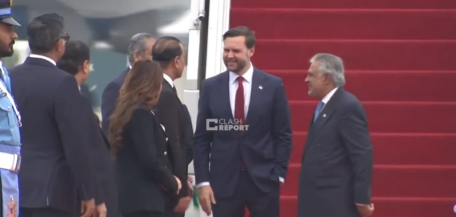
A Tale of Two Welcomes: Military vs. Civilian Attire
The Iranian Delegation (Earlier Friday)
When Iranian Parliament Speaker Mohammad Bagher Ghalibaf and Foreign Minister Abbas Araghchi arrived at Nur Khan Airbase earlier today, General Munir was present in full military dress uniform. The formal military attire signaled a reception befitting a fellow military power, acknowledging the Iranian delegation’s inclusion of four senior commanders from the Islamic Revolutionary Guard Corps (IRGC) and recognizing the military-to-military nature of the security discussions .
Photographs from the arrival showed Munir standing alongside uniformed Iranian military officials, reinforcing the message that the talks have a significant defense component.
The US Delegation (Friday Evening)
Hours later, when Vice President JD Vance arrived at the same airbase, General Munir appeared in a dark business suit, accompanied by a white dress shirt and tie. The civilian attire marked a departure from the military formality extended to the Iranian delegation and signaled a different framing of the relationship with the United States—more diplomatic and political than military .
The choice of a suit rather than a uniform aligns with the nature of the US delegation, which, while led by the Vice President, also includes civilian officials Jared Kushner and Steve Witkoff, alongside military advisor Brad Cooper .
The Art of Diplomatic Attire: What the Uniforms Signal
In the world of international diplomacy, military uniforms carry specific meanings that are carefully calibrated.
| Attire | Signal |
|---|---|
| Full Military Uniform | Respect for military parity; recognition of defense relationship; formal reception for security talks; acknowledgment of counterpart’s military rank |
| Business Suit | Civilian-to-civilian engagement; diplomatic rather than military framing; emphasis on political negotiation over defense cooperation |
General Munir’s decision to wear a suit for Vance while having worn a uniform for Ghalibaf suggests that Pakistan views its relationship with the United States through a more diplomatic, political lens—even as the talks focus heavily on military issues such as the Strait of Hormuz, Iran’s nuclear program, and regional security.
Analysts suggest the choice may also reflect the different relationships Pakistan maintains with the two nations. Pakistan shares a 900-kilometer border with Iran and has deep historical, cultural, and economic ties with Tehran. Its relationship with the United States, while strategically significant, is more transactional and diplomatic in nature .
Pakistan’s Balancing Act: Mediator Between Adversaries
General Munir’s contrasting attire choices underscore the delicate balancing act Pakistan’s military leadership must perform as it hosts two adversarial delegations simultaneously in Islamabad.
Pakistan shares a lengthy and porous border with Iran, and the two countries have maintained generally cordial relations despite occasional tensions. The military-to-military relationship between Islamabad and Tehran has been significant, with cooperation on border security and counterterrorism operations .
At the same time, Pakistan has long been a strategic partner of the United States, particularly in the context of counterterrorism operations in Afghanistan and the broader War on Terror. However, that relationship has experienced significant strains over the years, with US officials frequently criticizing Pakistan for harboring militant groups .
By greeting the Iranian delegation in military uniform, General Munir signaled respect for Iran’s military establishment and acknowledged the security-focused nature of the discussions with Tehran. By greeting the American delegation in a suit, he signaled a more diplomatic, political framing of the US relationship—perhaps also subtly distancing himself from the more contentious military aspects of the US-Pakistan relationship .
The Vance-Ghalibaf Contrast: Setting the Stage for Talks
The contrasting welcomes set the stage for the high-stakes negotiations scheduled to begin tomorrow at the Serena Hotel in Islamabad. Both delegations are now assembled, with Vice President Vance having joined Jared Kushner and Steve Witkoff, who arrived earlier .
| Delegation | Lead Representative | General Munir’s Attire |
|---|---|---|
| Iran | Parliament Speaker Mohammad Bagher Ghalibaf | Full military uniform |
| United States | Vice President JD Vance | Business suit |
The Iranian delegation includes four senior commanders from the Islamic Revolutionary Guard Corps (IRGC), underscoring the military dimension of the talks. The American delegation includes military advisor Brad Cooper, but is led by civilian officials .
What This Means for the Talks
General Munir’s contrasting attire choices offer a window into how Pakistan’s military leadership is approaching its role as mediator. The uniformed welcome for Iran signals respect for Tehran’s military establishment and recognition of the security-focused nature of the discussions. The suited welcome for the United States signals a more diplomatic, political framing of the relationship.
As the negotiations begin, both delegations will be aware of these subtle signals. For Iran, the military uniform reception confirms that Pakistan takes its security concerns seriously. For the United States, the suit reception suggests that Pakistan views the relationship through a diplomatic lens—perhaps aiming to keep the talks focused on political solutions rather than military confrontation.
The true test will come at the negotiating table. But in the art of diplomacy, the welcome—and the attire—often sets the tone for what follows.
Frequently Asked Questions (FAQs)
1. Why did General Asim Munir wear different attire to welcome the US and Iranian delegations?
General Munir wore a full military uniform to welcome the Iranian delegation, which included four senior IRGC commanders, signaling respect for military-to-military relations. He wore a business suit to welcome Vice President Vance, signaling a more diplomatic, political framing of the US relationship .
2. What does the choice of military uniform signal in diplomatic contexts?
A military uniform typically signals respect for military parity, recognition of a defense relationship, formal reception for security talks, and acknowledgment of a counterpart’s military rank .
3. What does a business suit signal in diplomatic contexts?
A business suit signals civilian-to-civilian engagement, a diplomatic rather than military framing, and an emphasis on political negotiation over defense cooperation .
4. Did General Munir greet both delegations at the same location?
Both delegations were received at Nur Khan Airbase in Islamabad—the Iranian delegation earlier Friday and the US delegation later in the day .
5. Does this difference in attire reflect Pakistan’s preferences in the negotiations?
Analysts interpret the contrasting attire as a reflection of the different relationships Pakistan maintains with the two nations—military-to-military ties with Iran and a more diplomatic, political relationship with the United States .
6. What are the implications for the talks?
The contrasting welcomes set the tone for each relationship—confirming for Iran that Pakistan takes its security concerns seriously, and signaling to the US that Pakistan views the relationship through a diplomatic lens .
Stay informed with Reflecto News – Your trusted source for breaking diplomatic and geopolitical intelligence. Subscribe for real-time updates from the Islamabad peace talks.
Questions people ask
What is China's current share of global manufacturing?
China now accounts for twenty eight percent of global manufacturing. This industrial output exceeds the combined manufacturing production of the United States, Japan, and Germany, making China the leading global industrial power according to recent reports.
Why were Andrew Tate and Tristan Tate arrested in Miami?
Andrew Tate and his brother Tristan Tate were taken into custody in Miami by the United States Marshals Service. They face thirty eight new charges in the United Kingdom, including rape and child pornography offences, and prosecutors are seeking their extradition.
What warning did Moscow issue about oil prices?
Kirill Dmitriev, the Chief Executive of the Russian Direct Investment Fund, warned that a tsunami of skyrocketing oil prices is approaching. Moscow describes this potential energy shock as a major threat to global markets.
What political shift is projected for Benjamin Netanyahu's coalition?
Political polls project that Prime Minister Benjamin Netanyahu's coalition is on track to lose its majority in the upcoming October election. This projection indicates a potential political shift in Jerusalem.
Why did a Russian military aircraft land in Tehran?
A Russian airborne command aircraft, widely known as a doomsday plane, landed in Tehran. The arrival of the aircraft represents a high stakes show of support from Russia for Iran during a period of heightened regional tensions.
What did President Masoud Pezeshkian claim about the United States and Israel?
Iranian President Masoud Pezeshkian claimed that the United States and Israel failed in a forty eight hour plan to topple the Iranian government. He made these statements during a televised address marking two years since his inauguration.