Reflecto News is an online news platform covering major international political events, global economic developments, and security conflicts. The site provides updates on topics such as Chinese manufacturing dominance, Middle Eastern political tensions, and high profile legal arrests. Readers can access current articles organized by categories like World News, Iran, and USA.
Published on Reflecto News | World News | Energy & Geopolitics
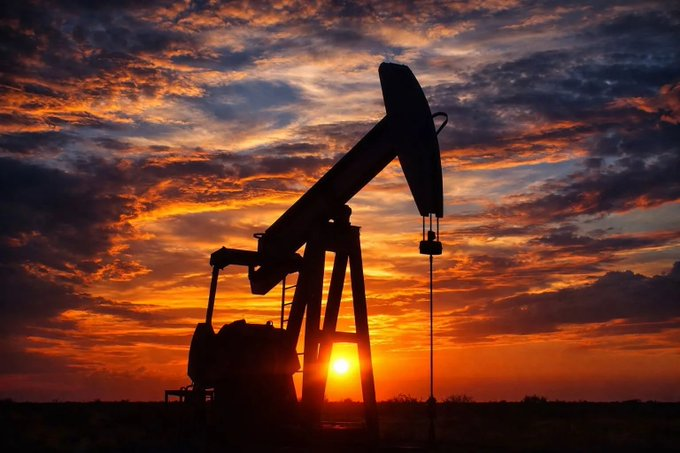
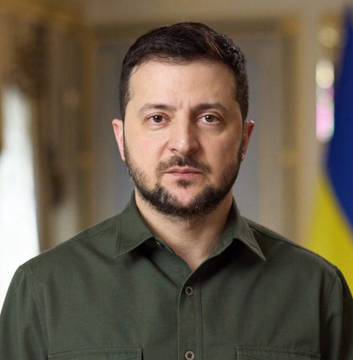
Ukrainian President Volodymyr Zelensky has announced that the Druzhba oil pipeline, a critical artery for Russian crude supplies to Hungary and Slovakia, will be repaired and resume operations by the end of April . The statement, made during a joint press conference with German Chancellor Friedrich Merz in Berlin, marks a significant development in regional energy security and could help resolve a protracted political standoff between Kyiv and Budapest .
“As for the oil pipeline, as we promised, it will be repaired by the end of April. Not completely, but enough to function.” — President Volodymyr Zelensky
Key Details of the Announcement
Zelensky clarified that the repairs will not restore the pipeline to full capacity but will be sufficient to make it operational. The restoration timeline aligns with broader diplomatic efforts, as the Ukrainian leader expressed hope that this move would coincide with the fulfillment of commitments by EU countries, particularly Hungary .
The Druzhba pipeline, whose name means “Friendship” in Russian, has been offline since a Russian attack on its infrastructure on January 27, 2026 . The disruption has had significant consequences for landlocked Hungary and Slovakia, which rely heavily on this route for their crude oil imports.
Political Context: The Hungarian Connection
The pipeline’s fate became a central point of leverage in EU-Ukraine relations under the previous Hungarian government of Viktor Orbán. Budapest, which maintained close ties with the Kremlin throughout the war, blocked a €90 billion EU loan for Ukraine and opposed the 20th package of anti-Russian sanctions, demanding the restoration of the Druzhba pipeline as a condition .
Orbán had predicted on the eve of Hungary’s April 12 parliamentary elections that the pipeline would restart “the next morning” after his anticipated victory . However, Orbán’s party lost the election, and opposition leader Péter Magyar of the Tisza party is expected to become the new prime minister . Zelensky has already reached out to Magyar, stating he is ready for a meeting “whenever the new prime minister is ready” .
Impact on Regional Energy Security
The resumption of flows through the Druzhba pipeline is critical for Central Europe’s energy infrastructure. The pipeline’s shutdown contributed to a surge in global energy prices, exacerbated by the ongoing war in the Middle East and the closure of the Strait of Hormuz . According to the International Energy Agency (IEA), Russia’s crude oil exports rose in March as seaborne shipments increased to compensate for the offline pipeline, but revenues remain highly sensitive to price volatility .
Key Developments at a Glance
| Aspect | Details |
|---|---|
| Announcement | Pipeline to be repaired and functional by end of April |
| Current Status | Offline since Russian attack on Jan. 27, 2026 |
| Reason for Shutdown | Infrastructure damage caused by Russian military action |
| Capacity Post-Repair | Operational but not at full capacity |
| Political Leverage | Hungary used pipeline to block €90 billion EU loan for Ukraine |
| Election Context | Announcement follows defeat of pro-Russian Hungarian PM Orbán |
The restoration of the pipeline removes a key obstacle to unlocking frozen EU funds for Ukraine. German government spokesman Stefan Kornelius expressed hope that the €90 billion aid package would be made available to Ukraine “very quickly” following Hungary’s election and the expected change in government .
What Comes Next
The repair timeline is contingent on the security situation in Ukraine and the ability of crews to access the damaged infrastructure. Zelensky noted that while not all reservoirs will be repaired immediately—a process he described as lengthy—the pipeline will be functional enough to resume transit .
As Hungary prepares for a transition of power, European leaders are hopeful that the new government under Péter Magyar will take a less obstructionist stance toward EU support for Ukraine. Magyar has indicated he will work toward restoring Hungary’s full membership in the European Union’s mainstream and has signaled openness to dialogue with Kyiv .
The resumption of oil flows would ease pressure on European energy markets still reeling from the Iran war and provide relief to Hungarian and Slovakian refineries that have faced supply uncertainties since the shutdown. However, the long-term viability of the pipeline remains tied to the broader geopolitical landscape, including the future of EU sanctions on Russian energy imports.
Questions people ask
What is China's current share of global manufacturing?
China now accounts for twenty eight percent of global manufacturing. This industrial output exceeds the combined manufacturing production of the United States, Japan, and Germany, making China the leading global industrial power according to recent reports.
Why were Andrew Tate and Tristan Tate arrested in Miami?
Andrew Tate and his brother Tristan Tate were taken into custody in Miami by the United States Marshals Service. They face thirty eight new charges in the United Kingdom, including rape and child pornography offences, and prosecutors are seeking their extradition.
What warning did Moscow issue about oil prices?
Kirill Dmitriev, the Chief Executive of the Russian Direct Investment Fund, warned that a tsunami of skyrocketing oil prices is approaching. Moscow describes this potential energy shock as a major threat to global markets.
What political shift is projected for Benjamin Netanyahu's coalition?
Political polls project that Prime Minister Benjamin Netanyahu's coalition is on track to lose its majority in the upcoming October election. This projection indicates a potential political shift in Jerusalem.
Why did a Russian military aircraft land in Tehran?
A Russian airborne command aircraft, widely known as a doomsday plane, landed in Tehran. The arrival of the aircraft represents a high stakes show of support from Russia for Iran during a period of heightened regional tensions.
What did President Masoud Pezeshkian claim about the United States and Israel?
Iranian President Masoud Pezeshkian claimed that the United States and Israel failed in a forty eight hour plan to topple the Iranian government. He made these statements during a televised address marking two years since his inauguration.