Reflecto News is an online news platform covering major international political events, global economic developments, and security conflicts. The site provides updates on topics such as Chinese manufacturing dominance, Middle Eastern political tensions, and high profile legal arrests. Readers can access current articles organized by categories like World News, Iran, and USA.
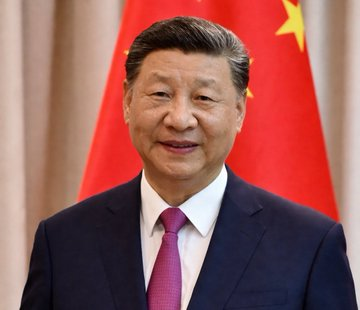
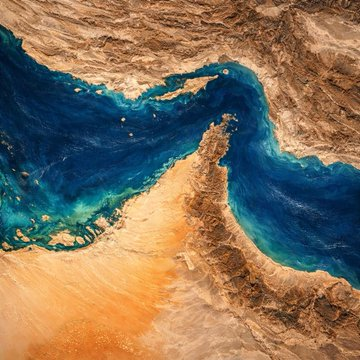
Reflecto News – Chinese President Xi Jinping has publicly called for the Strait of Hormuz to remain open to normal shipping traffic, describing it as serving the common interests of regional countries and the international community.
The statement came during a phone conversation on Monday, April 20, 2026, with Saudi Crown Prince and Prime Minister Mohammed bin Salman. It marks Beijing’s clearest public intervention on the issue amid the fragile U.S.-Iran ceasefire and recent incidents of gunfire against merchant vessels in the waterway.
Xi’s Remarks
According to official Chinese readouts, Xi told the Crown Prince:
“The Strait of Hormuz should maintain normal passage, as this serves the common interests of regional countries and the international community.”
He added that China supports regional countries in building a common home characterized by good-neighborliness, development, security, and cooperation, while mastering their own future and destiny to promote long-term peace and stability.
The call also celebrated the 10th anniversary of the China-Saudi Arabia comprehensive strategic partnership, with both leaders agreeing to deepen cooperation in energy, trade, high technology, infrastructure, and clean energy.
Timing and Broader Context
Xi’s comments come as the Strait of Hormuz faces renewed uncertainty:
- Iran has reimposed strict controls over the waterway in response to the ongoing U.S. naval blockade of Iranian ports.
- Recent reports of gunfire by IRGC gunboats against merchant vessels have heightened risks and reduced traffic significantly.
- The two-week U.S.-Iran ceasefire remains under strain, with high-level talks potentially scheduled soon in Islamabad, Pakistan.
China, as the world’s largest importer of crude oil and a major buyer of Iranian and Saudi energy, has a direct economic stake in ensuring stable and uninterrupted passage through the strait.
Beijing has been stepping up diplomatic efforts to help de-escalate the Iran conflict while balancing relations with both Tehran and Gulf states. The emphasis on “normal passage” aligns with China’s long-standing position that freedom of navigation in international waterways should be preserved.
Reactions and Implications
- Saudi Arabia: The Crown Prince welcomed China’s role and reaffirmed the strategic importance of ties with Beijing.
- Global markets: Any sustained disruption to the strait risks further volatility in oil prices and higher shipping costs.
- U.S.-Iran dynamics: Xi’s call indirectly pressures all parties to avoid actions that could close or severely restrict the waterway, even as the U.S. maintains its blockade and Iran enforces controls.
Reflecto News will continue monitoring the situation in the Strait of Hormuz, reactions from Washington, Tehran, and Riyadh, and any impact on the ceasefire and upcoming diplomatic talks.
Frequently Asked Questions (FAQs)
Q1: What exactly did Xi Jinping say about the Strait of Hormuz?
He called for normal passage of ships through the strait to be maintained, stating it serves the common interests of regional countries and the international community.
Q2: During which conversation did Xi make these remarks?
In a phone call with Saudi Crown Prince Mohammed bin Salman on April 20, 2026.
Q3: Why is China speaking out now?
As the world’s largest oil importer, China has a major interest in stable energy flows. The call also coincides with heightened tensions and recent incidents involving gunfire against vessels near the strait.
Q4: Does this mean China is taking sides in the U.S.-Iran dispute?
China is positioning itself as a proponent of stability and normal navigation rather than explicitly siding with any party. It continues to engage diplomatically with both Iran and Gulf states.
Q5: How does this relate to the current ceasefire?
The two-week U.S.-Iran ceasefire is under pressure due to the U.S. naval blockade and Iran’s restrictions on the strait. Xi’s call for normal passage adds international pressure for de-escalation.
Q6: What is the current situation in the Strait of Hormuz?
Iran has reimposed strict controls, with recent reports of gunfire against merchant vessels. Traffic has dropped sharply, and shipping risks remain elevated.
Q7: What are the next key developments expected?
Possible high-level U.S.-Iran talks in Islamabad, ongoing enforcement actions in the strait, and further diplomatic efforts by China and other regional players.
For continuous, accurate coverage of the Strait of Hormuz situation, U.S.-Iran diplomacy, and China’s role in the Middle East, follow Reflecto News — your source for timely and professional reporting.
Questions people ask
What is China's current share of global manufacturing?
China now accounts for twenty eight percent of global manufacturing. This industrial output exceeds the combined manufacturing production of the United States, Japan, and Germany, making China the leading global industrial power according to recent reports.
Why were Andrew Tate and Tristan Tate arrested in Miami?
Andrew Tate and his brother Tristan Tate were taken into custody in Miami by the United States Marshals Service. They face thirty eight new charges in the United Kingdom, including rape and child pornography offences, and prosecutors are seeking their extradition.
What warning did Moscow issue about oil prices?
Kirill Dmitriev, the Chief Executive of the Russian Direct Investment Fund, warned that a tsunami of skyrocketing oil prices is approaching. Moscow describes this potential energy shock as a major threat to global markets.
What political shift is projected for Benjamin Netanyahu's coalition?
Political polls project that Prime Minister Benjamin Netanyahu's coalition is on track to lose its majority in the upcoming October election. This projection indicates a potential political shift in Jerusalem.
Why did a Russian military aircraft land in Tehran?
A Russian airborne command aircraft, widely known as a doomsday plane, landed in Tehran. The arrival of the aircraft represents a high stakes show of support from Russia for Iran during a period of heightened regional tensions.
What did President Masoud Pezeshkian claim about the United States and Israel?
Iranian President Masoud Pezeshkian claimed that the United States and Israel failed in a forty eight hour plan to topple the Iranian government. He made these statements during a televised address marking two years since his inauguration.