Reflecto News is an online news platform covering major international political events, global economic developments, and security conflicts. The site provides updates on topics such as Chinese manufacturing dominance, Middle Eastern political tensions, and high profile legal arrests. Readers can access current articles organized by categories like World News, Iran, and USA.
By Reflecto News Staff
April 4, 2026
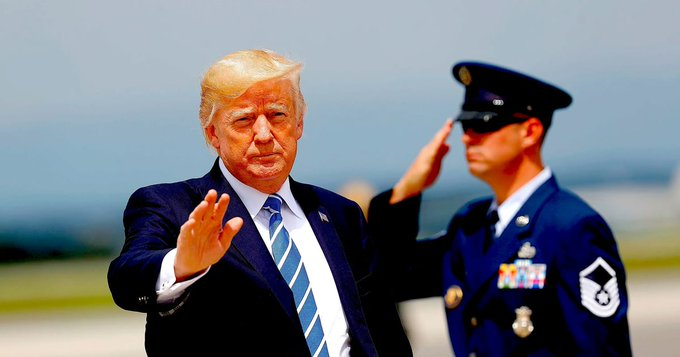
Lahore, Pakistan – President Donald Trump has formally asked Congress for a historic $1.5 trillion defense budget for fiscal year 2027, a roughly 40-44% increase from current levels, as the U.S.-led military campaign against Iran enters its sixth week and daily war costs reportedly approach or exceed $2 billion in some estimates. The proposal, released on April 3, 2026, pairs the massive military spending hike with proposed 10% cuts (approximately $73 billion) to non-defense discretionary programs, setting the stage for intense partisan clashes on Capitol Hill over priorities, debt, and domestic needs.
The White House framed the request as essential to replenish depleted munitions stockpiles, modernize forces, support ongoing operations in the Middle East, and counter broader threats from China, Russia, and Iran. It includes funding for troop pay raises (5-7%), new naval assets, and initiatives like the “Golden Dome” missile defense system.
Map illustrating the strategic importance of the Strait of Hormuz and surrounding regions amid ongoing U.S.-Iran tensions. (Image: Institute for the Study of War)
Details of the Proposed Budget
- Defense Spending: Approximately $1.1 trillion through regular appropriations plus $350 billion via budget reconciliation, totaling $1.5 trillion — the largest single-year surge in modern U.S. history and exceeding even Reagan-era buildups in relative terms.
- Non-Defense Cuts: A 10% reduction in discretionary spending on areas such as health, education, housing, environmental programs, and certain “woke” or “wasteful” initiatives, with some responsibilities shifted to states and localities.
- War-Related Needs: The proposal builds on a separate Pentagon request for $200 billion in supplemental funding to cover immediate Iran war costs and restock munitions exhausted by sustained airstrikes and operations.
Administration officials, including Office of Management and Budget Director Russ Vought, emphasized that the U.S. is “fighting wars” and must prioritize military protection over expanded domestic programs like child care or certain social services.
War Costs Driving the Push
The Iran conflict, which began with U.S.-Israeli strikes in late February 2026, has imposed significant financial strain. Reports from congressional briefings and analyses cite daily costs ranging from hundreds of millions to nearly $2 billion, depending on the intensity of operations, munitions usage, and naval/air deployments. Early phases saw high expenditures on expensive interceptors and long-range strikes, with cumulative costs already in the tens of billions.
Disruptions to the Strait of Hormuz have compounded economic pressure, pushing U.S. gas prices above $4 per gallon in many areas and contributing to inflation concerns. This has coincided with sliding approval ratings for President Trump, as highlighted in recent The Atlantic reporting on rising public discontent over the economy and war.
Satellite imagery of Iran’s Bushehr Nuclear Power Plant, site of recent reported strikes raising regional safety concerns. (Representative image)
Political Backlash and Reactions
The proposal has ignited immediate debate:
- Republican Support: Chairs of the House and Senate Armed Services committees praised the increase, arguing it restores military readiness and lethality against global adversaries.
- Democratic Criticism: Leaders like Sen. Patty Murray called it “morally bankrupt,” accusing the administration of prioritizing military expansion and potential White House projects while slashing support for health care, housing, and nutrition programs. House Minority Leader Hakeem Jeffries warned of public backlash against cuts affecting working families.
- Broader Concerns: Fiscal hawks on both sides worry about ballooning national debt. The budget request arrives as Congress grapples with supplemental war funding and potential government funding deadlines.
Trump has previously signaled that military needs take precedence, stating the U.S. cannot simultaneously fund extensive domestic programs while engaged in conflicts.
Connection to Ongoing Conflict Developments
This budget battle unfolds against a backdrop of intensified military activity:
- Fresh U.S. and Israeli strikes causing massive explosions in northern Tehran, Isfahan, and other areas.
- Iranian Foreign Minister Abbas Araghchi’s warning that further attacks on the Bushehr nuclear plant risk radioactive fallout affecting Gulf capitals.
- President Trump’s 48-hour ultimatum to Iran to negotiate or reopen the Strait of Hormuz, or face severe consequences.
- Iranian claims of resilient missile production and air defenses via Khatam al-Anbiya.
- Proxy actions, including Hezbollah rocket strikes damaging sites like a McDonald’s in northern Israel.
The war’s multi-front nature, including risks to global energy markets, has strained resources and highlighted debates over NATO burden-sharing, with Trump earlier labeling the alliance “severely weakened and extremely unreliable.”
Implications for the Future
Congress is not bound by the president’s proposal and often modifies budgets significantly. Negotiations will likely involve trade-offs on supplemental war funding, debt ceiling concerns, and domestic priorities. Analysts warn that prolonged conflict could drive even higher costs, while critics argue the proposed cuts could harm vulnerable populations and long-term U.S. competitiveness in non-military sectors.
Supporters view the $1.5 trillion request as a necessary investment in national security during a period of heightened global threats. Detractors see it as exacerbating fiscal imbalances and shifting resources away from American families amid economic pressures from the war.
Reflecto News will continue tracking the congressional response, any supplemental requests, and developments in the Iran conflict. The coming weeks promise heated debates as lawmakers balance wartime necessities with domestic realities and long-term fiscal sustainability.
This is a developing story with significant implications for U.S. policy, the economy, and the Middle East.
Questions people ask
What is China's current share of global manufacturing?
China now accounts for twenty eight percent of global manufacturing. This industrial output exceeds the combined manufacturing production of the United States, Japan, and Germany, making China the leading global industrial power according to recent reports.
Why were Andrew Tate and Tristan Tate arrested in Miami?
Andrew Tate and his brother Tristan Tate were taken into custody in Miami by the United States Marshals Service. They face thirty eight new charges in the United Kingdom, including rape and child pornography offences, and prosecutors are seeking their extradition.
What warning did Moscow issue about oil prices?
Kirill Dmitriev, the Chief Executive of the Russian Direct Investment Fund, warned that a tsunami of skyrocketing oil prices is approaching. Moscow describes this potential energy shock as a major threat to global markets.
What political shift is projected for Benjamin Netanyahu's coalition?
Political polls project that Prime Minister Benjamin Netanyahu's coalition is on track to lose its majority in the upcoming October election. This projection indicates a potential political shift in Jerusalem.
Why did a Russian military aircraft land in Tehran?
A Russian airborne command aircraft, widely known as a doomsday plane, landed in Tehran. The arrival of the aircraft represents a high stakes show of support from Russia for Iran during a period of heightened regional tensions.
What did President Masoud Pezeshkian claim about the United States and Israel?
Iranian President Masoud Pezeshkian claimed that the United States and Israel failed in a forty eight hour plan to topple the Iranian government. He made these statements during a televised address marking two years since his inauguration.