Reflecto News is an online news platform covering major international political events, global economic developments, and security conflicts. The site provides updates on topics such as Chinese manufacturing dominance, Middle Eastern political tensions, and high profile legal arrests. Readers can access current articles organized by categories like World News, Iran, and USA.
Labour faces a full-blown crisis as over 80 MPs publicly demand the Prime Minister’s resignation following historic local election losses. As mutiny brews in Westminster, Starmer warns of “chaos,” while allies position themselves for a potential leadership contest.
The political landscape in the United Kingdom has been thrown into turmoil as Prime Minister Keir Starmer fights for his political survival. Just two years after securing a landslide victory for the Labour Party, Starmer is facing an unprecedented internal rebellion, with dozens of his own lawmakers calling for him to step aside.
In a high-stakes address to the nation and his fractured party, Starmer has refused to resign, arguing that doing so would plunge the country back into the “chaos” that defined the Brexit years. However, with ministerial resignations mounting and the opposition surging, the Prime Minister’s grip on power appears increasingly tenuous .
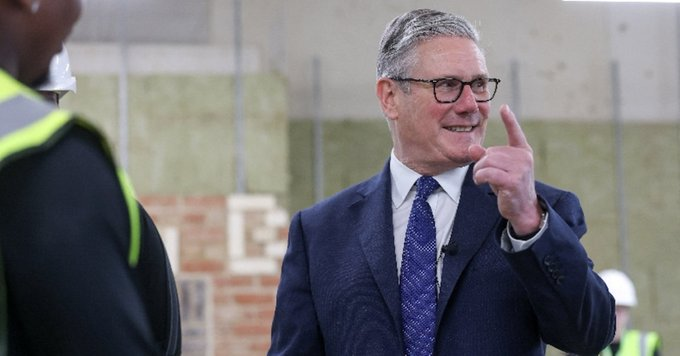
The Electoral Catastrophe That Sparked the Mutiny
The immediate trigger for the current crisis was the disastrous performance of the Labour Party in last week’s local elections. Across England, Scotland, and Wales, the party lost an estimated 1,400 council seats, including the loss of control over the Welsh Parliament, a traditional Labour stronghold .
While the governing party often suffers mid-term losses, the scale of the defeat—coupled with the rise of populist right-wing party Reform UK and the Greens—has shattered the authority of Starmer’s leadership . Critics within the party argue that the electorate has rejected Starmer’s centrist agenda, viewing him as indecisive on economic policy and immigration.
Westminster in Uproar: The Numbers Behind the Revolt
As of Tuesday, the rebellion has moved from private WhatsApp groups to public declarations. Reports indicate that more than 80 Labour Members of Parliament (MPs) have publicly signed letters or issued statements demanding that the Prime Minister set a timetable for his departure .
The pressure escalated dramatically when four junior ministers resigned from the government within a single 24-hour period. In their resignation letters, several officials explicitly stated that Starmer had “lost the confidence of the country” and no longer possessed the authority to govern .
However, the party is not entirely united against the leader. A counter-movement has emerged, with over 100 Labour MPs signing a statement urging the party to avoid a damaging leadership contest and to rally behind the current Prime Minister .
Starmer’s Defense: “I Will Not Walk Away”
Standing before an audience of party faithful at a community center in London, a defiant Starmer attempted to reset the narrative. He acknowledged that the public is “frustrated with me” but insisted that changing leader now would be an act of political suicide.
“The British people expect the Government to get on with the job of changing our country for the better,” Starmer said. He warned that the party would “never be forgiven” for repeating the instability seen under previous Conservative governments, which cycled through five prime leaders in just over six years .
“I’m not going to walk away and plunge the country into chaos, ” Starmer declared, doubling down on his mandate that extends until the next general election, due in 2029 .
The King’s Speech: A Policy Reset
In a strategic move to divert attention from the leadership crisis, the government has unveiled an ambitious agenda for the upcoming King’s Speech, scheduled for Wednesday. The legislative package, which includes over 35 Bills, represents a “reset” aimed at reclaiming the political initiative .
Key policy proposals outlined by Downing Street include:
- Immigration Overhaul: Legislation to restrict the use of Article 8 of the European Convention on Human Rights (right to family life), making it harder for migrants who do not qualify for asylum to remain in the UK .
- Economic Intervention: A radical move to renationalise British Steel, giving the government direct control over the struggling industry .
- Housing Reforms: Long-promised leasehold reforms to give homeowners more control over their properties.
- Energy & Education: New green energy initiatives and reforms to Special Educational Needs and Disabilities (SEND) schooling .
Starmer framed this package as a “complete break” with the status quo, promising to govern with “urgency” to improve living standards .
Who Could Replace Starmer?
Westminster is rife with speculation regarding potential successors, should the Prime Minister be forced out or choose to resign. While no formal challenge has been launched yet, several senior figures are emerging as frontrunners:
- Angela Rayner (Deputy Prime Minister): Viewed as a potential unity candidate from the party’s left-leaning grassroots, though her relationship with Starmer has been strained.
- Wes Streeting (Health Secretary): Hailing from the party’s right wing, Streeting is seen as a more charismatic communicator who could counter the rise of Reform UK .
- David Lammy (Foreign Secretary): A staunch Starmer ally currently, Lammy has experience on the world stage, though he has publicly urged the party to remain calm .
To trigger a formal leadership contest, a challenger would need the backing of 20% of Labour MPs (approximately 81 lawmakers) .
Looking Ahead: What Happens Now?
The coming days are critical for the Starmer premiership. The cabinet is scheduled to meet at Downing Street to discuss the fallout. While senior ministers like Peter Kyle and Liz Kendall have publicly backed Starmer, others are reportedly urging him to negotiate a dignified exit timetable .
For now, the Prime Minister remains in office, but his authority is critically wounded. As the King’s Speech unfolds, the world is watching to see if Starmer can turn the tide—or if the United Kingdom is heading for its seventh Prime Minister in a decade.
Frequently Asked Questions (FAQs)
Q1: Why are Labour MPs asking Keir Starmer to resign?
A: The calls for resignation stem from the Labour Party’s devastating losses in the recent local elections. The party lost over 1,400 council seats and control of the Welsh Parliament. Critics blame Starmer’s leadership style and centrist policies for failing to connect with voters amid the rise of Reform UK .
Q2: Is this the first time Keir Starmer has faced a rebellion?
A: No. This marks the third major wave of pressure on Starmer this year. Previous criticisms followed his appointment of Peter Mandelson as ambassador to the US and prior policy missteps. However, this current revolt is the most severe due to the scale of the electoral defeat .
Q3: How many resignations have there been?
A: As of the latest reports, four junior ministers resigned from the government in a single day over the leadership crisis. Additionally, several parliamentary private secretaries (ministerial aides) have stepped down .
Q4: What will happen in the King’s Speech?
A: The King’s Speech will outline the government’s legislative agenda for the next parliamentary session. Key expected Bills include the renationalisation of British Steel, strict limits on immigration appeals (Article 8 ECHR), leasehold reforms, and green energy investments. It is seen as a “reset” attempt by Starmer .
Q5: Could Starmer be forced out immediately?
A: Labour party rules make it difficult to remove a sitting Prime Minister compared to the Conservative Party. Removing Starmer requires a specific challenger to rally MPs behind them, rather than a simple “no confidence” vote. If enough cabinet ministers resign or publicly demand he step aside, he may be forced to negotiate a departure timetable .
Q6: How has the financial market reacted?
A: Reports indicate that UK borrowing costs have risen and the value of Sterling has fallen against the US dollar as the political instability in London deepens, reminiscent of the post-Brexit volatility .
This is a developing story. Reflecto News will continue to provide updates as the situation unfolds in Westminster.
Questions people ask
What is China's current share of global manufacturing?
China now accounts for twenty eight percent of global manufacturing. This industrial output exceeds the combined manufacturing production of the United States, Japan, and Germany, making China the leading global industrial power according to recent reports.
Why were Andrew Tate and Tristan Tate arrested in Miami?
Andrew Tate and his brother Tristan Tate were taken into custody in Miami by the United States Marshals Service. They face thirty eight new charges in the United Kingdom, including rape and child pornography offences, and prosecutors are seeking their extradition.
What warning did Moscow issue about oil prices?
Kirill Dmitriev, the Chief Executive of the Russian Direct Investment Fund, warned that a tsunami of skyrocketing oil prices is approaching. Moscow describes this potential energy shock as a major threat to global markets.
What political shift is projected for Benjamin Netanyahu's coalition?
Political polls project that Prime Minister Benjamin Netanyahu's coalition is on track to lose its majority in the upcoming October election. This projection indicates a potential political shift in Jerusalem.
Why did a Russian military aircraft land in Tehran?
A Russian airborne command aircraft, widely known as a doomsday plane, landed in Tehran. The arrival of the aircraft represents a high stakes show of support from Russia for Iran during a period of heightened regional tensions.
What did President Masoud Pezeshkian claim about the United States and Israel?
Iranian President Masoud Pezeshkian claimed that the United States and Israel failed in a forty eight hour plan to topple the Iranian government. He made these statements during a televised address marking two years since his inauguration.