Reflecto News is an online news platform covering major international political events, global economic developments, and security conflicts. The site provides updates on topics such as Chinese manufacturing dominance, Middle Eastern political tensions, and high profile legal arrests. Readers can access current articles organized by categories like World News, Iran, and USA.
Iranian sources and aligned commentators assert that Tehran has inflicted more than $2.4 billion in damage or destruction on U.S. military aircraft over roughly the first 35 days of the intensified conflict. The figure draws from a mix of confirmed losses, damaged platforms, and high-value assets affected during operations, including the costly combat search-and-rescue (CSAR) missions for downed F-15E crews. Independent estimates from U.S. analysts and media place early conflict aircraft and related equipment losses in a similar range ($1.4–2.9 billion in the first three weeks alone), though exact attribution and replacement costs remain debated.
By Reflecto News Desk
April 5, 2026 | Tehran / Washington
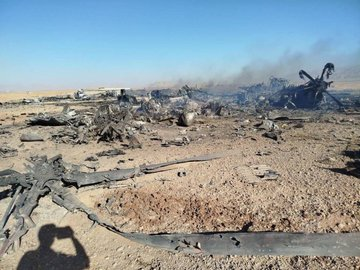
Iranian state media and military spokespeople have repeatedly highlighted successful interceptions and strikes on U.S. platforms as evidence of effective asymmetric defense against superior technology. The claimed $2.4+ billion tally encompasses fighters, tankers, drones, helicopters, and support aircraft lost or damaged in direct combat, friendly-fire incidents, ground attacks on bases, and high-risk CSAR operations inside Iran.
Key elements feeding into such estimates include:
- Multiple F-15E Strike Eagle losses (each valued at roughly $65–100 million depending on variant and upgrades).
- Damage or loss of an F-35 Lightning II (unit cost ~$80–110 million).
- A-10 Thunderbolt II and other close air support platforms.
- High-value E-3G Sentry AWACS and multiple KC-135 Stratotanker assets affected (AWACS replacement can exceed $500–700 million; tankers add tens to hundreds of millions).
- Dozens of MQ-9 Reaper drones (~$30–40 million flyaway cost each, with totals quickly scaling).
- Helicopters (HH-60 Pave Hawks, UH-60 Black Hawks, MH-6 Little Birds) damaged or lost during rescue missions.
- Supporting C-130 family aircraft, including HC-130J Combat King II variants deliberately destroyed to prevent capture.
Early independent assessments (e.g., Wall Street Journal reporting citing former Pentagon officials) put U.S. equipment losses and battle damage in the first three weeks at $1.4–2.9 billion, driven largely by Iranian missile and drone strikes on bases, friendly-fire mishaps, and direct air combat. The figure has likely grown with continued operations, including the expensive F-15E CSAR efforts that involved deep incursions, temporary desert airstrips, and self-destruction of stranded assets.
Propaganda vs. Verified Reality
Iran frames these claims as proof that advanced U.S. airpower can be degraded despite technological gaps, using imagery from wreckage sites (including Basij members posing with debris or symbolic items) to amplify the narrative. U.S. officials acknowledge certain losses but emphasize that overall air superiority persists and that many incidents involved friendly-fire, mechanical issues, or deliberate scuttling rather than direct Iranian kills.
The high cost reflects not only unit prices but also the expense of rapid replacement, lost operational capability, and the broader strain on munitions and readiness. Broader war cost trackers (including operations, munitions expenditure, and force deployment) have estimated daily or weekly figures in the hundreds of millions to over a billion.
Ongoing Conflict Context
These claimed aircraft losses occur alongside:
- Iranian ballistic missile and drone strikes on Israeli targets (e.g., recent hit on Ne’ot Hovav industrial zone causing fires at chemical facilities).
- U.S.-Israeli infrastructure strikes inside Iran (including the Karaj B1 bridge).
- Deep U.S. special operations activity, such as reported C-295W low-level flights and temporary airstrips south of Isfahan.
- Persistent disruption of the Strait of Hormuz, selective commercial transits, and energy market ripple effects (China reselling record LNG volumes).
Diplomatically, Iran continues mixed signaling: Foreign Minister Abbas Araghchi stresses openness to mediated talks via Pakistan for a “conclusive and lasting” end to the war, while military actions and propaganda efforts persist.
Reflecto News will continue monitoring verified loss tallies from both sides, official Pentagon or Iranian statements, replacement cost analyses, and the broader military-diplomatic trajectory of the conflict.
Sources: Iranian state media claims, Wall Street Journal and other U.S. reporting on early loss estimates, OSINT compilations, and cross-referenced defense analyses as of April 5, 2026. Cost figures in active conflicts are approximate, often including flyaway prices, upgrades, and operational impacts; exact totals remain fluid and contested.
Questions people ask
What is China's current share of global manufacturing?
China now accounts for twenty eight percent of global manufacturing. This industrial output exceeds the combined manufacturing production of the United States, Japan, and Germany, making China the leading global industrial power according to recent reports.
Why were Andrew Tate and Tristan Tate arrested in Miami?
Andrew Tate and his brother Tristan Tate were taken into custody in Miami by the United States Marshals Service. They face thirty eight new charges in the United Kingdom, including rape and child pornography offences, and prosecutors are seeking their extradition.
What warning did Moscow issue about oil prices?
Kirill Dmitriev, the Chief Executive of the Russian Direct Investment Fund, warned that a tsunami of skyrocketing oil prices is approaching. Moscow describes this potential energy shock as a major threat to global markets.
What political shift is projected for Benjamin Netanyahu's coalition?
Political polls project that Prime Minister Benjamin Netanyahu's coalition is on track to lose its majority in the upcoming October election. This projection indicates a potential political shift in Jerusalem.
Why did a Russian military aircraft land in Tehran?
A Russian airborne command aircraft, widely known as a doomsday plane, landed in Tehran. The arrival of the aircraft represents a high stakes show of support from Russia for Iran during a period of heightened regional tensions.
What did President Masoud Pezeshkian claim about the United States and Israel?
Iranian President Masoud Pezeshkian claimed that the United States and Israel failed in a forty eight hour plan to topple the Iranian government. He made these statements during a televised address marking two years since his inauguration.