Washington, D.C. / Tehran – April 5, 2026 | Reflecto News
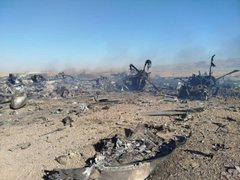
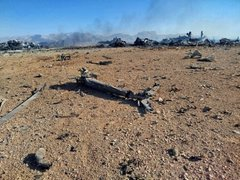
After successfully evacuating the second crew member of the downed F-15E Strike Eagle, U.S. forces were forced to destroy two HC-130J Combat King II rescue aircraft and two helicopters on Iranian soil because they were unable to take off from an improvised refueling and extraction site, according to new details of the high-risk combat search and rescue (CSAR) operation.
The aircraft were deliberately blown up on the ground to prevent sensitive equipment, classified technology, or intact airframes from falling into Iranian hands. Three additional HC-130J Combat King II aircraft were then dispatched to complete the extraction of all U.S. personnel.
Updated Aircraft Losses in the Rescue Operation
The latest revelations add to the growing list of U.S. aviation losses during the multi-day mission deep inside Iran:
Destroyed by U.S. forces on the ground:
- Two HC-130J Combat King II (special operations rescue and refueling aircraft)
- Two helicopters (previously reported as including at least one MH-6 Little Bird; additional UH-60 Black Hawks also damaged in earlier accounts)
- One A-10 Warthog attack aircraft
- Two C-130 Hercules transport planes (earlier reports)
Damaged:
- Two UH-60 Black Hawk helicopters
- One F-16 fighter jet
Despite these material losses, the entire operation ended with zero American casualties — both F-15E pilots were rescued safely, as President Trump has repeatedly highlighted with the declaration “WE GOT HIM!”
What Happened at the Improvised Site
According to U.S. and media accounts:
- The HC-130J Combat King II aircraft were critical for in-flight refueling and supporting the low-altitude CSAR mission involving HH-60G Pave Hawk helicopters.
- After landing at a temporary “remote base” or improvised refueling site inside Iran to support the final extraction phase, two of the HC-130Js and two helicopters became unable to depart for “unknown reasons” (possibly mechanical issues, damage from ground fire, or operational constraints under fire).
- With IRGC forces in the area following a fierce “nightmare scenario” ground shootout between U.S. Special Forces and Iranian troops, commanders made the difficult decision to destroy the stranded aircraft on site.
- Three replacement HC-130J Combat King II aircraft were rapidly dispatched to extract the remaining Special Operations teams and the rescued pilots.
The mission also required U.S. Air Force airstrikes to prevent advancing Iranian forces from reaching the second pilot’s location.
Strategic and Propaganda Impact
The destruction of multiple high-value aircraft on Iranian territory represents a significant tactical cost, even as the personnel rescue is hailed as a major success. Iranian state media has released footage of wreckage from Black Hawks and C-130s, claiming their forces inflicted the damage and portraying the operation as a failure for the U.S.
President Trump continues to frame the overall mission as “one of the most daring search and rescue operations in U.S. history,” focusing on the successful, casualty-free recovery of both crew members.
This episode occurs amid the sixth week of Operation Epic Fury, with:
- U.S. strikes on Tehran reportedly killing over 50 senior Iranian officials.
- Attacks on petrochemical facilities and internal discussions about targeting power plants and bridges.
- Iranian retaliation, including drone strikes on Kuwaiti infrastructure.
- Stalled ceasefire talks after Iran rejected the 15-point peace proposal.
- Growing transatlantic tensions and international calls for de-escalation, including from Pope Leo XIV during his Easter message.
Reflecto News will continue monitoring official Pentagon confirmation, full damage assessments, Iranian claims regarding the wreckage, and any strategic implications for ongoing operations or future CSAR capabilities. The loss of multiple HC-130Js and helicopters underscores the extreme risks and improvisation required in deep operations inside Iran.
By Reflecto News Desk
Sources: The New York Times, Axios, CBS News, Reuters, U.S. military sources, President Trump’s statements, Iranian state media (Tasnim, Press TV), and international wire services.