Reflecto News is an online news platform covering major international political events, global economic developments, and security conflicts. The site provides updates on topics such as Chinese manufacturing dominance, Middle Eastern political tensions, and high profile legal arrests. Readers can access current articles organized by categories like World News, Iran, and USA.
Reflecto News | Breaking News | Geopolitics & Energy Security
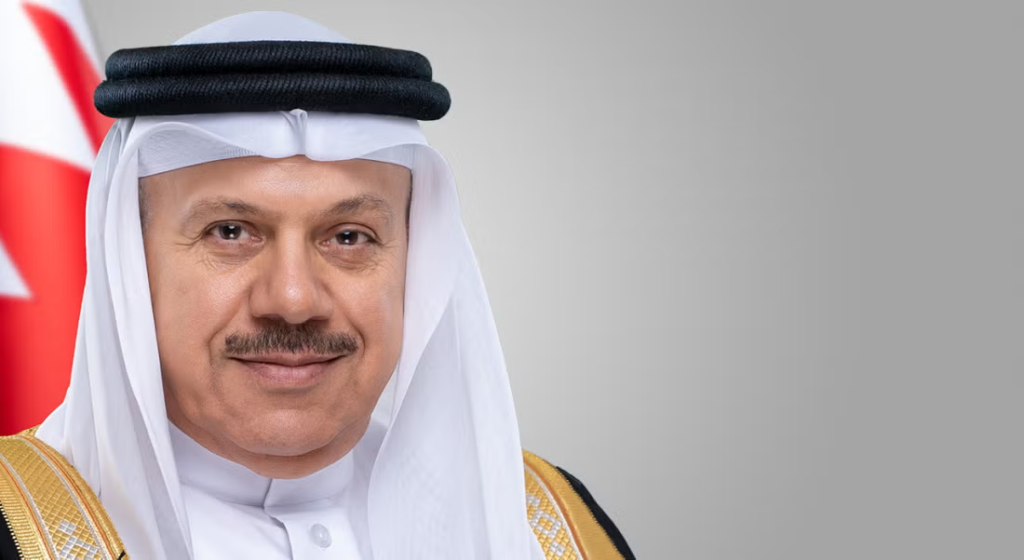
UNITED NATIONS — Bahrain’s Foreign Minister Abdullatif Al Zayani has declared that Iran has violated international law by closing the strategic Strait of Hormuz and warned that the international community “will not tolerate further losses” as the blockade continues to strangle global trade and energy supplies.
Speaking at a high‑level open debate of the UN Security Council on maritime security, which Bahrain chaired on Monday, Al Zayani delivered a joint statement on behalf of nearly 100 countries condemning Iran’s actions and demanding the immediate reopening of the vital waterway .
‘A Violation of International Law’
Al Zayani made clear that the closure is not merely an act of war but a breach of the legal framework governing the world’s oceans—the UN Convention on the Law of the Sea (UNCLOS).
“Iran has violated international law by closing the Strait of Hormuz. The world will not tolerate further losses,” the minister told the Council .
As part of the joint statement, Bahrain reiterated that free navigation through the strait is a cornerstone of global security and prosperity and that navigational rights “must not be unlawfully threatened or suspended.” The coalition also rejected any attempt to impose tolls on shipping, stating that such a move would be “a breach of international law, as reflected in UNCLOS” .
‘The World Will Not Tolerate Further Losses’
The Bahraini minister’s warning reflects the acute economic pain being felt across the globe. The disruption has effectively removed approximately 20% of the world’s seaborne oil supply from the market, keeping prices elevated and threatening to push vulnerable economies into crisis.
“We are already seeing global consequences from Iranian actions which are impeding international shipping, driving up costs and sending shockwaves through energy markets and crucial supply chains far beyond the region, including for vulnerable economies and food‑insecure populations,” the joint statement warned .
Al Zayani noted that Iran’s decision to seal the passage was part of a deliberate strategy to use hunger and energy scarcity as a weapon to win diplomatic concessions. “This closure represents a violation of international law aimed at inflicting hardship on the peoples of the world and exploiting the situation in negotiations,” he told the Council .
The Human and Economic Toll
The crisis has stranded approximately 800 cargo ships in the Arabian Gulf, leaving an estimated 20,000 seafarers in increasingly desperate conditions aboard vessels unable to move, Al Zayani revealed during the Security Council session .
The minister urged the international community to recognize the severe implications of the closure, stressing that it “threatens global supply chains and exacerbates the challenges faced by already fragile economies” .
Demands and Next Steps: Compensation and a Coalition
On behalf of the international coalition—which now includes nearly 100 UN member states—Al Zayani reiterated a clear call for the urgent and unimpeded reopening of the strait.
The Arab League has already passed a resolution holding Iran “fully internationally responsible” for the attacks and closure and demanding that Tehran pay “full reparation” for all resulting economic losses .
The Security Council debate signalled that the blockade has become a primary flashpoint in the war. In early April, Russia and China vetoed a draft resolution on the strait. However, the volume of nations signing onto Bahrain’s condemnation suggests the window for a diplomatic off‑ramp is narrowing.
“Complacency and inaction in the face of such a situation will have grave consequences for international peace and security,” Al Zayani concluded .
Key Takeaways for Reflecto News Readers
| Aspect | Summary |
|---|---|
| Main Statement | “Iran has violated international law… The world will not tolerate further losses” |
| Legal Basis | Breach of UNCLOS (freedom of navigation), potential war crimes for targeting civilian shipping |
| International Coalition | Nearly 100 nations signed joint statement (incl. US, UK, France, Arab states) |
| Stranded Trade | ~800 cargo ships & ~20,000 seafarers trapped in Gulf |
| Economic Impact | Oil prices high; supply chains strained; food insecure nations at risk |
| Arab League Action | Resolution demanding Iran pay full compensation for economic losses |
| Iran’s Counter | Demands “new legal regime” for the Strait including right to levy tolls |
Follow Reflecto News for continuous updates on the Strait of Hormuz crisis, UN Security Council developments, and all breaking news from around the world.
This article is the intellectual property of Reflecto News. Redistribution without attribution is prohibited. For syndication or media inquiries, please contact the editorial team.
Questions people ask
What is China's current share of global manufacturing?
China now accounts for twenty eight percent of global manufacturing. This industrial output exceeds the combined manufacturing production of the United States, Japan, and Germany, making China the leading global industrial power according to recent reports.
Why were Andrew Tate and Tristan Tate arrested in Miami?
Andrew Tate and his brother Tristan Tate were taken into custody in Miami by the United States Marshals Service. They face thirty eight new charges in the United Kingdom, including rape and child pornography offences, and prosecutors are seeking their extradition.
What warning did Moscow issue about oil prices?
Kirill Dmitriev, the Chief Executive of the Russian Direct Investment Fund, warned that a tsunami of skyrocketing oil prices is approaching. Moscow describes this potential energy shock as a major threat to global markets.
What political shift is projected for Benjamin Netanyahu's coalition?
Political polls project that Prime Minister Benjamin Netanyahu's coalition is on track to lose its majority in the upcoming October election. This projection indicates a potential political shift in Jerusalem.
Why did a Russian military aircraft land in Tehran?
A Russian airborne command aircraft, widely known as a doomsday plane, landed in Tehran. The arrival of the aircraft represents a high stakes show of support from Russia for Iran during a period of heightened regional tensions.
What did President Masoud Pezeshkian claim about the United States and Israel?
Iranian President Masoud Pezeshkian claimed that the United States and Israel failed in a forty eight hour plan to topple the Iranian government. He made these statements during a televised address marking two years since his inauguration.