Reflecto News is an online news platform covering major international political events, global economic developments, and security conflicts. The site provides updates on topics such as Chinese manufacturing dominance, Middle Eastern political tensions, and high profile legal arrests. Readers can access current articles organized by categories like World News, Iran, and USA.
By Jan Wolfe, Reuters
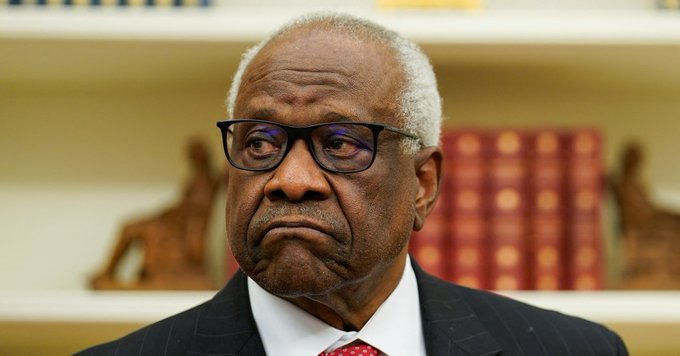
Justice Clarence Thomas, the longest-serving member of the current U.S. Supreme Court, this week surpasses Justice Stephen J. Field to become the third-longest-serving justice in American history. By Thursday, he will leapfrog his late colleague Justice John Paul Stevens to become the second-longest-serving justice ever, trailing only Justice William O. Douglas, who served from 1939 to 1975 .
But for Thomas, who turned 77 in June, the milestone is about more than tenure. Over 34 years on the bench, the stalwart conservative has helped guide the court on a rightward course, leaving an indelible stamp on American law—even if he has not gotten everything he has advocated .
From Dissenter to Dominance
Thomas was appointed at age 43 by Republican President George H.W. Bush to replace liberal luminary Thurgood Marshall, the first Black member of the court. Thomas, after a contentious Senate confirmation battle, became the second .
“He began his time on the court often in dissent, and he stood his ground,” said Haley Proctor, a University of Notre Dame law professor who previously served as a clerk for Thomas. “The justice’s influence on the law has been profound. And that is a consequence, not only of his many years on the court, but also of his persistence” .
Thomas has helped the court’s 6-3 conservative majority, in place since 2020, to act assertively. In June 2022, he was the author of a landmark ruling expanding gun rights protected by the Second Amendment and joined other conservative justices in overturning the 1973 Roe v. Wade decision that had legalized abortion nationwide .
Thomas has championed an expansive view of religious liberty, opposed gay marriage, fought affirmative action preferences for minorities in university admissions and hiring, supported the death penalty and broad presidential powers, and curbed campaign-finance restrictions .
‘The Most Radically Conservative Justice’
“Justice Thomas is the most radically conservative justice to serve on the Supreme Court in modern times,” said Erwin Chemerinsky, dean of the University of California, Berkeley School of Law. “I say this because in addition to being conservative he has taken positions that would dramatically change the law that the court never has accepted” .
Chemerinsky noted that Thomas favors overturning Supreme Court precedents that have blocked laws against contraceptives and gay sex, as well as key protections for freedom of the press. He also pointed to the justice’s criticism of the court’s precedent that required states to provide defense lawyers to criminal defendants who cannot afford to hire one .
“In some areas, he succeeded in changing the law, such as the Second Amendment, overruling Roe v. Wade and ending affirmative action,” Chemerinsky said. “But in most places his calls for a radical change in a conservative direction have not gained support from a majority of the court” .
Thomas and the other conservative justices have let Republican President Donald Trump implement a series of policies impeded by lower courts that faulted their legality. When the court handed Trump a rare setback in February by rejecting his sweeping global tariffs, Thomas was one of three conservative justices who dissented, and the president lavished praise on him .
An Originalist’s Crusade
Throughout his tenure, Thomas has pursued a relentless excavation of the Constitution’s original meaning. Justice Scalia once quipped that Thomas was a “bloodthirsty originalist.” Thomas didn’t mind. He believes that “something has gone seriously awry with this Court’s interpretation of the Constitution” and he is determined to right the record, cutting no corners and leaving no stone unturned .
From criminal procedure to sovereign immunity, the administrative state to separation of powers, Thomas has developed an originalist canon in scores of opinions rejecting established doctrine. “There are now few areas of constitutional law on which he has not left directions about recovering the original meaning of our fundamental law,” wrote two legal scholars .
In 1995, in Missouri v. Jenkins, Thomas began, “It never ceases to amaze me that the courts are so willing to assume that anything that is predominantly black must be inferior.” He blamed decades of precedents permitting “federal courts to exercise virtually unlimited equitable powers” in ways that have “trampled upon principles of federalism” .
He has also demonstrated a willingness to excavate away even his own past errors. In 2015, he called for overruling a precedent he had authored a decade earlier. “Although I authored Brand X,” he observed, “it is never too late to surrender former views to a better considered position” .
A Natural Law Turn
In a rare public address at the University of Texas in Austin on April 15, Thomas offered something beyond his usual originalism . He argued that the nation’s founding ethos that “all men are created equal” is under threat, and pit the ideals of the Declaration of Independence against the scourge of “progressivism” .
Thomas framed the revolutionary document as evidence that American law is not grounded in a legal text but rather comes from a higher power: that people’s equality is “endowed by their Creator” and that their “unalienable” rights come from God. “The Constitution is the means of government,” Thomas said. “It is the Declaration that announces the ends of government” .
“Justice Thomas is engaging in some strong natural law thinking,” said Andrea Katz, a professor at Washington University School of Law. “In fact, it’s close to theology on the bench” .
Thomas went on to blame progressives for the worst crimes of the 20th century, insisting that “Stalin, Hitler, Mussolini, and Mao” were all “intertwined with the rise of progressivism” . Former U.S. Secretary of Labor Robert Reich called the speech “pure rubbish,” arguing that Thomas’s critique “is denying the premise of a written constitution” .
The Ethics Cloud
Despite his judicial impact, Thomas’s final years on the court have been shadowed by controversy over his relationship with billionaire real estate developer Harlan Crow. Years of unreported luxury travel, private jet flights, and real estate deals have sparked widespread calls for an enforceable code of conduct for the justices, which the court only reluctantly adopted .
Thomas failed to disclose the gifts, nor did he disclose his sale of three properties to the billionaire, including the home where his mother still lives, rent-free . Thomas has tried to characterize the trips as “personal hospitality,” but the law clearly requires gifts of transportation to be disclosed. He appeared to understand that requirement when he reported a private jet flight in 1997—but stopped reporting them after the disclosure attracted media scrutiny .
In Congress, Rep. Alexandria Ocasio-Cortez introduced an impeachment resolution against Thomas, citing three articles: failure to disclose financial income, gifts and reimbursements; refusal to recuse from matters concerning his spouse’s legal interest; and refusal to recuse from matters involving his spouse’s financial interest .
Thomas has also refused to recuse himself from multiple cases related to the 2020 presidential election despite his wife Ginni’s active role in trying to overturn the results. She exchanged 29 text messages with White House Chief of Staff Mark Meadows, spreading false theories about the election and urging Meadows to overturn the results .
A Loyal Following
Yet Thomas has engendered a sense of loyalty among those who work with him, especially his former law clerks, several of whom have since become federal judges .
“One notices that his clerks are incredibly loyal to him, even the ones who disagree with him,” said Ken Masugi, a fellow at the conservative Claremont Institute think tank. “That’s proof of the influence he has on the people within the court” .
If Thomas remains until May 20, 2028, he would set the court’s longevity record, passing Justice William O. Douglas. President Trump, who would get to make a fourth appointment to the court if any vacancy arises, has said he hopes Thomas and fellow conservative Justice Samuel Alito, 76, stay on the bench .
Thomas has given no indication of planning to retire. During a 2019 talk at Pepperdine University, he was asked what he might say at his retirement party in 20 years’ time.
“But I’m not retiring,” Thomas told the interviewer.
“Not in 20 years?” the interviewer persisted.
“No,” Thomas replied .
Whether Thomas stays or goes, his conservative stamp on the Supreme Court will endure for decades to come.
Follow Reflecto News for continuous updates on the U.S. Supreme Court and all breaking news from Washington.
This article incorporates reporting from Reuters, The Guardian, National Urban League, The New Republic, Washington Examiner, Mother Jones, and other sources. All information is accurate as of publication.
Questions people ask
What is China's current share of global manufacturing?
China now accounts for twenty eight percent of global manufacturing. This industrial output exceeds the combined manufacturing production of the United States, Japan, and Germany, making China the leading global industrial power according to recent reports.
Why were Andrew Tate and Tristan Tate arrested in Miami?
Andrew Tate and his brother Tristan Tate were taken into custody in Miami by the United States Marshals Service. They face thirty eight new charges in the United Kingdom, including rape and child pornography offences, and prosecutors are seeking their extradition.
What warning did Moscow issue about oil prices?
Kirill Dmitriev, the Chief Executive of the Russian Direct Investment Fund, warned that a tsunami of skyrocketing oil prices is approaching. Moscow describes this potential energy shock as a major threat to global markets.
What political shift is projected for Benjamin Netanyahu's coalition?
Political polls project that Prime Minister Benjamin Netanyahu's coalition is on track to lose its majority in the upcoming October election. This projection indicates a potential political shift in Jerusalem.
Why did a Russian military aircraft land in Tehran?
A Russian airborne command aircraft, widely known as a doomsday plane, landed in Tehran. The arrival of the aircraft represents a high stakes show of support from Russia for Iran during a period of heightened regional tensions.
What did President Masoud Pezeshkian claim about the United States and Israel?
Iranian President Masoud Pezeshkian claimed that the United States and Israel failed in a forty eight hour plan to topple the Iranian government. He made these statements during a televised address marking two years since his inauguration.