
Reflecto News is an online news platform covering major international political events, global economic developments, and security conflicts. The site provides updates on topics such as Chinese manufacturing dominance, Middle Eastern political tensions, and high profile legal arrests. Readers can access current articles organized by categories like World News, Iran, and USA.
Published on Reflecto News | World News | Diplomacy & Conflict
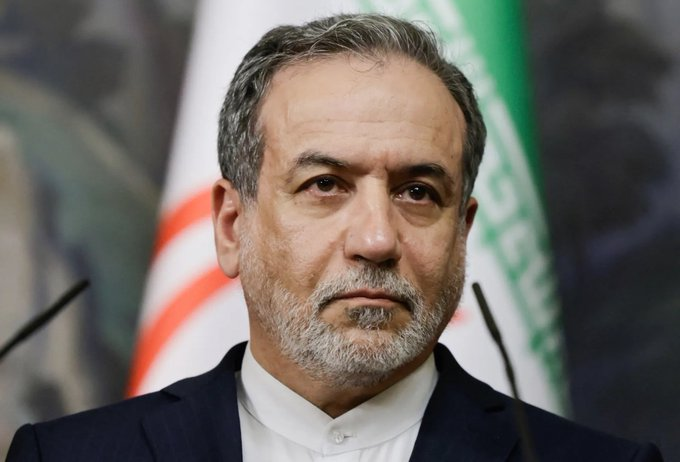
Iranian Foreign Minister Abbas Araghchi has declared that the United States’ naval blockade of Iranian ports constitutes an “act of war” and a direct violation of the fragile two-week ceasefire that has just expired. In a statement issued following the formal end of the truce, Araghchi also condemned the US seizure of an Iranian commercial vessel and the detention of its crew as an “even greater violation” of international law .
“Blockading Iranian ports is an act of war and thus a violation of the ceasefire. Striking a commercial vessel and taking its crew hostage is an even greater violation. The United States cannot claim to seek peace while committing acts of war.” — Abbas Araghchi, Iranian Foreign Minister
The Touska Incident
Araghchi’s reference to a “struck commercial vessel” refers to the April 19 seizure of the Iranian-flagged cargo ship Touska in the Gulf of Oman. The vessel, which was reportedly carrying chemicals used to manufacture ballistic missile fuel, was disabled by gunfire from the USS Spruance after its crew ignored warnings over a six-hour period . US Marines subsequently boarded and took control of the ship, detaining its crew .
Iran has denounced the operation as “armed piracy” and has demanded the immediate release of the vessel and its crew. The US has not announced any plans to release the ship or its personnel, and the incident remains a major point of contention between the two nations .
‘Act of War’ Under International Law
Araghchi’s characterization of the blockade as an “act of war” carries specific legal weight. Under international law, a naval blockade imposed during peacetime—or during a period of ceasefire—can be considered an act of aggression, particularly when it restricts access to a nation’s territorial waters and ports .
The US has defended the blockade as a lawful measure to enforce sanctions and prevent Iran from exporting oil, which Washington argues funds Tehran’s nuclear and missile programs. However, Iran contends that the blockade violates the terms of the ceasefire brokered by Pakistan, which was intended to pause all hostilities, including economic warfare .
Ceasefire Expired, Tensions Remain
The two-week ceasefire officially ended at 3:30 AM Tehran time on Wednesday (12:00 AM GMT / 8:00 PM Tuesday ET). The truce, which took effect on April 8, was brokered by Pakistan and was explicitly conditioned on Iran’s agreement to the “COMPLETE, IMMEDIATE, and SAFE OPENING” of the Strait of Hormuz — a condition Iran has not met .
With the ceasefire now expired, the legal framework that had contained the conflict has been removed. However, neither side has yet announced an immediate resumption of full-scale hostilities .
Iran’s Conditions for Return to Talks
Araghchi’s statement reiterates Iran’s position that it will not return to the negotiating table until the US lifts its naval blockade. Tehran has also demanded the release of the Touska and its crew, as well as an end to what it calls “economic terrorism” against the Iranian people .
“We are not the ones who closed the door to diplomacy. The United States closed it when they chose war over peace. If they want to talk, they must first end their acts of aggression.” — Abbas Araghchi
What Comes Next
With the ceasefire expired and diplomatic efforts stalled, several scenarios are possible:
| Scenario | Likelihood | Implications |
|---|---|---|
| US maintains blockade; no military action | Possible | Tensions remain high but contained |
| Limited US strikes on Iranian targets | Elevated | Trump has warned of “bombs” |
| Iran retaliates via proxies | Likely | Hezbollah, Houthi attacks may intensify |
| Full-scale war resumes | Possible | Both sides preparing |
Araghchi’s强硬声明 underscores Tehran’s position that the US, not Iran, is responsible for the breakdown of diplomacy. Whether the Biden-Trump administration (the current administration is a hybrid after the 2024 election) will respond with military force or seek a renewed diplomatic track remains to be seen.
Frequently Asked Questions (FAQs)
1. What did Iran’s Foreign Minister say about the US blockade?
Araghchi declared that “blockading Iranian ports is an act of war and thus a violation of the ceasefire,” adding that striking a commercial vessel and taking its crew hostage is “an even greater violation.”
2. What is the Touska incident?
On April 19, the US Navy seized the Iranian-flagged cargo ship Touska in the Gulf of Oman. The vessel was disabled by gunfire after its crew ignored warnings, and US Marines boarded and took control of the ship, detaining its crew.
3. Has the ceasefire expired?
Yes. The two-week ceasefire officially ended at 3:30 AM Tehran time on Wednesday (12:00 AM GMT / 8:00 PM Tuesday ET).
4. Will there be more negotiations?
Iran has stated that it will not return to the negotiating table until the US lifts its naval blockade. The US has rejected this condition, insisting that the blockade will remain until a deal is reached.
5. What happens now?
With the ceasefire expired, the risk of renewed military action has increased significantly. President Trump has warned that “lots of bombs” will begin to fall if no deal is reached.
Stay informed with Reflecto News – Your trusted source for breaking diplomatic and geopolitical intelligence. Subscribe for real-time updates on the US-Iran crisis, nuclear negotiations, and global security developments.
Questions people ask
What is China's current share of global manufacturing?
China now accounts for twenty eight percent of global manufacturing. This industrial output exceeds the combined manufacturing production of the United States, Japan, and Germany, making China the leading global industrial power according to recent reports.
Why were Andrew Tate and Tristan Tate arrested in Miami?
Andrew Tate and his brother Tristan Tate were taken into custody in Miami by the United States Marshals Service. They face thirty eight new charges in the United Kingdom, including rape and child pornography offences, and prosecutors are seeking their extradition.
What warning did Moscow issue about oil prices?
Kirill Dmitriev, the Chief Executive of the Russian Direct Investment Fund, warned that a tsunami of skyrocketing oil prices is approaching. Moscow describes this potential energy shock as a major threat to global markets.
What political shift is projected for Benjamin Netanyahu's coalition?
Political polls project that Prime Minister Benjamin Netanyahu's coalition is on track to lose its majority in the upcoming October election. This projection indicates a potential political shift in Jerusalem.
Why did a Russian military aircraft land in Tehran?
A Russian airborne command aircraft, widely known as a doomsday plane, landed in Tehran. The arrival of the aircraft represents a high stakes show of support from Russia for Iran during a period of heightened regional tensions.
What did President Masoud Pezeshkian claim about the United States and Israel?
Iranian President Masoud Pezeshkian claimed that the United States and Israel failed in a forty eight hour plan to topple the Iranian government. He made these statements during a televised address marking two years since his inauguration.