
Reflecto News is an online news platform covering major international political events, global economic developments, and security conflicts. The site provides updates on topics such as Chinese manufacturing dominance, Middle Eastern political tensions, and high profile legal arrests. Readers can access current articles organized by categories like World News, Iran, and USA.
By Reflecto News Desk
May 8, 2026
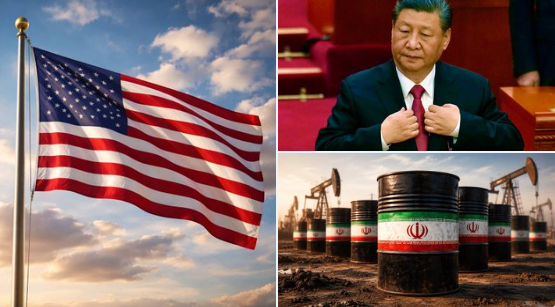
The United States has threatened to impose additional sanctions on Chinese oil refineries and companies that continue purchasing Iranian crude oil, escalating tensions between Washington and Beijing over Iran.
The warning comes in direct response to reports that China has instructed its refineries to ignore US sanctions and maintain imports of Iranian oil amid the ongoing US naval blockade in the Strait of Hormuz.
US Warning
US officials have signaled they are prepared to target Chinese entities involved in what Washington describes as sanctions evasion. The move aims to cut off a critical revenue stream for Iran and increase pressure on Tehran during sensitive negotiations.
The threat follows China’s recent directive to its companies to continue buying Iranian oil despite American sanctions.
Current Diplomatic and Economic Context
This latest development occurs as:
- Iranian Foreign Minister Abbas Araghchi is in Beijing holding high-level talks with Chinese officials.
- China has publicly called for the Strait of Hormuz to be reopened “as soon as possible.”
- The fragile US-Iran ceasefire remains in place, with President Trump expressing optimism that a broader deal could be reached before his summit with President Xi Jinping in Beijing next month.
- The US continues enforcing its naval blockade on Iranian-linked shipping, with reports of increased maritime risks in the strategic waterway.
China is Iran’s largest oil customer, and maintaining these imports is viewed in Beijing as essential for its energy security.
Strategic Implications
The US threat of secondary sanctions on Chinese refineries could:
- Further strain US-China relations ahead of the Trump-Xi summit.
- Complicate Beijing’s efforts to balance its strategic partnership with Iran and its economic ties with the United States.
- Impact global oil markets if Chinese imports are disrupted or rerouted.
Analysts note that previous attempts to sanction Chinese entities involved in Iranian oil trade have had limited long-term success due to China’s economic leverage and use of alternative payment and shipping mechanisms.
Reflecto News will continue monitoring official responses from Washington and Beijing, developments in the Araghchi visit, the status of the Hormuz blockade, and any progress toward a US-Iran agreement.
Frequently Asked Questions (FAQs)
Q1: What is the US threatening exactly?
The US is warning of additional sanctions on Chinese oil refineries and companies that continue buying Iranian oil in defiance of American sanctions.
Q2: Why is the US taking this step?
To reduce Iran’s oil revenue and pressure Tehran into accepting a comprehensive deal on its nuclear program and regional activities.
Q3: How has China responded to similar pressure in the past?
China has consistently rejected unilateral US sanctions, directed its companies to continue legitimate commercial trade, and criticized such measures as illegal.
Q4: What is the current status of Chinese oil imports from Iran?
China has reportedly instructed refineries to maintain purchases despite US sanctions and the ongoing Hormuz blockade.
Q5: Will this affect the upcoming Trump-Xi summit?
It is highly likely. Sanctions on Chinese entities, energy trade with Iran, and regional security are expected to be major discussion points.
Q6: How does this connect to the US-Iran ceasefire?
The US is using economic pressure, including secondary sanctions, to strengthen its negotiating position as efforts continue for a longer-term agreement with Iran.
For the latest updates on US-China relations, the Iran situation, the Strait of Hormuz crisis, and major power diplomacy, follow Reflecto News — your trusted source for accurate, timely, and balanced international coverage.
Questions people ask
What is China's current share of global manufacturing?
China now accounts for twenty eight percent of global manufacturing. This industrial output exceeds the combined manufacturing production of the United States, Japan, and Germany, making China the leading global industrial power according to recent reports.
Why were Andrew Tate and Tristan Tate arrested in Miami?
Andrew Tate and his brother Tristan Tate were taken into custody in Miami by the United States Marshals Service. They face thirty eight new charges in the United Kingdom, including rape and child pornography offences, and prosecutors are seeking their extradition.
What warning did Moscow issue about oil prices?
Kirill Dmitriev, the Chief Executive of the Russian Direct Investment Fund, warned that a tsunami of skyrocketing oil prices is approaching. Moscow describes this potential energy shock as a major threat to global markets.
What political shift is projected for Benjamin Netanyahu's coalition?
Political polls project that Prime Minister Benjamin Netanyahu's coalition is on track to lose its majority in the upcoming October election. This projection indicates a potential political shift in Jerusalem.
Why did a Russian military aircraft land in Tehran?
A Russian airborne command aircraft, widely known as a doomsday plane, landed in Tehran. The arrival of the aircraft represents a high stakes show of support from Russia for Iran during a period of heightened regional tensions.
What did President Masoud Pezeshkian claim about the United States and Israel?
Iranian President Masoud Pezeshkian claimed that the United States and Israel failed in a forty eight hour plan to topple the Iranian government. He made these statements during a televised address marking two years since his inauguration.