Reflecto News is an online news platform covering major international political events, global economic developments, and security conflicts. The site provides updates on topics such as Chinese manufacturing dominance, Middle Eastern political tensions, and high profile legal arrests. Readers can access current articles organized by categories like World News, Iran, and USA.
Published on Reflecto News | World News | Defense & Geopolitics
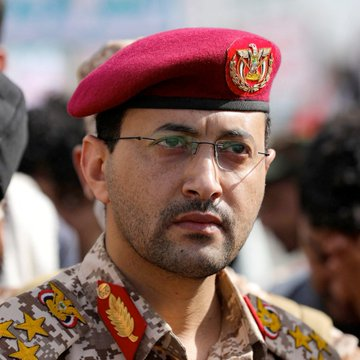
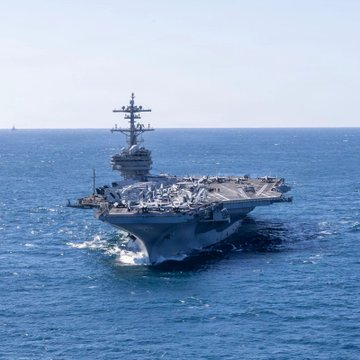
In an unprecedented strategic maneuver, the USS George H.W. Bush Carrier Strike Group is circumnavigating the African continent rather than taking the direct route through the Suez Canal, deliberately avoiding the Red Sea and the Bab el-Mandeb Strait—waters controlled by Yemen’s Iran-backed Ansar Allah (Houthi) movement .
The nuclear-powered aircraft carrier and its escorts—the destroyers USS Donald Cook, USS Mason, and USS Ross, along with the fast combat support ship USNS Arctic—are currently operating off the coast of Namibia as they make their way toward the Arabian Sea .
An Unprecedented Detour
The decision to reroute around the Cape of Good Hope represents a significant departure from standard naval procedure. Aircraft carriers departing from the U.S. East Coast for the Middle East typically transit the Strait of Gibraltar into the Mediterranean Sea before passing through the Suez Canal .
By taking the 13,000-mile route around Africa instead of the 6,500-mile Suez Canal route, the Bush strike group is adding weeks to its transit time. The extraordinary measure underscores the severity of the threat posed by Yemen’s Houthi forces, who have repeatedly demonstrated their ability to strike U.S. and commercial vessels in the Red Sea corridor.
A U.S. defense official confirmed to USNI News that the alternate route was chosen specifically to “avoid transiting the Red Sea and Bab el-Mandeb, both of which have been hotspots for Houthi drone and missile attacks on U.S. ships in 2024 and 2025” .
The Houthi Threat
The Houthi movement, officially known as Ansar Allah, has controlled large portions of Yemen’s Red Sea coastline since 2014. During the Gaza war, the group launched dozens of missile and drone attacks on commercial shipping, forcing major carriers to reroute around Africa and causing a 70% drop in Red Sea traffic .
While the Houthis have been largely quiet during the current US-Israeli war on Iran, they remain a key component of Tehran’s “Axis of Resistance” and retain the capability to strike maritime targets. U.S. intelligence officials have warned that Iran could activate its Yemeni proxies at any time to widen the conflict .
The group has publicly stated that closing the Bab el-Mandeb Strait—often called the “Gate of Tears”—remains one of its options if tensions escalate further .
Strategic Implications
The Bush’s detour comes as the U.S. enforces a naval blockade of Iranian ports, a operation that began April 13 and has already seen U.S. forces interdicting vessels in the Gulf of Oman . The carrier is expected to join the USS Abraham Lincoln and USS Gerald R. Ford, creating a rare three-carrier presence in the Middle East .
However, the fact that America’s most powerful warship is taking the “long way” to the theater sends an unintended message: the U.S. Navy is unwilling to risk its capital ships in waters where a non-state actor has demonstrated the ability to strike effectively .
Military experts note that while the Houthis’ arsenal has been degraded by U.S. strikes in 2025, the group remains a “resilient opponent.” An F/A-18 pilot who served in the Red Sea told the Wall Street Journal that “every transit was a gamble. You never knew if today was the day a missile would get through” .
A Double Chokepoint Crisis
The Bush’s detour highlights a broader strategic vulnerability: the U.S. ability to project power into the Persian Gulf is now constrained not only by Iran’s control of the Strait of Hormuz but also by the Houthis’ control of the Bab el-Mandeb.
This “double chokepoint” crisis has profound implications. With Iran restricting Hormuz and the Houthis threatening Bab el-Mandeb, the U.S. Navy’s ability to reinforce the Persian Gulf is significantly constrained .
| Chokepoint | Controlled By | Threat Level |
|---|---|---|
| Strait of Hormuz | Iran | Active blockade |
| Bab el-Mandeb | Houthis (Iran proxy) | Elevated risk; carrier avoids |
| Suez Canal | Egypt | Access requires safe Red Sea passage |
What Comes Next
The USS George H.W. Bush is expected to arrive in the Arabian Sea within two to three weeks, where it will join the blockade force. But its journey around Africa serves as a stark reminder: in this new era of asymmetric warfare, even the world’s most powerful navy must sometimes take the long way home.
Frequently Asked Questions (FAQs)
1. Why is the USS George H.W. Bush sailing around Africa instead of through the Suez Canal?
The carrier is avoiding the Red Sea and Bab el-Mandeb Strait to prevent attacks from Yemen’s Iran-backed Houthi forces, who have previously struck U.S. and commercial vessels in those waters with drones and missiles .
2. How long will the detour take?
The route around Africa adds approximately 6,500 miles and several weeks to the journey compared to the direct Suez Canal transit .
3. What ships are accompanying the Bush?
The strike group includes the destroyers USS Donald Cook, USS Mason, USS Ross, and the fast combat support ship USNS Arctic .
4. Is the Houthi threat still active?
While U.S. strikes in 2025 degraded Houthi capabilities, the group remains capable of launching attacks and has threatened to close the Bab el-Mandeb if the conflict escalates .
5. What is the purpose of the Bush’s deployment?
The carrier is heading to the Arabian Sea to support the U.S. naval blockade of Iranian ports, which began on April 13, 2026 .
Stay informed with Reflecto News – Your trusted source for breaking defense and geopolitical intelligence. Subscribe for real-time updates on the USS George H.W. Bush deployment, the Iran war, and Middle East security developments.
Questions people ask
What is China's current share of global manufacturing?
China now accounts for twenty eight percent of global manufacturing. This industrial output exceeds the combined manufacturing production of the United States, Japan, and Germany, making China the leading global industrial power according to recent reports.
Why were Andrew Tate and Tristan Tate arrested in Miami?
Andrew Tate and his brother Tristan Tate were taken into custody in Miami by the United States Marshals Service. They face thirty eight new charges in the United Kingdom, including rape and child pornography offences, and prosecutors are seeking their extradition.
What warning did Moscow issue about oil prices?
Kirill Dmitriev, the Chief Executive of the Russian Direct Investment Fund, warned that a tsunami of skyrocketing oil prices is approaching. Moscow describes this potential energy shock as a major threat to global markets.
What political shift is projected for Benjamin Netanyahu's coalition?
Political polls project that Prime Minister Benjamin Netanyahu's coalition is on track to lose its majority in the upcoming October election. This projection indicates a potential political shift in Jerusalem.
Why did a Russian military aircraft land in Tehran?
A Russian airborne command aircraft, widely known as a doomsday plane, landed in Tehran. The arrival of the aircraft represents a high stakes show of support from Russia for Iran during a period of heightened regional tensions.
What did President Masoud Pezeshkian claim about the United States and Israel?
Iranian President Masoud Pezeshkian claimed that the United States and Israel failed in a forty eight hour plan to topple the Iranian government. He made these statements during a televised address marking two years since his inauguration.