
Reflecto News is an online news platform covering major international political events, global economic developments, and security conflicts. The site provides updates on topics such as Chinese manufacturing dominance, Middle Eastern political tensions, and high profile legal arrests. Readers can access current articles organized by categories like World News, Iran, and USA.
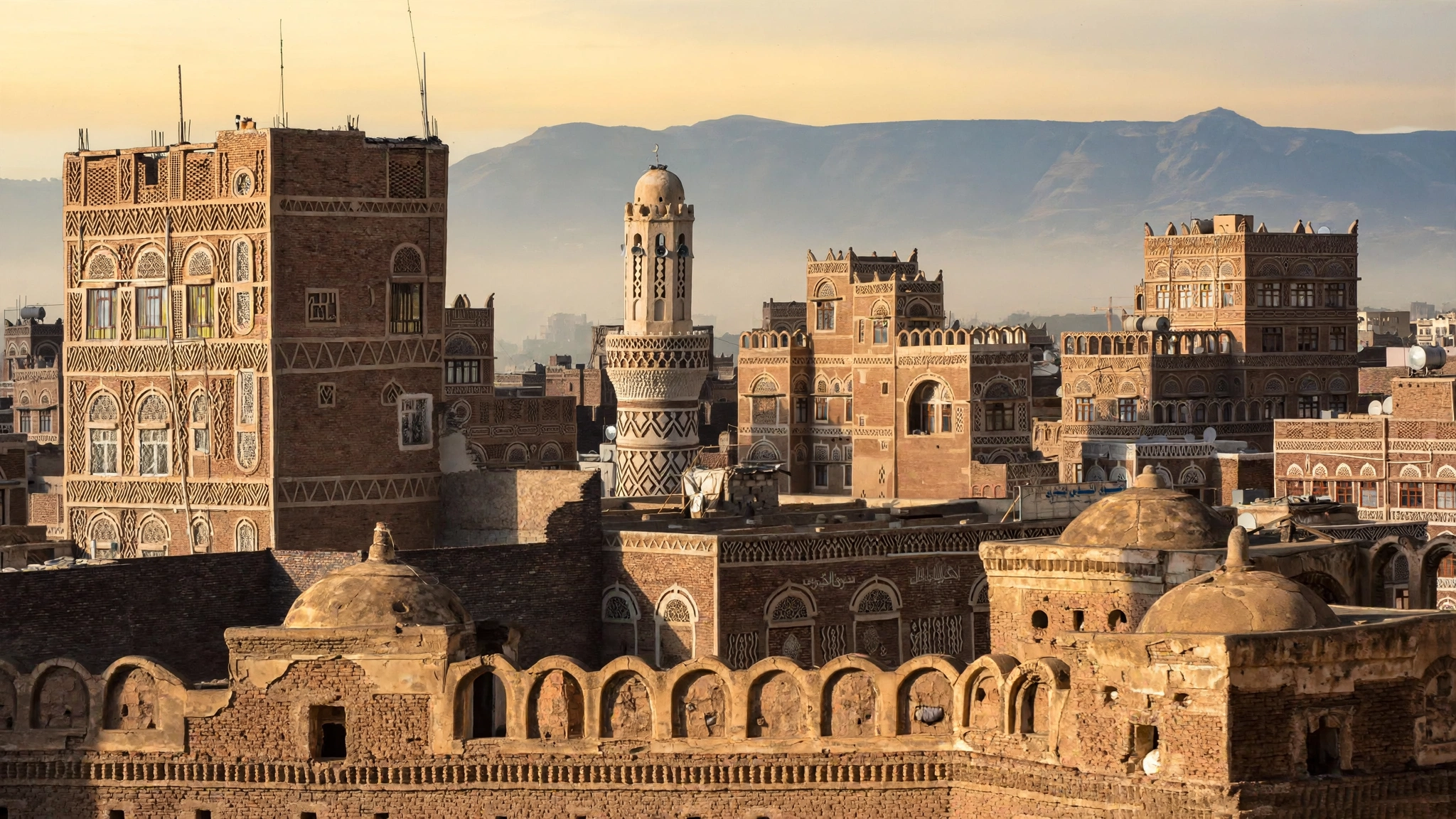
SANAA / RIYADH — The Saudi-led coalition said on Monday, October 26, 2026, that it had destroyed two ballistic missile launchers in Yemen’s capital, Sanaa, hours after Saudi air defences intercepted a Houthi missile fired toward Riyadh. The Saudi coalition strikes Sanaa targeted the launchers used in the attack, the coalition said, including the one that fired the missile at the Saudi capital.
Missile Intercepted Over Riyadh
Residents of Riyadh were woken by a Civil Defense alert on their mobile phones at 3:42 a.m. local time, warning of a possible “aerial threat,” according to Arab News. A second alert minutes later said the threat had passed. Coalition spokesman Maj. Gen. Turki Al-Maliki later confirmed that a ballistic missile launched toward Riyadh by the Houthi movement had been intercepted and destroyed by Saudi air defences. Al-Maliki, spokesman for the Coalition to Restore Legitimacy in Yemen, announced the Sanaa operation in posts on X, the social media platform. He said operations would continue to dismantle the Houthis’ ballistic missile network. The coalition said its response was aimed at the Houthis’ repeated attacks and attempts to target civilians, and that the operation complied with international law and humanitarian law.
Saudi Coalition Strikes Sanaa: What Was Destroyed
According to the coalition, its forces destroyed two ballistic missile launch sites in Sanaa, one of which had been used to launch the missile toward Riyadh. The operation also destroyed five tunnels used to store ballistic missiles, four launch platforms and a missile depot in areas under Houthi control, the coalition said. It also targeted fortifications and gatherings of Houthi fighters along front lines inside Yemen, and said it would continue efforts to dismantle the missile network and disrupt supply lines. Explosions were heard in Sanaa early on Monday, and media outlets affiliated with the Houthi movement reported airstrikes in the city, according to the Siasat newspaper. No casualty figures were disclosed, and the extent of the reported destruction could not be independently verified.
A Weekend of Attacks Across Saudi Arabia
The Sanaa operation followed a weekend of intensifying cross-border attacks. On Sunday, Saudi authorities reported that debris from two intercepted ballistic missiles had injured a Saudi citizen and an Asian expatriate resident in Khamis Mushayt and Ahad Rafidah. Three residential buildings and seven vehicles were damaged, according to a Civil Defense spokesperson. Debris also fell on Saturday at several locations in western Saudi Arabia, including Wadi Al-Mughammas, about 20 kilometres from the Grand Mosque in Makkah, as well as in Jeddah’s Al-Nuzha neighbourhood, Wadi Jalil in Taif and the Masturah Center in Rabigh governorate. Authorities did not report casualties from those incidents. The coalition said on Sunday that its air defences had intercepted and destroyed two drones and a ballistic missile launched toward Riyadh, as well as a cruise missile targeting the southern city of Khamis Mushayt. It subsequently announced the interception of 10 ballistic missiles fired toward southern Saudi Arabia. The barrage followed attacks on Saturday involving ballistic missiles aimed at Taif, Yanbu and Riyadh, as well as a drone targeting the Eastern Region, according to the coalition.
Houthi Claims and the Airport
Houthi military spokesman Yahya Saree claimed on Monday that the group had targeted King Khalid International Airport in Riyadh with a ballistic missile and oil pumping stations along Saudi Arabia’s East-West Pipeline with drones. He claimed the attacks had achieved their objectives, but there was no independent confirmation of direct hits or damage to the facilities, according to the South24 Center. The Houthis had also announced on Sunday evening that they had targeted the airport, an air base in Khamis Mushait and a Border Guard naval base in Jizan. Saree also claimed Houthi forces had shot down a Saudi-owned Wing Loong II reconnaissance drone over Yemen’s Taiz governorate. None of these claims could be independently verified. The renewed attacks came as authorities began a partial reopening of King Khalid International Airport on Sunday, following a deadly strike on October 10 that killed 13 people and injured more than 300, according to previous Arab News reporting. Airport officials said Terminal 1 had resumed limited domestic operations and Terminal 2 international flights operated by national carriers. The repeated attacks toward western Saudi Arabia have heightened concerns over the security of Islam’s holiest sites. Sheikh Abdulrahman Al-Sudais, president of Religious Affairs at the Grand Mosque and the Prophet’s Mosque, condemned the Houthi strikes toward the Makkah and Madinah regions on Sunday, describing the security and sanctity of the Two Holy Mosques as a “red line that must not be breached,” the Saudi Press Agency reported.
The Wider War in Yemen
The Yemeni army said on Sunday that its forces had “neutralised” around 218 Houthi fighters and field commanders in 753 operations over the past 24 hours, destroying or damaging 78 military vehicles and weapons. The army said the operations, conducted under Operation Dawn of Yemen, targeted command centres, fortifications, firing positions, troop concentrations, reinforcements and supply vehicles. It gave no breakdown of those killed or wounded, and there was no immediate comment from the Houthis. Yemen has been engulfed in conflict since the Houthis seized Sanaa and other provinces in 2014, prompting a Saudi-led coalition to intervene in 2015 in support of the internationally recognised government. The Houthis control much of northern and western Yemen, including Sanaa, while the government and allied forces retain Aden and substantial areas of the south and east. Renewed fighting has shifted front lines, particularly along the Red Sea coast, and control of some areas remains contested.
What Happens Next
The Saudi coalition strikes Sanaa are part of a wider campaign the coalition says will continue against Houthi missile capabilities. Neither side has published casualty figures for Monday’s exchange, and independent verification of the damage claimed in Sanaa is not yet available. The escalation comes amid an intensifying campaign of Houthi missile and drone attacks against Saudi Arabia, with projectiles targeting the capital, southern cities and areas in western Saudi Arabia, including locations near Makkah. The coming days are likely to show whether the strikes on the launchers slow the tempo of attacks or whether the cycle of strikes and counter-strikes continues.
Frequently Asked Questions
Q: What happened in Sanaa on October 26, 2026?
A: The Saudi coalition strikes Sanaa destroyed two ballistic missile launchers, according to the coalition, one of which had been used to fire a missile toward Riyadh. The coalition said the operation also destroyed missile storage tunnels, launch platforms and a depot.
Q: Was anyone hurt in the missile attack on Riyadh?
A: The missile fired toward Riyadh overnight was intercepted and destroyed, and no casualties were reported from that attack. On Sunday, debris from intercepted missiles injured two people in southern Saudi Arabia.
Q: Why did the coalition strike Sanaa?
A: According to the coalition, the operation was a response to repeated Houthi missile and drone attacks on Saudi Arabia, including the overnight missile fired at Riyadh.
Q: What is the war in Yemen about?
A: Yemen’s conflict began in 2014 when the Houthi movement seized the capital, Sanaa. A Saudi-led coalition intervened in 2015 in support of the internationally recognised government. The Houthis control the north and west; the government holds Aden and much of the south and east.
Questions people ask
What is China's current share of global manufacturing?
China now accounts for twenty eight percent of global manufacturing. This industrial output exceeds the combined manufacturing production of the United States, Japan, and Germany, making China the leading global industrial power according to recent reports.
Why were Andrew Tate and Tristan Tate arrested in Miami?
Andrew Tate and his brother Tristan Tate were taken into custody in Miami by the United States Marshals Service. They face thirty eight new charges in the United Kingdom, including rape and child pornography offences, and prosecutors are seeking their extradition.
What warning did Moscow issue about oil prices?
Kirill Dmitriev, the Chief Executive of the Russian Direct Investment Fund, warned that a tsunami of skyrocketing oil prices is approaching. Moscow describes this potential energy shock as a major threat to global markets.
What political shift is projected for Benjamin Netanyahu's coalition?
Political polls project that Prime Minister Benjamin Netanyahu's coalition is on track to lose its majority in the upcoming October election. This projection indicates a potential political shift in Jerusalem.
Why did a Russian military aircraft land in Tehran?
A Russian airborne command aircraft, widely known as a doomsday plane, landed in Tehran. The arrival of the aircraft represents a high stakes show of support from Russia for Iran during a period of heightened regional tensions.
What did President Masoud Pezeshkian claim about the United States and Israel?
Iranian President Masoud Pezeshkian claimed that the United States and Israel failed in a forty eight hour plan to topple the Iranian government. He made these statements during a televised address marking two years since his inauguration.