
Reflecto News is an online news platform covering major international political events, global economic developments, and security conflicts. The site provides updates on topics such as Chinese manufacturing dominance, Middle Eastern political tensions, and high profile legal arrests. Readers can access current articles organized by categories like World News, Iran, and USA.
By Reflecto News Desk
May 6, 2026
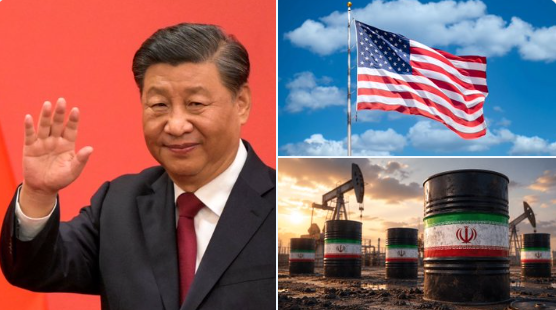
China has reportedly directed its oil refineries to disregard US sanctions and maintain purchases of Iranian crude oil, escalating tensions between Washington and Beijing amid the ongoing Strait of Hormuz crisis and the fragile US-Iran ceasefire.
The directive underscores China’s strategic priority of securing energy supplies and its unwillingness to comply with unilateral US measures targeting Iran’s oil exports.
Details of China’s Directive
According to sources familiar with the matter, Beijing has instructed major state-owned and independent refineries to continue importing Iranian oil through established channels, including its shadow fleet and ship-to-ship transfers. This move comes as the US enforces a naval blockade in the Strait of Hormuz, which has already disrupted Iranian oil flows and prompted reports of gunfire incidents involving merchant vessels.
China is Iran’s largest oil customer, purchasing millions of barrels daily despite international sanctions. The order aims to stabilize supply chains and protect Chinese energy security at a time when alternative sources face their own constraints.
Broader Context
The decision arrives as:
- Iranian Foreign Minister Abbas Araghchi prepares for high-level talks in Beijing with Chinese Foreign Minister Wang Yi.
- The short-term US-Iran ceasefire remains in effect but highly fragile.
- The US naval blockade continues, with CENTCOM claiming success in redirecting vessels while Iran adapts through offshore networks.
- President Trump recently claimed China had agreed not to supply weapons to Iran ahead of the expected Trump-Xi summit in Beijing.
China has consistently criticized the US blockade as destabilizing and has called for respect of Iran’s sovereignty. By prioritizing Iranian oil imports, Beijing is sending a clear signal that it will not allow US sanctions to dictate its energy policy.
Strategic Implications
This development could:
- Increase friction ahead of the Trump-Xi summit.
- Further strain US-China trade and economic relations.
- Bolster Iran’s ability to withstand economic pressure from the blockade.
- Encourage other nations to challenge unilateral US sanctions on energy trade.
Russia has already offered to help China replace any lost energy supplies, highlighting growing coordination among the three countries.
Reflecto News will continue monitoring official confirmations, reactions from Washington and Tehran, the impact on global oil markets, and outcomes from the upcoming Araghchi-Wang Yi meetings in Beijing.
Frequently Asked Questions (FAQs)
Q1: What exactly did China order its refineries to do?
China has instructed its oil refineries to ignore US sanctions and continue purchasing and processing Iranian crude oil.
Q2: Why is China taking this step?
To secure its energy supplies and protect economic interests, as Iran remains a critical oil supplier to China.
Q3: How does this relate to the US blockade in the Strait of Hormuz?
The blockade has disrupted traditional shipping routes, but China’s directive supports Iran’s efforts to maintain exports through alternative methods like its shadow fleet.
Q4: Will this affect the upcoming Trump-Xi summit?
It is likely to be a major point of discussion, adding to existing tensions over trade, tariffs, and regional security issues.
Q5: Has the US responded to this report?
No immediate official reaction has been reported, though Washington has previously warned third countries against evading sanctions on Iran.
Q6: What is the current status of Iran-China relations?
The partnership remains strong, with high-level diplomatic visits underway and deep economic ties, particularly in energy, despite US pressure.
For the latest updates on US-China relations, the Iran situation, the Strait of Hormuz developments, and global energy markets, follow Reflecto News — your trusted source for accurate, timely, and balanced international coverage.
Questions people ask
What is China's current share of global manufacturing?
China now accounts for twenty eight percent of global manufacturing. This industrial output exceeds the combined manufacturing production of the United States, Japan, and Germany, making China the leading global industrial power according to recent reports.
Why were Andrew Tate and Tristan Tate arrested in Miami?
Andrew Tate and his brother Tristan Tate were taken into custody in Miami by the United States Marshals Service. They face thirty eight new charges in the United Kingdom, including rape and child pornography offences, and prosecutors are seeking their extradition.
What warning did Moscow issue about oil prices?
Kirill Dmitriev, the Chief Executive of the Russian Direct Investment Fund, warned that a tsunami of skyrocketing oil prices is approaching. Moscow describes this potential energy shock as a major threat to global markets.
What political shift is projected for Benjamin Netanyahu's coalition?
Political polls project that Prime Minister Benjamin Netanyahu's coalition is on track to lose its majority in the upcoming October election. This projection indicates a potential political shift in Jerusalem.
Why did a Russian military aircraft land in Tehran?
A Russian airborne command aircraft, widely known as a doomsday plane, landed in Tehran. The arrival of the aircraft represents a high stakes show of support from Russia for Iran during a period of heightened regional tensions.
What did President Masoud Pezeshkian claim about the United States and Israel?
Iranian President Masoud Pezeshkian claimed that the United States and Israel failed in a forty eight hour plan to topple the Iranian government. He made these statements during a televised address marking two years since his inauguration.