Reflecto News is an online news platform covering major international political events, global economic developments, and security conflicts. The site provides updates on topics such as Chinese manufacturing dominance, Middle Eastern political tensions, and high profile legal arrests. Readers can access current articles organized by categories like World News, Iran, and USA.
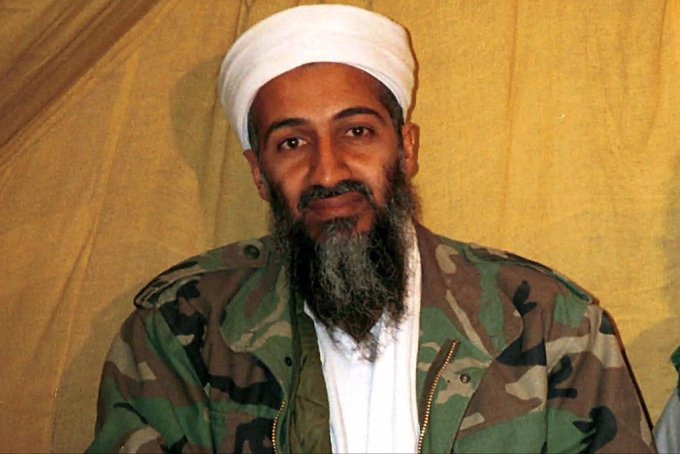
WASHINGTON — Fifteen years ago today, on May 2, 2011, a small team of U.S. Navy SEALs landed in the Pakistani city of Abbottabad under the cover of darkness and killed Osama bin Laden, the architect of the September 11, 2001, terrorist attacks that killed nearly 3,000 Americans .
The operation, code-named Operation Neptune Spear, brought to a close a nearly decade-long global manhunt for the al-Qaeda leader and remains one of the most celebrated special operations missions in American military history .
🛩️ The Raid: How It Unfolded
In the early hours of May 2, 2011 (local time), two MH-60 Black Hawk helicopters carrying 23 SEALs from the Naval Special Warfare Development Group (DEVGRU), a combat support team, and a Pakistani-American translator flew from Jalalabad, Afghanistan, into the Khyber Pakhtunkhwa province of northeastern Pakistan .
The operation targeted a large, three-story compound built in 2005 — roughly eight times larger than neighboring homes — located approximately 800 meters from the Pakistan Military Academy. The intelligence community had identified the compound as the likely hiding place of bin Laden’s “trusted courier,” Abu Ahmed al-Kuwaiti .
The Helicopter Crash and the Assault
One of the Black Hawks, tail number “149,” lost lift while attempting to hover above the compound wall — likely due to a “thermal vortex” effect caused by the high walls and warm air temperatures — and crashed into the vegetable garden on the southeast side of the yard. The SEAL team adapted instantly, breaching the compound on foot .
The SEALs cleared the compound in sections, moving from structure to structure:
- The guesthouse: Al-Kuwaiti and his brother Abrar were killed
- The main building (ground floor): Bin Laden’s courier and his family were detained.
- The first floor: Bin Laden’s son, Khalid, was killed.
- The second floor: Bin Laden was found in a third-floor bedroom, wearing a tan shalwar kameez.
According to official accounts, bin Laden ducked back into his room when he saw the SEALs approaching. The lead SEAL entered the dimly lit room and, seeing bin Laden’s “tall, thin figure,” shot him twice: once in the chest and once above the left eye. The al-Qaeda leader was dead within seconds .
The DNA Confirmation and Burial
Bin Laden’s identity was confirmed visually by multiple SEALs, including the lead assaulter who recognized the 6’4″ figure, through biometric facial recognition software, and through subsequent DNA analysis that provided a 99.9% match. The SEALs took custody of bin Laden’s body, loaded it onto the remaining operational helicopter, and flew to the aircraft carrier USS Carl Vinson in the North Arabian Sea .
Within 24 hours of his death, bin Laden’s body was washed, wrapped in a white sheet, placed in a weighted bag, and committed to the deep sea from the deck of the Vinson — in accordance with Islamic law, to prevent any gravesite from becoming a shrine or rallying point for his followers .
What the SEALs Found
The Abbottabad compound yielded a trove of intelligence, including:
- Five computers, 10 hard drives, 100 flash drives, and 100 DVDs
- Documents showing al-Qaeda’s continued interest in attacking U.S. rail lines, including plans to “derail a train on a bridge or cause an explosion on the tracks”
- Evidence of al-Qaeda’s ongoing media operations and leadership communications
The documents also revealed that bin Laden had continued to lead al-Qaeda from the compound, not merely serve as a symbolic figurehead .
🏛️ The Presidential Moment: Obama’s Gamble
The decision to launch the raid carried immense political risk for President Barack Obama.
The CIA had identified the Abbottabad compound in August 2010, but officials could not be 100% certain bin Laden was inside. Nothing above 80% confident, officials later testified . The Pakistani government was not notified in advance — a deliberate choice to prevent leaks that could warn bin Laden, but one that risked a major diplomatic incident and accusations of violating Pakistani sovereignty .
The mission was discussed during multiple National Security Council meetings in March and April 2011. Vice President Joe Biden and Defense Secretary Robert Gates both advised against launching the raid, preferring expanded airstrikes or further intelligence gathering. CIA Director Leon Panetta and Secretary of State Hillary Clinton, however, urged the President to proceed with the helicopter assault.
On April 30, 2011, Obama assembled his national security team in the Situation Room and gave the final order: “Go in and get Osama bin Laden; bring him back alive if possible; if not, bring him back dead.”
The iconic photograph of Obama, Clinton, Biden, Gates, Panetta, and others watching the operation in real-time from the Situation Room has become one of the most enduring images of his presidency. “I want to thank the men who carried out this operation,” Obama told the nation the following evening. “The death of bin Laden marks the most significant achievement to date in our nation’s effort to defeat al-Qaeda.”
🗳️ Trump on Obama and bin Laden
The bin Laden raid became an enduring political issue for former President Donald Trump, who repeatedly suggested — without evidence — that Obama had not actually made the critical decisions and that U.S. Navy SEALs had been “set up” to be killed.
At a 2025 rally, Trump said of Obama: “He didn’t kill bin Laden.”
Trump’s claims have been extensively fact-checked and debunked.:
- The photographs: Obama’s team in the Situation Room included dozens of officials, including Biden, Clinton, Gates, Panetta, and others — all of whom have confirmed his role .
- The 2012 60 Minutes interview: Obama personally described the conversation with Leon Panetta, saying, “I said, ‘It’s a go'” .
- Leon Panetta’s confirmation: The former CIA Director has stated repeatedly that the final order to proceed came from the White House Situation Room with Obama’s explicit approval .
The bin Laden raid, along with the death of Iranian Quds Force commander Qassem Soleimani (January 2020), represents a rare point of achievement that both President Obama and President Trump have claimed as a legacy-defining military success.
🕊️ Bin Laden’s Legacy: The Unfinished War
The death of bin Laden did not end the war on terror. Al-Qaeda’s affiliates continue to operate in Somalia, Yemen, and Syria, and the Islamic State (ISIS) — an al-Qaeda offshoot — emerged as a major threat in the years following the raid.
However, the Abbottabad operation remains a singular moment in U.S. military history: a high-risk, high-reward direct action mission that succeeded in eliminating the world’s most wanted terrorist and brought a measure of justice to the families of the nearly 3,000 Americans killed on September 11, 2001.
📋 Key Takeaways
| Aspect | Summary |
|---|---|
| Date of Operation | May 2, 2011 (local time) |
| Location | Abbottabad, Pakistan |
| Force | 23 SEALs from DEVGRU (Team 6) |
| Casualties | Osama bin Laden, his son Khalid, al-Kuwaiti, and one other killed |
| US Losses | One MH-60 helicopter crashed (recovered, no casualties) |
| Intelligence Recovered | 10 hard drives, 100 flash drives, 100 DVDs |
| Bin Laden’s Burial | Deep sea from USS Carl Vinson (within 24 hours) |
| US President | Barack Obama |
| Obama’s Poll Bump | +6% approval (Gallup) |
| Trump’s Position | Contends Obama did not give the order (false) |
| SEAL Team’s Fate | Remains classified; several SEALs still serving |
Follow Reflecto News for continuous coverage of U.S. military history, special operations, and all breaking news from around the world.
This article is the intellectual property of Reflecto News. Redistribution without attribution is prohibited. For syndication or media inquiries, please contact the editorial team.
Questions people ask
What is China's current share of global manufacturing?
China now accounts for twenty eight percent of global manufacturing. This industrial output exceeds the combined manufacturing production of the United States, Japan, and Germany, making China the leading global industrial power according to recent reports.
Why were Andrew Tate and Tristan Tate arrested in Miami?
Andrew Tate and his brother Tristan Tate were taken into custody in Miami by the United States Marshals Service. They face thirty eight new charges in the United Kingdom, including rape and child pornography offences, and prosecutors are seeking their extradition.
What warning did Moscow issue about oil prices?
Kirill Dmitriev, the Chief Executive of the Russian Direct Investment Fund, warned that a tsunami of skyrocketing oil prices is approaching. Moscow describes this potential energy shock as a major threat to global markets.
What political shift is projected for Benjamin Netanyahu's coalition?
Political polls project that Prime Minister Benjamin Netanyahu's coalition is on track to lose its majority in the upcoming October election. This projection indicates a potential political shift in Jerusalem.
Why did a Russian military aircraft land in Tehran?
A Russian airborne command aircraft, widely known as a doomsday plane, landed in Tehran. The arrival of the aircraft represents a high stakes show of support from Russia for Iran during a period of heightened regional tensions.
What did President Masoud Pezeshkian claim about the United States and Israel?
Iranian President Masoud Pezeshkian claimed that the United States and Israel failed in a forty eight hour plan to topple the Iranian government. He made these statements during a televised address marking two years since his inauguration.