🚨 JUST IN: US Treasury Secretary Scott Bessent Declares China “Will No Longer Be Able to Get Iranian Oil” Due to Hormuz Blockade
By Reflecto News Desk
April 15, 2026
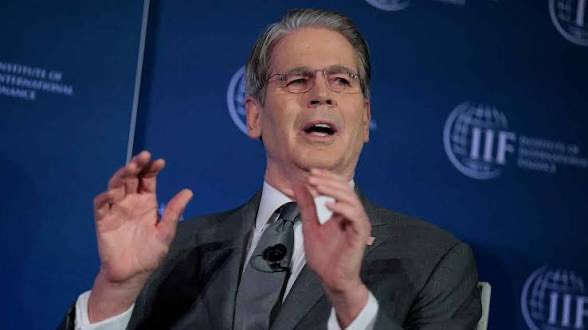
US Treasury Secretary Scott Bessent stated on Tuesday that the ongoing US naval blockade in the Strait of Hormuz will effectively cut China off from Iranian oil supplies.
“Those ships aren’t going to be allowed out anymore… they’re not going to be able to get their oil. They can get oil. Not Iranian oil,” Bessent told reporters on the sidelines of IMF-World Bank meetings.
He accused China of acting as an “unreliable global partner” by continuing to purchase and hoard discounted Iranian crude during the Middle East conflict, while limiting exports of certain goods — drawing parallels to China’s behavior during the COVID-19 pandemic.
Bessent’s Comments in Detail
Bessent noted that China has been buying more than 90% of Iran’s exported oil in recent periods, accounting for roughly 8% of China’s annual oil purchases. He emphasized that the blockade targets vessels linked to Iranian ports, aiming to deprive Tehran of revenue while the short-term ceasefire remains fragile.
The remarks come as the US enforces the blockade announced by President Donald Trump after high-level US-Iran talks in Islamabad collapsed without agreement on Iran’s nuclear program. US Central Command has reported that no ships have passed the blockade of Iranian ports in the initial phase, though vessels not tied to Iran continue to transit.
China’s Dependence on Iranian Oil
China is Iran’s largest customer for sanctioned oil, importing an average of over 1 million barrels per day in recent years. The Strait of Hormuz carries about 20% of global oil and LNG trade, making it a critical chokepoint for Beijing’s energy security.
Chinese officials have already condemned the blockade as “dangerous and irresponsible,” warning it risks escalating tensions and disrupting global energy flows. Beijing has urged all parties to respect the ceasefire and return to dialogue.
Escalating US-China Tensions
Bessent’s statement adds fuel to multiple flashpoints in US-China relations:
- Allegations (denied by Beijing) of potential Chinese arms or dual-use technology support to Iran, including the recently reported TEE-01B spy satellite acquisition by the IRGC.
- President Trump’s threat of 50% tariffs on countries supplying weapons to Iran, prompting China to vow “resolute countermeasures.”
- The fragile post-conflict environment following five weeks of US-Israeli operations that began in February 2026.
President Xi Jinping has described the broader international order as “crumbling into disarray” and has been actively engaging partners including Russia (via Foreign Minister Sergey Lavrov’s visit today), the Arab world, and Spain to promote multipolarity and stability.
The developments are likely to feature prominently in the upcoming Trump-Xi summit scheduled for May in Beijing.
Reflecto News will continue tracking enforcement of the Hormuz blockade, oil market reactions, shipping data, official responses from Beijing and Washington, and any impact on global energy prices.
Frequently Asked Questions (FAQs)
Q1: What exactly did Treasury Secretary Scott Bessent say?
Bessent stated that due to the US blockade, China “will not be able to get their oil” from Iran. He clarified that China can still import oil from other sources, but not Iranian crude, and criticized Beijing for hoarding discounted Iranian oil during the conflict.
Q2: Why is the US implementing the Hormuz blockade?
The blockade targets vessels entering or leaving Iranian ports to pressure Tehran economically after US-Iran talks failed over Iran’s nuclear program. It aims to reduce Iran’s oil export revenue while maintaining freedom of navigation for non-Iran-linked shipping.
Q3: How much Iranian oil does China import?
China has purchased more than 90% of Iran’s recent oil exports, representing around 8% of China’s total annual oil imports. Much of this has flowed at discounted rates under sanctions.
Q4: Has the blockade stopped all Iranian oil shipments?
US officials claim no ships have passed the blockade of Iranian ports in the initial phase. However, enforcement focuses on Iran-linked traffic, and some vessels continue transiting if not tied to Iranian ports.
Q5: What has China’s reaction been?
Beijing has called the blockade “dangerous and irresponsible,” warned of risks to global energy security, and urged de-escalation and dialogue. China denies providing military support to Iran.
Q6: Could this affect global oil prices and supply?
Yes. Any sustained disruption in the Strait of Hormuz could drive up prices and force China and other buyers to seek alternative (often more expensive) sources.
Q7: Will this impact the upcoming Trump-Xi summit?
The May summit is still planned, but the Hormuz blockade, oil access issues, tariff threats, and broader Iran-related allegations are expected to be major discussion points.
For ongoing coverage of the Strait of Hormuz situation, US-China relations, global energy markets, and the Iran ceasefire, follow Reflecto News — your trusted source for accurate, timely, and balanced international reporting.