Reflecto News is an online news platform covering major international political events, global economic developments, and security conflicts. The site provides updates on topics such as Chinese manufacturing dominance, Middle Eastern political tensions, and high profile legal arrests. Readers can access current articles organized by categories like World News, Iran, and USA.
Published on Reflecto News | World News | Energy Security & Geopolitics
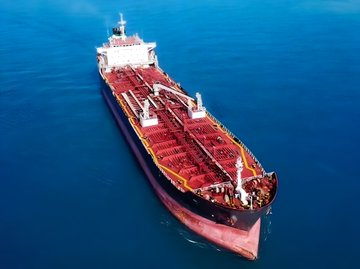
A Chinese-owned oil tanker under active U.S. sanctions has successfully completed its transit through the Strait of Hormuz, directly challenging President Donald Trump’s newly imposed naval blockade on Iran. The vessel, Rich Starry, is the first known tanker to exit the Persian Gulf since the blockade went into effect on April 13, and its successful passage raises urgent questions about Washington’s ability to enforce the sweeping maritime embargo .
The very large crude carrier (VLCC) loaded approximately 250,000 barrels of methanol at the UAE’s Port of Hamriyah before making its way through the strategic waterway. Reuters reported that the tanker has now “made it through the strait and is currently sailing toward Sohar, Oman” .
A Test of Resolve
The Rich Starry’s journey was a test of U.S. resolve. On its first attempt shortly after the blockade began, the tanker approached the narrow waterway near Iran’s Qeshm Island and abruptly turned back . On its second attempt, the vessel broadcast that it had a Chinese owner and crew—a deliberate signal to the U.S. Navy that the world’s largest oil importer was calling Washington’s bluff .
The tanker is owned by Shanghai Xuanrun Shipping Co Ltd, a company previously blacklisted by the Treasury Department for its dealings with Iran. The vessel itself is a medium-range tanker, and its successful transit marks a significant symbolic blow to the blockade, demonstrating that not all shipping is deterred by the U.S. naval presence .
Legal Nuances of the Blockade
The successful transit may have exploited a critical distinction in the blockade’s legal framework. According to U.S. Central Command (CENTCOM), the blockade is enforced “impartially against vessels of all nations entering or departing Iranian ports and coastal areas” . However, CENTCOM explicitly stated that it “will not impede freedom of navigation for vessels transiting the Strait of Hormuz to and from non-Iranian ports” .
The Rich Starry loaded its cargo at Hamriyah Port in the UAE—a non-Iranian port—and was exiting the Gulf rather than attempting to enter an Iranian port. This placed its transit in a legal gray area that the U.S. has not yet clarified .
A Second Tanker Follows Suit
Following the Rich Starry’s transit, another U.S.-sanctioned tanker, the Murlikishan, was detected heading into the strait on Tuesday . The empty handysize tanker, formerly known as MKA, has previously transported Russian and Iranian oil and is expected to load fuel oil in Iraq on April 16 . The vessel is owned by Full Star Shipping Ltd., which shares the same contact details as the sanctioned Shanghai Xuanrun Shipping, suggesting a network of vessels operating under U.S. sanctions .
China’s Warning to Washington
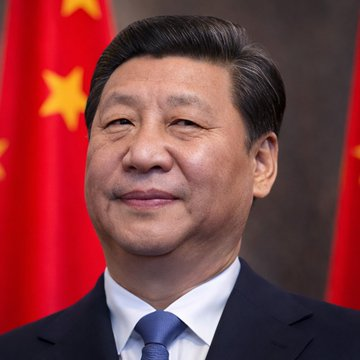
The tanker’s transit was preceded by a stern warning from Beijing. Chinese Defence Minister Admiral Dong Jun declared that Beijing would honor its trade and energy commitments with Tehran and cautioned Washington not to interfere in China’s affairs .
“Our ships are moving in and out of the waters of the Strait of Hormuz. We have trade and energy agreements with Iran. We will respect and honour those agreements and expect others not to interfere in our affairs.” — Admiral Dong Jun, Chinese Defence Minister
Admiral Dong also asserted that Iran controls the Strait and that it remains open for Chinese vessels .
What Comes Next
The successful passage of the Rich Starry raises critical questions about the future of the U.S. blockade:
| Question | Implication |
|---|---|
| Will the U.S. take enforcement action against future violators? | A direct confrontation with a Chinese state-linked vessel could spark a major diplomatic incident |
| Will other sanctioned tankers follow suit? | The Murlikishan is already heading into the strait |
| How will Iran respond to the blockade? | Tehran has condemned the blockade as “piracy” and threatened to close other ports |
| Will the second round of US-Iran talks proceed? | Expected April 16 in Islamabad or Geneva |
For now, China has called the first move in what one analyst called a “high-stakes game of chicken” — and the Rich Starry has made it through.
Frequently Asked Questions (FAQs)
1. Did the Rich Starry successfully transit the Strait of Hormuz?
Yes. According to Reuters and ship-tracking data, the tanker “made it through the strait and is currently sailing toward Sohar, Oman” .
2. Is the tanker carrying Iranian oil?
No. The Rich Starry loaded its cargo at Hamriyah Port in the United Arab Emirates, not an Iranian port. It was exiting the Gulf, not attempting to enter an Iranian port .
3. Why is the tanker sanctioned by the U.S.?
The tanker’s owner, Shanghai Xuanrun Shipping Co Ltd, was previously blacklisted by the Treasury Department for dealing with Iran .
4. Has the U.S. Navy intercepted the tanker?
No. The tanker completed its transit without being stopped, though the U.S. has not publicly commented on the specific case .
5. Are there other tankers attempting to transit?
Yes. Another U.S.-sanctioned tanker, the Murlikishan, was detected heading into the strait on Tuesday .
Stay informed with Reflecto News – Your trusted source for breaking energy security, defense, and geopolitical intelligence. Subscribe for real-time updates on the Strait of Hormuz crisis, US-China tensions, and global energy markets.
Questions people ask
What is China's current share of global manufacturing?
China now accounts for twenty eight percent of global manufacturing. This industrial output exceeds the combined manufacturing production of the United States, Japan, and Germany, making China the leading global industrial power according to recent reports.
Why were Andrew Tate and Tristan Tate arrested in Miami?
Andrew Tate and his brother Tristan Tate were taken into custody in Miami by the United States Marshals Service. They face thirty eight new charges in the United Kingdom, including rape and child pornography offences, and prosecutors are seeking their extradition.
What warning did Moscow issue about oil prices?
Kirill Dmitriev, the Chief Executive of the Russian Direct Investment Fund, warned that a tsunami of skyrocketing oil prices is approaching. Moscow describes this potential energy shock as a major threat to global markets.
What political shift is projected for Benjamin Netanyahu's coalition?
Political polls project that Prime Minister Benjamin Netanyahu's coalition is on track to lose its majority in the upcoming October election. This projection indicates a potential political shift in Jerusalem.
Why did a Russian military aircraft land in Tehran?
A Russian airborne command aircraft, widely known as a doomsday plane, landed in Tehran. The arrival of the aircraft represents a high stakes show of support from Russia for Iran during a period of heightened regional tensions.
What did President Masoud Pezeshkian claim about the United States and Israel?
Iranian President Masoud Pezeshkian claimed that the United States and Israel failed in a forty eight hour plan to topple the Iranian government. He made these statements during a televised address marking two years since his inauguration.