Reflecto News is an online news platform covering major international political events, global economic developments, and security conflicts. The site provides updates on topics such as Chinese manufacturing dominance, Middle Eastern political tensions, and high profile legal arrests. Readers can access current articles organized by categories like World News, Iran, and USA.
Published on Reflecto News | World News | Defense & Energy Security
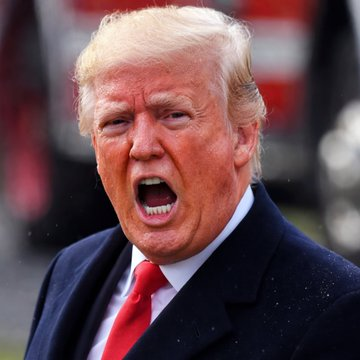
The United States naval blockade of Iranian ports is now fully in effect, with U.S. naval forces actively intercepting vessels in the strategic waters between Sohar, Oman, and Bandar Jask, Iran. The blockade, announced by President Donald Trump following the collapse of weekend peace talks in Islamabad, represents a dramatic escalation in the six-week conflict and marks the first time the U.S. Navy has enforced a maritime embargo against Iranian ports in decades.
According to U.S. Central Command (CENTCOM), the blockade applies to “all maritime traffic entering and exiting Iranian ports and coastal areas, including all Iranian ports on the Arabian Gulf and the Gulf of Oman” . The operation began at 10:00 a.m. Eastern Time on April 13, 2026 .
Interceptions Underway in the Gulf of Oman
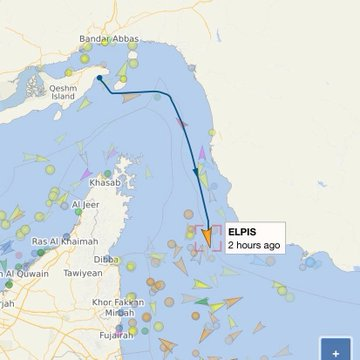
Shipping data and intelligence reports confirm that U.S. naval forces are actively interdicting vessels in the waters between Sohar, Oman, and Bandar Jask, Iran — a key transit corridor for vessels attempting to access or exit the Persian Gulf. The area lies just outside the Strait of Hormuz and has become the primary enforcement zone for the blockade.
Several tankers have already been affected:
- Rich Starry: A U.S.-sanctioned Chinese-linked tanker made multiple attempts to transit the strait. After an initial turn-back, it successfully passed through and is now bound for Sohar, Oman . Its status under the blockade remains unclear.
- Elpis: A U.S.-sanctioned tanker that had docked at an Iranian port appears to have stopped off the Iranian coast, potentially awaiting instructions .
- Guan Yuan Fu Xing: A China-linked bulk carrier made a sudden U-turn on its inbound passage .
Shipowners and energy traders are closely watching these transits to understand how the blockade will be enforced in practice. “The real issue is not simply whether ships can pass through Hormuz, but what spectrum of enforcement options U.S. warships apply, and where they choose to apply them,” said Charlie Brown, an advisor to United Against Nuclear Iran .
Legal Framework: Distinguishing Iranian Port Traffic
The blockade has a critical legal distinction: it applies specifically to vessels entering or departing Iranian ports, while CENTCOM has stated it “will not impede freedom of navigation for vessels transiting the Strait of Hormuz to and from non-Iranian ports” .
This creates a complex enforcement environment. The Rich Starry, for example, departed from Sharjah Anchorage in the United Arab Emirates — a non-Iranian port — and is bound for Sohar, Oman. Its transit through the strait is technically permitted under CENTCOM’s rules, even though the vessel itself is U.S.-sanctioned .
However, vessels that have called on Iranian ports — such as the Elpis — are considered legitimate targets for interception. Tracking data indicates the Elpis had docked at an Iranian port before attempting to exit the Gulf, placing it squarely within the blockade’s enforcement parameters .
Military Assets and Enforcement
The U.S. Navy has deployed significant assets to enforce the blockade, including:
- Destroyers capable of intercepting and boarding vessels
- P-8 Poseidon maritime patrol aircraft for surveillance
- Carrier strike groups in the region
- Mine countermeasure vessels (though the U.S. has acknowledged capability gaps following the retirement of legacy minesweepers)
CENTCOM has stated that the blockade will be enforced “impartially against vessels of all nations,” and that mariners should monitor Notice to Mariners broadcasts and contact U.S. naval forces on bridge-to-bridge channel 16 when operating in the Gulf of Oman and Strait of Hormuz approaches .
Iran’s Response: Threats of Retaliation
Iran has responded with defiance and threats of retaliation. The Islamic Revolutionary Guard Corps (IRGC) Navy has declared that the Strait of Hormuz remains under Iran’s “full control” and warned that any military vessels approaching the strait will be considered a ceasefire violation .
“Iranian naval forces are closely monitoring U.S. military activity in the region,” said Iranian naval commander Shahram Irani, calling the blockade “ridiculous” .
In a more ominous warning, Iranian military and Revolutionary Guard officials stated that “NO PORT in the region will be safe” if the blockade is enforced, threatening to close other strategic waterways in the Persian Gulf and Gulf of Oman .
Mohsen Rezaei, a military adviser and former Revolutionary Guard commander, wrote on social media that Iran’s armed forces have “major untouched levers” to counter the blockade .
International Reactions
Allied nations have reacted cautiously to the blockade.
- United Kingdom: Prime Minister Keir Starmer confirmed that Britain will not participate in the blockade, stating that the UK is “not getting dragged into the war” and is instead working with France on a separate maritime security coalition .
- Pakistan: Deputy Prime Minister Ishaq Dar called on all sides to respect ceasefire commitments and avoid further escalation .
- China: Foreign Minister Wang Yi has urged global stakeholders to push for peace talks between Tehran and Washington, expressing concern about the blockade’s impact on regional stability .
Market Impact
The blockade has already affected global oil markets. Brent crude oil rose to approximately $102 per barrel following the announcement, while U.S. crude reached $104 — significant increases from pre-war levels of roughly $70 per barrel .
What Comes Next
As the blockade enters its second day, several critical questions remain:
| Question | Current Status |
|---|---|
| Will the U.S. intercept vessels that have called on Iranian ports? | Unclear; enforcement rules are still being tested |
| How will Iran respond to interceptions? | Threats of retaliation remain |
| Will the ceasefire hold? | Fragile; expires April 22 |
| Will a second round of talks occur? | Expected April 16 in Islamabad or Geneva |
The blockade represents a high-risk gambit for the Trump administration. If successful, it could cripple Iran’s oil exports and force Tehran back to the negotiating table. If it triggers a military confrontation or drives oil prices even higher, it could have the opposite effect — and with Iran threatening “no port in the region will be safe,” the risk of escalation has never been higher.
Frequently Asked Questions (FAQs)
1. What is the legal basis for the US blockade?
The blockade is being enforced under presidential proclamation as an act of self-defense following the collapse of ceasefire talks. CENTCOM has stated it applies to vessels entering or departing Iranian ports, while not impeding vessels transiting the strait to non-Iranian ports .
2. Has any vessel been intercepted yet?
Several tankers have been affected. The Rich Starry, a U.S.-sanctioned Chinese-linked tanker, transited the strait and is bound for Oman. The Elpis, which had docked at an Iranian port, appears to have stopped off the Iranian coast and may be a target for interception .
3. Is the UK participating in the blockade?
No. Prime Minister Keir Starmer has confirmed Britain will not participate, stating the UK is “not getting dragged into the war” .
4. What has Iran said in response?
Iran has called the blockade “ridiculous” and warned that “no port in the region will be safe.” The IRGC has declared that the Strait of Hormuz remains under Iran’s “full control” .
5. What is the status of the ceasefire?
The two-week ceasefire announced on April 7 remains in effect until April 22, though its future is uncertain following the collapse of talks and the imposition of the blockade .
Stay informed with Reflecto News – Your trusted source for breaking defense, energy, and geopolitical intelligence. Subscribe for real-time updates on the US-Iran crisis, the Strait of Hormuz blockade, and global energy markets.
Questions people ask
What is China's current share of global manufacturing?
China now accounts for twenty eight percent of global manufacturing. This industrial output exceeds the combined manufacturing production of the United States, Japan, and Germany, making China the leading global industrial power according to recent reports.
Why were Andrew Tate and Tristan Tate arrested in Miami?
Andrew Tate and his brother Tristan Tate were taken into custody in Miami by the United States Marshals Service. They face thirty eight new charges in the United Kingdom, including rape and child pornography offences, and prosecutors are seeking their extradition.
What warning did Moscow issue about oil prices?
Kirill Dmitriev, the Chief Executive of the Russian Direct Investment Fund, warned that a tsunami of skyrocketing oil prices is approaching. Moscow describes this potential energy shock as a major threat to global markets.
What political shift is projected for Benjamin Netanyahu's coalition?
Political polls project that Prime Minister Benjamin Netanyahu's coalition is on track to lose its majority in the upcoming October election. This projection indicates a potential political shift in Jerusalem.
Why did a Russian military aircraft land in Tehran?
A Russian airborne command aircraft, widely known as a doomsday plane, landed in Tehran. The arrival of the aircraft represents a high stakes show of support from Russia for Iran during a period of heightened regional tensions.
What did President Masoud Pezeshkian claim about the United States and Israel?
Iranian President Masoud Pezeshkian claimed that the United States and Israel failed in a forty eight hour plan to topple the Iranian government. He made these statements during a televised address marking two years since his inauguration.