Reflecto News is an online news platform covering major international political events, global economic developments, and security conflicts. The site provides updates on topics such as Chinese manufacturing dominance, Middle Eastern political tensions, and high profile legal arrests. Readers can access current articles organized by categories like World News, Iran, and USA.
Published on Reflecto News | World News | Diplomacy & Conflict
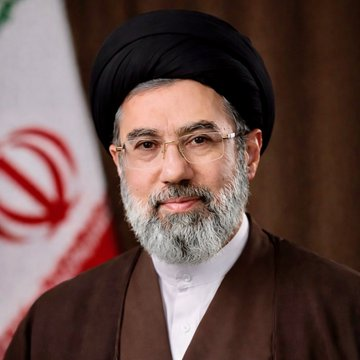
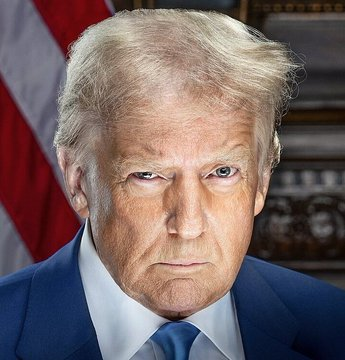
The second round of direct peace talks between the United States and Iran is likely to take place on Thursday, April 16, 2026, as both sides race to reach a deal before the fragile two-week ceasefire expires on April 21 . According to the Associated Press, discussions are underway about a potential meeting in either Islamabad, Pakistan, or Geneva, Switzerland, with Pakistani officials having formally proposed hosting the talks in the capital .
The potential resumption of face-to-face negotiations comes after the first round in Islamabad — the highest-level direct engagement between the two nations since the 1979 Islamic Revolution — concluded after nearly 21 hours without a formal agreement .
🔄 Backchannel Diplomacy Continues Despite Deadlock
Despite the lack of a breakthrough in the first round, diplomatic channels between Washington and Tehran remain open. A senior Pakistani government official told Reuters that Islamabad has reached out to Iran and received a “positive response” indicating Tehran’s willingness to return to the negotiating table .
A U.S. official confirmed that “continuous dialogue is underway between the U.S. and Iran, and progress toward an agreement is ongoing,” while another official noted “there is continued engagement and forward motion on trying to get an agreement” .
President Donald Trump told reporters on Monday that “we’ve been called by the other side” and that Iran “wants to work a deal very badly” . The White House has not officially confirmed the second round but has emphasized that “President Trump, Vice President Vance and the negotiating team have made the U.S. red lines very clear” .
📍 Islamabad vs. Geneva: The Venue Question
The location for the second round remains under discussion, with two potential venues emerging:
| Venue | Status | Considerations |
|---|---|---|
| Islamabad, Pakistan | Leading candidate; proposed by Pakistani officials | Familiar venue; Pakistan’s continued mediation role; “proximity, familiarity and comfort” for Iran |
| Geneva, Switzerland | Alternative under consideration | Neutral ground; potential U.S. preference for European venue |
According to AP sources, “Islamabad, Pakistan, was once again being discussed as the host location. The US officials also said Geneva was a possibility, and that while the venue and timing had not been decided, the talks could happen Thursday” .
A diplomat from one of the mediating countries went further, telling AP that Tehran and Washington have already agreed to a second round of talks . However, U.S. officials have been more cautious, stating that discussions are still underway .
⏰ The Ceasefire Clock
The urgency behind the second round stems from the approaching expiration of the two-week ceasefire on April 21, 2026 . The truce, brokered by Pakistan and announced on April 7, was explicitly conditioned on Iran’s agreement to the “COMPLETE, IMMEDIATE, and SAFE OPENING” of the Strait of Hormuz — a condition Iran has not met.
According to sources familiar with the discussions, the U.S. is considering extending the ceasefire deadline if progress is made in the coming days, allowing more time for negotiations .
📋 The Sticking Points: What Remains Unresolved
The first round of talks, which involved expert-level discussions across economic, military, legal, and nuclear committees, failed to bridge the gap on several core issues .
| Issue | U.S. Position | Iranian Position | Status |
|---|---|---|---|
| Nuclear enrichment suspension | 20 years | 5 years (offered) | Major gap |
| Enriched uranium stockpile | Ship out of Iran | Keep, but dilute | Unresolved |
| Strait of Hormuz | Immediate, full reopening | Only after final peace agreement | Fundamental disagreement |
| Sanctions relief | Phased relief tied to compliance | Complete lifting of all sanctions | Gap remains |
| Regional proxies | End support for Hamas, Hezbollah, Houthis | Non-negotiable | Deep divide |
Despite these disagreements, Pakistani officials characterized the first round as part of an “ongoing diplomatic process rather than a one-off effort” . A Pakistani official told Reuters that “the written outlines of demands and concessions have already been shared, so both parties are aware of the potential trade-offs” .
🤝 Pakistan’s Mediation Role
Pakistan has continued to play a central mediating role between Washington and Tehran. Deputy Prime Minister and Foreign Minister Ishaq Dar has held calls with his counterparts from Britain, China, Turkiye, Saudi Arabia, and Egypt, conveying a consistent message that “dialogue remains the only viable path forward” .
Turkish, Egyptian, and Omani mediators have also been involved in facilitating communication between the two sides . A diplomat based in the Middle East revealed that even after U.S. Vice President JD Vance left Islamabad, dialogue between mediators and the U.S. has continued .
🌍 Broader Regional Support
The international community has broadly welcomed Pakistan’s role in hosting the “Islamabad Talks” and facilitating dialogue . A coalition of nations — including Turkiye, Egypt, China, Saudi Arabia, and European allies — has urged both sides to uphold the ceasefire and return to the negotiating table .
Russia has also offered to serve as a custodian for Iran’s enriched uranium as part of any potential deal, though that proposal has not yet gained traction .
🚢 Pressure Remains: The Naval Blockade
Even as diplomatic channels reopen, the U.S. has maintained military pressure on Iran. The U.S. Navy began enforcing a naval blockade of Iranian ports on April 13, aiming to cut off Iran’s oil exports . White House Press Secretary Karoline Leavitt stated that “the Iranians’ desperation for a deal will only increase with President Trump’s highly effective Naval blockade now in effect” .
Iran has dismissed the blockade as “piracy” and warned of retaliation, but has not closed the door to further talks .
🔮 What Comes Next
As the Thursday deadline approaches, several factors will determine whether the second round of talks materializes:
| Factor | Current Status | Potential Impact |
|---|---|---|
| Venue agreement | Still under discussion | Could be resolved quickly |
| Delegation level | Unclear if same principals will attend | Lower-level talks may focus on technical issues |
| Ceasefire extension | Under consideration | Would provide more diplomatic runway |
| Iran’s response | “Positive response” received | Encouraging sign |
| U.S. red lines | Unchanged | Non-negotiable parameters include end to enrichment, dismantlement of facilities, retrieval of enriched uranium |
A U.S. official told CNN that “we need to be prepared to stand something up quickly should things head in that direction,” reflecting the administration’s readiness to act if Iran shows genuine willingness to compromise .
📊 Timeline of Events
| Date | Event |
|---|---|
| February 28, 2026 | US-Israeli strikes on Iran begin |
| April 7, 2026 | Two-week ceasefire announced, brokered by Pakistan |
| April 11-12, 2026 | First round of direct talks in Islamabad (~21 hours) |
| April 13, 2026 | U.S. naval blockade of Iranian ports begins |
| April 14, 2026 | Pakistan proposes second round; AP reports talks likely Thursday |
| April 16, 2026 (expected) | Potential second round of talks |
| April 21, 2026 | Ceasefire expiration date |
🌐 Conclusion: A Diplomatic Opening
The prospect of a second round of US-Iran peace talks represents a significant diplomatic opening, even as military tensions remain high. The fact that both sides are willing to return to the table — despite the failure of the first round to produce an agreement — suggests that neither Washington nor Tehran wants a return to full-scale war.
Pakistan’s continued mediation, the backchannel communications between the two sides, and the exchange of written outlines of demands and concessions all point to a diplomatic process that remains very much alive. Whether the second round can produce the breakthrough that eluded the first — bridging the gaps on Iran’s nuclear program, the Strait of Hormuz, and sanctions relief — will depend on the willingness of both sides to compromise.
For now, the world watches as Islamabad and Geneva emerge as potential venues for what could be a pivotal moment in the six-week conflict. As one diplomat noted, “the door is not closed yet” .
Frequently Asked Questions (FAQs)
1. When will the second round of US-Iran talks take place?
According to AP sources, the talks could happen on Thursday, April 16, 2026, though the venue and timing have not been finalized .
2. Where will the talks be held?
Two potential venues are under consideration: Islamabad, Pakistan (proposed by Pakistani officials) and Geneva, Switzerland (suggested by U.S. officials) .
3. Did the first round of talks make any progress?
While no formal agreement was reached, Pakistani officials characterized the talks as part of an “ongoing diplomatic process.” Vice President Vance said the talks “did make some progress,” and written outlines of demands and concessions have been exchanged .
4. What are the main sticking points?
Core disagreements remain on the duration of Iran’s nuclear pause (U.S. demands 20 years; Iran offered 5 years), the fate of Iran’s enriched uranium stockpile, control of the Strait of Hormuz, sanctions relief, and Iran’s support for regional proxies .
5. Is the ceasefire still in effect?
Yes, the two-week ceasefire announced on April 7 remains in effect until April 21, 2026, though its future depends on diplomatic progress .
6. What is the U.S. naval blockade?
The U.S. Navy began enforcing a blockade of Iranian ports on April 13, aiming to cut off Iran’s oil exports. The White House views the blockade as a pressure tactic to bring Iran back to the negotiating table .
7. Could the ceasefire be extended?
Yes. Depending on the pace of negotiations, the U.S. and Iran could extend the ceasefire deadline to allow more time for diplomacy, according to sources familiar with the talks .
Stay informed with Reflecto News – Your trusted source for breaking diplomatic and geopolitical intelligence. Subscribe for real-time updates on the US-Iran peace talks, ceasefire developments, and regional security.
Questions people ask
What is China's current share of global manufacturing?
China now accounts for twenty eight percent of global manufacturing. This industrial output exceeds the combined manufacturing production of the United States, Japan, and Germany, making China the leading global industrial power according to recent reports.
Why were Andrew Tate and Tristan Tate arrested in Miami?
Andrew Tate and his brother Tristan Tate were taken into custody in Miami by the United States Marshals Service. They face thirty eight new charges in the United Kingdom, including rape and child pornography offences, and prosecutors are seeking their extradition.
What warning did Moscow issue about oil prices?
Kirill Dmitriev, the Chief Executive of the Russian Direct Investment Fund, warned that a tsunami of skyrocketing oil prices is approaching. Moscow describes this potential energy shock as a major threat to global markets.
What political shift is projected for Benjamin Netanyahu's coalition?
Political polls project that Prime Minister Benjamin Netanyahu's coalition is on track to lose its majority in the upcoming October election. This projection indicates a potential political shift in Jerusalem.
Why did a Russian military aircraft land in Tehran?
A Russian airborne command aircraft, widely known as a doomsday plane, landed in Tehran. The arrival of the aircraft represents a high stakes show of support from Russia for Iran during a period of heightened regional tensions.
What did President Masoud Pezeshkian claim about the United States and Israel?
Iranian President Masoud Pezeshkian claimed that the United States and Israel failed in a forty eight hour plan to topple the Iranian government. He made these statements during a televised address marking two years since his inauguration.