Reflecto News is an online news platform covering major international political events, global economic developments, and security conflicts. The site provides updates on topics such as Chinese manufacturing dominance, Middle Eastern political tensions, and high profile legal arrests. Readers can access current articles organized by categories like World News, Iran, and USA.
Published on Reflecto News | World News | Defense & Energy Security
The United States military has intercepted at least two Iranian oil supertankers attempting to bypass the US naval blockade in the Indian Ocean, as Washington intensifies its global campaign to choke off Tehran’s oil revenues . The interceptions come amid a tense maritime standoff in the Strait of Hormuz that has seen Iranian forces seize two container ships and open fire on commercial vessels .
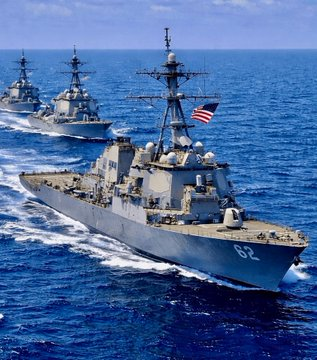
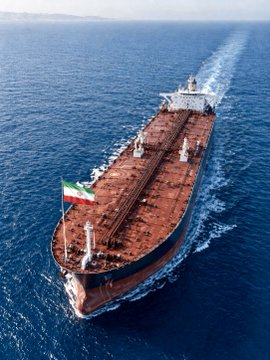
Two Supertankers Diverted: Dorena and Deep Sea
US Central Command (CENTCOM) confirmed on Wednesday that the Iranian-flagged supertanker Dorena has been under the escort of a US Navy destroyer in the Indian Ocean after attempting to violate the blockade . The vessel was fully loaded with approximately 2 million barrels of crude oil and was last seen three days ago off the coast of southern India before being intercepted .
A second vessel, the Iranian-flagged supertanker Deep Sea, which was partially loaded with crude, was also intercepted and redirected away from its position near Malaysia .
| Vessel Name | Cargo Status | Last Known Location |
|---|---|---|
| Dorena | Fully loaded (~2 million barrels) | Off southern Indian coast |
| Deep Sea | Partially loaded crude | Off Malaysian coast |
| Sevin | ~650,000 barrels (65% load) | Off Malaysian coast |
Sources: Reuters, shipping data, CENTCOM
The Sevin, a smaller tanker with a maximum capacity of 1 million barrels carrying 65% of its load, was also reportedly intercepted . US forces may have additionally intercepted the Iranian-flagged Derya tanker, which failed to discharge its cargo in India before a US sanctions waiver expired .
Tactical Shift: ‘By-Catch’ Operations in Open Seas
The interceptions reflect a strategic shift by the Pentagon. Rather than attempting to halt vessels in the mine-risky waters of the Strait of Hormuz, US forces are now conducting “by-catch” operations—targeting Iranian tankers far from Iranian shores in the open waters of the Indian Ocean .
This approach avoids the immediate threat of Iranian coastal defense systems, mines, and fast-attack craft, while still achieving the strategic goal of preventing Iranian oil from reaching buyers in Asia. According to a maritime security source, the US military is specifically targeting Iranian ships “away from the Strait of Hormuz and in open waters to avoid any risk of floating mines” .
Blockade Enforcement: 29 Vessels Turned Back
CENTCOM has confirmed that since the US naval blockade of Iranian ports began on April 13, American forces have directed 29 vessels to turn around or return to port . The vast majority of these interceptions involved civilian commercial shipping, with the majority being oil tankers .
Despite these numbers, the Financial Times reported Wednesday that at least 34 tankers with links to Iran have bypassed the US blockade since it was imposed, including six carrying Iranian crude totaling approximately 10.7 million barrels—valued at roughly $910 million .
Seizures: The Majestic X and Touska
On Thursday, the Pentagon announced the seizure of another oil tanker associated with the smuggling of Iranian oil. The Majestic X, a Guyana-flagged oil tanker previously sanctioned by the US Treasury in 2024 for smuggling Iranian crude, was seized in the Indian Ocean between Sri Lanka and Indonesia .
US forces had previously seized the Iranian-flagged cargo ship Touska in the Gulf of Oman on April 19 after it reportedly refused to comply with blockade directions. The vessel was disabled by gunfire and boarded by US Marines .
The Maritime War Escalates
The interceptions and seizures are part of a broader escalation of the “shadow war” at sea. Directly challenging the US blockade, Iranian forces attacked three cargo ships in the Strait of Hormuz on Wednesday, using gunfire to capture two of them: the MSC Francesca (Panama-flagged) and the Epaminondas (Liberia-flagged) .
The Islamic Revolutionary Guard Corps (IRGC) stated that the MSC Francesca was seized due to its alleged link to Israel . This tit-for-tat escalation underscores the high-risk environment now facing international shipping.
Oil Prices and Ceasefire Status
Brent crude oil has reacted sharply to the escalating conflict, spiking by approximately 35% to over $100 per barrel .
The interceptions come as a fragile ceasefire between the US and Iran, brokered by Pakistan, hangs in the balance. The truce, which was set to expire on April 22, was extended by President Trump, but the terms remain heavily contested . Iran has refused to send a delegation for a second round of talks until the US lifts its naval blockade of the Strait of Hormuz.
Frequently Asked Questions (FAQs)
1. What ships did the US intercept?
The US intercepted at least two Iranian-flagged supertankers: the Dorena (fully loaded with 2 million barrels) and the Deep Sea (partially loaded). The Sevin was also reportedly intercepted .
2. Where did the interceptions take place?
The interceptions occurred in the Indian Ocean, near the coasts of India and Malaysia, far from the Strait of Hormuz .
3. How many vessels has the US turned back since the blockade began?
CENTCOM has reported that US forces have directed 29 vessels to turn around or return to port since the blockade began on April 13 .
4. Is the US blockade successful?
The blockade has had mixed results. While the US has seized several vessels and turned back nearly 30 ships, at least 34 tankers have successfully bypassed the blockade, carrying approximately $910 million worth of Iranian crude .
5. What is the current status of the US-Iran ceasefire?
A fragile ceasefire is in effect, brokered by Pakistan. President Trump recently extended the truce, but diplomatic efforts to hold a second round of peace talks have stalled. Iran refused to send a delegation until the US lifts its naval blockade .
Stay informed with Reflecto News – Your trusted source for breaking defense, energy, and geopolitical intelligence. Subscribe for real-time updates on the US-Iran crisis, the Strait of Hormuz blockade, and global energy markets.
Questions people ask
What is China's current share of global manufacturing?
China now accounts for twenty eight percent of global manufacturing. This industrial output exceeds the combined manufacturing production of the United States, Japan, and Germany, making China the leading global industrial power according to recent reports.
Why were Andrew Tate and Tristan Tate arrested in Miami?
Andrew Tate and his brother Tristan Tate were taken into custody in Miami by the United States Marshals Service. They face thirty eight new charges in the United Kingdom, including rape and child pornography offences, and prosecutors are seeking their extradition.
What warning did Moscow issue about oil prices?
Kirill Dmitriev, the Chief Executive of the Russian Direct Investment Fund, warned that a tsunami of skyrocketing oil prices is approaching. Moscow describes this potential energy shock as a major threat to global markets.
What political shift is projected for Benjamin Netanyahu's coalition?
Political polls project that Prime Minister Benjamin Netanyahu's coalition is on track to lose its majority in the upcoming October election. This projection indicates a potential political shift in Jerusalem.
Why did a Russian military aircraft land in Tehran?
A Russian airborne command aircraft, widely known as a doomsday plane, landed in Tehran. The arrival of the aircraft represents a high stakes show of support from Russia for Iran during a period of heightened regional tensions.
What did President Masoud Pezeshkian claim about the United States and Israel?
Iranian President Masoud Pezeshkian claimed that the United States and Israel failed in a forty eight hour plan to topple the Iranian government. He made these statements during a televised address marking two years since his inauguration.