Reflecto News is an online news platform covering major international political events, global economic developments, and security conflicts. The site provides updates on topics such as Chinese manufacturing dominance, Middle Eastern political tensions, and high profile legal arrests. Readers can access current articles organized by categories like World News, Iran, and USA.
Published on Reflecto News | World News | Politics & Diplomacy
Exiled Iranian Crown Prince Reza Pahlavi has firmly rejected allegations that he is an asset of the Israeli government, instead characterizing himself as a “friend to Israel and the Jewish people.” The statement comes amid heightened speculation about the future of Iran’s political leadership, should the current regime fall, and Pahlavi’s potential role in a post-Islamic Republic transition .
“I am not an Israeli asset. I have never been an Israeli asset. I am, however, a friend to Israel and the Jewish people, as I am a friend to all those who seek peace, freedom, and democracy. There is a difference.” — Reza Pahlavi, Exiled Crown Prince of Iran
The distinction Pahlavi draws is significant: friendship with a nation is not the same as being controlled by its intelligence services. The allegation appears to stem from his long-standing advocacy for normalization between a future democratic Iran and Israel, a position that has drawn both support and criticism .
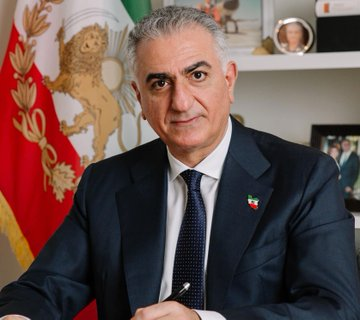

Who Is Reza Pahlavi?
Reza Pahlavi is the eldest son of the late Mohammad Reza Pahlavi, the last Shah of Iran, who was overthrown in the 1979 Islamic Revolution. He has lived in exile in the United States since childhood and has been an outspoken critic of the Islamic Republic for decades .
While he has not formally declared himself the leader of an opposition government-in-exile, he has positioned himself as a unifying figure for the secular opposition and a potential transitional leader should the regime collapse. His platform emphasizes human rights, democracy, and a return to Iran’s pre-revolutionary cultural identity .
Key facts about Reza Pahlavi:
| Aspect | Details |
|---|---|
| Born | October 31, 1960 (age 65) |
| Exile since | Age 17 (following 1979 revolution) |
| Residence | United States |
| Political stance | Calls for democratic, secular Iran |
| Position on Israel | Supports normalization after regime change |
Sources: Multiple reports
History of Allegations: Israeli Interference in Iran’s Opposition
This is not the first time that allegations of Israeli influence have surfaced regarding Iran’s exiled political opposition. Over the years, the Islamic Republic has consistently accused Western and Israeli intelligence services of infiltrating Iranian exile groups, a claim that is difficult to verify independently .
The intensified speculation likely stems from two factors:
- The war with Israel: Iran is currently engaged in a direct military conflict with Israel, raising the stakes of any political activity abroad
- The regime’s vulnerability: The Islamic Republic has been severely weakened by the war, and discussions about a post-regime transition have become more urgent
The Islamic Republic’s state media has long labeled Pahlavi a “foreign agent” and “Zionist puppet,” allegations he has consistently denied.
Pahlavi’s Position on Israel: Advocacy for Normalization
Pahlavi has not hidden his views on Israel. He has repeatedly expressed support for the Abraham Accords and has advocated for full normalization between a future democratic Iran and Israel, a position that aligns him with mainstream Western foreign policy but puts him at odds with the Islamic Republic’s foundational opposition to the Jewish state .
In past interviews, he has stated that Iranians “have no problem with the Jewish people or Israel” and that anti-Israel sentiment is a product of the regime’s propaganda. He has also called on the Iranian diaspora to engage with Jewish communities and to reject the regime’s “export of antisemitism.”
The ‘Asset’ Accusation: A Deliberate Smear
The specific allegation that Pahlavi is an “Israeli asset” — rather than simply a political ally — is a more serious charge. It implies not just political alignment but operational control by a foreign intelligence service.
Whether the accusation originates from the Iranian regime itself (as a smear tactic) or from rivals within the opposition is unclear. Either way, Pahlavi’s denial is unequivocal:
“The Islamic Republic has spent 45 years trying to convince the world that anyone who opposes them is a foreign agent. This is a lie. I oppose them because I love Iran and the Iranian people, not because any foreign power tells me to.” — Reza Pahlavi
Implications for a Post-Regime Transition
As the war weakens the Islamic Republic and diplomatic efforts to resolve the conflict remain stalled, the question of what comes next has become increasingly urgent.
| Factor | Current Status |
|---|---|
| Ceasefire | Extended, but fragile |
| Regime stability | Weakened but still in power |
| Opposition unity | Fractured; no clear leadership |
| International support | Unclear; Western nations divided |
Pahlavi’s potential role in any transition remains uncertain. While he has name recognition and a following among some segments of the diaspora, he lacks a formal political organization inside Iran and faces competition from other opposition figures .
What Comes Next
Pahlavi’s denial is unlikely to end the speculation about his ties to foreign intelligence services. As the conflict with Israel continues and the possibility of regime change looms, such allegations will likely intensify.
| Scenario | Likelihood | Impact on Pahlavi |
|---|---|---|
| Regime collapses | Uncertain | Could position him as transitional figure |
| Ceasefire holds; no regime change | Likely | Has limited influence |
| Iran-Israel conflict escalates | Elevated | May increase suspicion of his ties |
For now, Pahlavi has made his position clear: he is a friend of Israel, but not its asset. Whether that distinction will hold in the eyes of his critics remains to be seen.
Frequently Asked Questions (FAQs)
1. What did Reza Pahlavi say about being an Israeli asset?
Pahlavi flatly denied being an Israeli asset, stating: “I am not an Israeli asset. I have never been an Israeli asset. I am, however, a friend to Israel and the Jewish people.”
2. Who is Reza Pahlavi?
He is the exiled Crown Prince of Iran, the eldest son of the last Shah, Mohammad Reza Pahlavi. He has lived in exile in the United States since the 1979 Islamic Revolution.
3. What is his position on Israel?
Pahlavi supports normalization between a future democratic Iran and Israel, aligning with the Abraham Accords framework. He has stated that Iranians “have no problem with the Jewish people or Israel.”
4. Why is he being accused of being an Israeli asset?
The Islamic Republic’s state media has long labeled him a “foreign agent.” The accusation has intensified during the current war, as discussions about a post-regime transition have become more urgent .
5. Is Pahlavi the leader of the Iranian opposition?
No. He is one of several opposition figures but lacks a formal political organization inside Iran. He has positioned himself as a potential unifying figure in a post-regime transition .
6. What is the Islamic Republic’s view of Pahlavi?
The regime views him as a foreign-backed “agent” seeking to restore the monarchy. State media regularly attacks him as a “Zionist puppet.”
7. Could Pahlavi play a role in a post-regime Iran?
Possibly, but it is uncertain. While he has name recognition and a following among some segments of the diaspora, he faces competition from other opposition figures and lacks a formal political infrastructure inside Iran .
Stay informed with Reflecto News – Your trusted source for breaking political, opposition, and geopolitical intelligence. Subscribe for real-time updates on Iran’s political future, opposition movements, and regional developments.
Questions people ask
What is China's current share of global manufacturing?
China now accounts for twenty eight percent of global manufacturing. This industrial output exceeds the combined manufacturing production of the United States, Japan, and Germany, making China the leading global industrial power according to recent reports.
Why were Andrew Tate and Tristan Tate arrested in Miami?
Andrew Tate and his brother Tristan Tate were taken into custody in Miami by the United States Marshals Service. They face thirty eight new charges in the United Kingdom, including rape and child pornography offences, and prosecutors are seeking their extradition.
What warning did Moscow issue about oil prices?
Kirill Dmitriev, the Chief Executive of the Russian Direct Investment Fund, warned that a tsunami of skyrocketing oil prices is approaching. Moscow describes this potential energy shock as a major threat to global markets.
What political shift is projected for Benjamin Netanyahu's coalition?
Political polls project that Prime Minister Benjamin Netanyahu's coalition is on track to lose its majority in the upcoming October election. This projection indicates a potential political shift in Jerusalem.
Why did a Russian military aircraft land in Tehran?
A Russian airborne command aircraft, widely known as a doomsday plane, landed in Tehran. The arrival of the aircraft represents a high stakes show of support from Russia for Iran during a period of heightened regional tensions.
What did President Masoud Pezeshkian claim about the United States and Israel?
Iranian President Masoud Pezeshkian claimed that the United States and Israel failed in a forty eight hour plan to topple the Iranian government. He made these statements during a televised address marking two years since his inauguration.