Reflecto News is an online news platform covering major international political events, global economic developments, and security conflicts. The site provides updates on topics such as Chinese manufacturing dominance, Middle Eastern political tensions, and high profile legal arrests. Readers can access current articles organized by categories like World News, Iran, and USA.
Published on Reflecto News | World News | Geopolitics & Intelligence
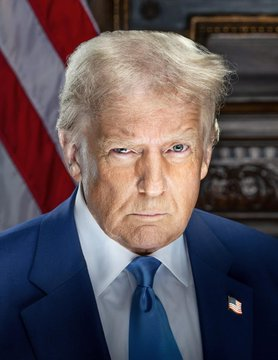
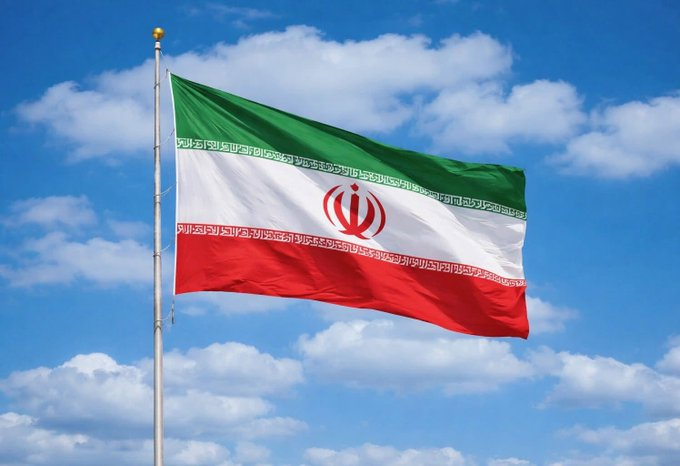
President Donald Trump has declared that Iran is experiencing a leadership crisis, stating that the country is having a “very hard time figuring out who their leader is.” The comments, made during a press briefing on Thursday, highlight what the administration sees as a critical vulnerability in Tehran’s power structure amid the ongoing conflict and fragile ceasefire .
“Iran is having a very hard time figuring out who their leader is. I think they’re confused. I think they’re in disarray. They don’t know who’s in charge. And that’s not a good situation for a country that wants to negotiate.” — President Donald Trump
The Succession Question
Trump’s statement reflects an assessment by US intelligence that Iran’s leadership transition has not gone smoothly. Supreme Leader Mojtaba Khamenei, who took power after the February 28 airstrike that killed his father, former Supreme Leader Ali Khamenei, has not appeared in public since the attack and is said to be severely wounded .
According to Reuters reporting, three sources close to Khamenei’s inner circle have disclosed that the 56-year-old leader suffered catastrophic injuries in the airstrike that killed his father, including: severe facial wounds leaving him “disfigured,” significant damage to one or both legs, and possible loss of one leg . One source familiar with U.S. intelligence assessments told Reuters he is believed to have lost one leg.
Despite the devastating physical toll, the sources emphasized that Khamenei remains “mentally sharp” and continues to govern—participating in high-level meetings via audio conference and playing a direct role in decisions on the war and negotiations with Washington .
‘They Don’t Know Who’s in Charge’
The practical question of who actually governs Iran has been a subject of intense debate since Mojtaba Khamenei’s incapacitation. While his formal authority remains, the IRGC has reportedly assumed “de facto control” of key state functions amid questions about the new Supreme Leader’s capacity to govern .
“Mojtaba will be one voice but it will not be the decisive one. He needs to prove himself as the credible, powerful, overriding voice. The regime as a whole has to make a decision in terms of where they are going to go.” — Alex Vatanka, Senior Fellow, Middle East Institute
The Islamic Revolutionary Guard Corps (IRGC), which helped steer Mojtaba into the role, has reportedly emerged as the dominant voice on strategic decisions during the war. This leadership ambiguity has complicated diplomatic efforts, as it is unclear who has the final authority to make and enforce commitments.
US Intelligence: ‘A Black Box at the Helm’
The uncertainty surrounding Iran’s leadership is not just a public observation—it reflects genuine intelligence gaps. U.S. agencies have struggled to definitively determine how command decisions are being made, which IRGC commanders hold ultimate authority, the health status of Mojtaba Khamenei, and whether Khamenei is capable of rendering final decisions.
Iran’s Leadership Ambiguity:
| Factor | Known | Unknown |
|---|---|---|
| New Supreme Leader | Mojtaba Khamenei, severely wounded | His health, location, decision-making capacity |
| IRGC control | Dominant in strategic decisions | Exact power-sharing arrangements |
| Internally | Power struggles between factions | Who holds ultimate authority |
| Negotiating authority | Who can commit Iran in talks | Not publicly established |
| Ceasefire decisions | Made by consensus (?) | Actual decision-making process |
Sources: Reuters, multiple reports
Former CIA Director Bill Burns has previously noted that understanding Iran’s internal power dynamics is “one of the hardest targets in intelligence.”
Implications for Ceasefire Negotiations
The leadership ambiguity has direct implications for the fragile Pakistan-brokered ceasefire. Iran’s refusal to send a delegation to Islamabad for a second round of peace talks may reflect not only strategic calculation but also genuine uncertainty about who has the authority to negotiate—and on what terms.
| Factor | Status |
|---|---|
| Ceasefire | Extended, but fragile |
| Iran’s negotiating position | No delegation to Islamabad until blockade lifted |
| IRGC’s stance | Hardline; opposes negotiating under “threat” |
| President Pezeshkian | Has signaled openness to diplomacy |
| Supreme Leader Khamenei | Severely wounded; governing remotely |
Sources: Multiple news reports
The delegation remains at home. The Marines are at sea. And the Supreme Leader is governing via audio conference.
Personal Rivalries and Policy Paralysis
Beyond the constitutional ambiguity, personal rivalries are paralyzing decision-making. The IRGC has used its leverage over the Strait of Hormuz to flex its power over internal rivals, including Parliament Speaker Mohammad Bagher Ghalibaf, who would likely lead any Iranian negotiating team .
The rivalry between the IRGC and civilian leadership has been a persistent feature of the Islamic Republic’s internal politics. During wartime, however, the balance of power has shifted decisively toward the military, with the Guard assuming effective control over strategic decisions.
What Comes Next
Trump’s characterization of Iranian leadership confusion is not likely to ease diplomatic tensions. If anything, it reinforces the administration’s view that Tehran is not capable of making a coherent deal—and that maximum pressure is the only language the regime understands.
| Scenario | Likelihood | Implication |
|---|---|---|
| Leadership stabilized | Uncertain | Could enable negotiations |
| IRGC consolidates control | Likely | Harder-line negotiating position |
| Power struggle intensifies | Possible | Policy paralysis in Tehran |
| Ceasefire persists without deal | Likely | Neither war nor peace |
For now, President Trump’s message is clear: in his view, Iran is too disorganized to negotiate, and the United States will continue to apply pressure until that changes.
Frequently Asked Questions (FAQs)
1. What did President Trump say about Iran’s leadership?
Trump stated that Iran is having a “very hard time figuring out who their leader is,” suggesting confusion and disarray within the country’s power structure.
2. Who is Iran’s Supreme Leader?
Ayatollah Mojtaba Khamenei became Supreme Leader after the February 28 airstrike that killed his father, former Supreme Leader Ali Khamenei.
3. Is Mojtaba Khamenei healthy?
According to Reuters reporting, Khamenei suffered catastrophic injuries in the February 28 strike, including severe facial wounds and the possible loss of one leg. He has not appeared in public since and is governing via audio conference.
4. Who is really running Iran?
The IRGC has reportedly assumed “de facto control” of key state functions amid questions about the new Supreme Leader’s capacity to govern. The Guard is the dominant voice on strategic decisions.
5. How does this affect ceasefire negotiations?
The leadership ambiguity complicates negotiations. Iran has refused to send a delegation to Islamabad for a second round of talks until the US lifts its naval blockade, but it is unclear who in Tehran has the final authority to negotiate.
6. Is there a power struggle in Tehran?
Yes. The IRGC has used its leverage over the Strait of Hormuz to flex its power over internal rivals, including Parliament Speaker Mohammad Bagher Ghalibaf.
7. What is the status of the Supreme Leader’s health?
Details are scarce, but the sources described him as “mentally sharp” but severely physically wounded, governing via audio conference from an undisclosed location.
Stay informed with Reflecto News – Your trusted source for breaking intelligence, geopolitical, and diplomatic reporting. Subscribe for real-time updates on the US-Iran standoff, Iranian leadership developments, and global security.
Questions people ask
What is China's current share of global manufacturing?
China now accounts for twenty eight percent of global manufacturing. This industrial output exceeds the combined manufacturing production of the United States, Japan, and Germany, making China the leading global industrial power according to recent reports.
Why were Andrew Tate and Tristan Tate arrested in Miami?
Andrew Tate and his brother Tristan Tate were taken into custody in Miami by the United States Marshals Service. They face thirty eight new charges in the United Kingdom, including rape and child pornography offences, and prosecutors are seeking their extradition.
What warning did Moscow issue about oil prices?
Kirill Dmitriev, the Chief Executive of the Russian Direct Investment Fund, warned that a tsunami of skyrocketing oil prices is approaching. Moscow describes this potential energy shock as a major threat to global markets.
What political shift is projected for Benjamin Netanyahu's coalition?
Political polls project that Prime Minister Benjamin Netanyahu's coalition is on track to lose its majority in the upcoming October election. This projection indicates a potential political shift in Jerusalem.
Why did a Russian military aircraft land in Tehran?
A Russian airborne command aircraft, widely known as a doomsday plane, landed in Tehran. The arrival of the aircraft represents a high stakes show of support from Russia for Iran during a period of heightened regional tensions.
What did President Masoud Pezeshkian claim about the United States and Israel?
Iranian President Masoud Pezeshkian claimed that the United States and Israel failed in a forty eight hour plan to topple the Iranian government. He made these statements during a televised address marking two years since his inauguration.