Reflecto News is an online news platform covering major international political events, global economic developments, and security conflicts. The site provides updates on topics such as Chinese manufacturing dominance, Middle Eastern political tensions, and high profile legal arrests. Readers can access current articles organized by categories like World News, Iran, and USA.
US Navy has spent weeks clearing a safe corridor, warning the normal route is “extremely hazardous”—while reports suggest Iran may not know exactly where all of its mines are located.
WASHINGTON — A recent American intelligence assessment has confirmed that US forces have identified at least 10 naval mines planted by Iran in the strategic Strait of Hormuz, according to multiple US officials with knowledge of the matter .
The discovery, first reported by CBS News on Wednesday citing the latest intelligence assessment, follows earlier reports from March that indicated at least a dozen underwater mines were present in the strait . The mines are believed to be of Iranian manufacture, including Maham 3 and Maham 7 Limpet mines, according to previous US intelligence .
The detection of these mines has effectively paralyzed one of the world’s most critical energy chokepoints, through which approximately 20 percent of global oil supplies and a quarter of liquefied natural gas exports normally pass .
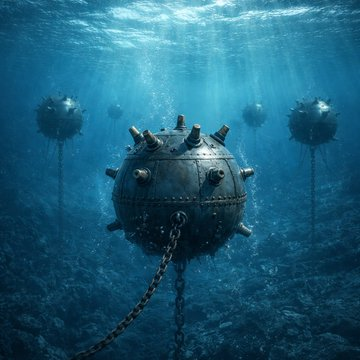
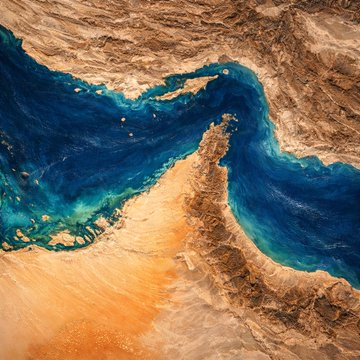
Types of Iranian Mines in the Strait
According to previous US intelligence reports cited by CBS News, Iran has deployed two distinct types of naval mines in the strait, both domestically manufactured :
| Mine Type | Description | Capabilities |
|---|---|---|
| Maham 3 | Moored naval mine tethered to an anchor | Uses magnetic and acoustic sensors to detect nearby vessels without physical contact; can engage targets within about 10 feet; analyzes movement to determine optimal activation moment |
| Maham 7 | “Sticking mine” designed to rest on seabed | Relies on combination of acoustic and three-axis magnetic sensors; targets medium-sized ships, landing craft, and smaller submarines |
The latest US intelligence assessment did not specify which types of mines were recently discovered .
The Challenge: A “Chaotic” Minefield
The threat posed by Iranian mines extends beyond their destructive potential. The manner in which they were deployed has created what experts describe as a “chaotic” minefield, presenting unique challenges for any clearance operation .
A report by The New York Times, cited by Al-Ahram Weekly, quoted officials as saying that Iran “may not have accurate records of the locations of all the mines it has laid” . The report further suggested that underwater mine planting may have been “carried out in a random and disorganised” fashion .
More strikingly, the report indicated that Iran is finding it increasingly difficult to reopen the Strait of Hormuz due to its inability to locate all the naval mines it planted during the recent conflict, in addition to the possibility of some being swept away by sea currents .
This assessment has been corroborated by other sources. According to a report cited by Yeni Şafak, Iran has been unable to completely reopen the strait because it cannot locate all the sea mines it deployed and lacks the capacity to remove them quickly . While Tehran has kept a narrow, toll-based corridor open, US officials say safe routes remain limited because some mines may have drifted or were not properly recorded during deployment .
US Navy Response: Clearing a Safe Corridor
The US Navy has spent weeks clearing mines from a route in the Strait of Hormuz meant for the safe passage of commercial ships . The US has warned that transiting the normal route could be “extremely hazardous” due to mines laid by Tehran .
The Pentagon has displayed a graphic indicating that Iran laid new mines in the strait as recently as April 23 —after the April 8 ceasefire brokered by Pakistan took effect .
Earlier this month, the US military began directing commercial ships toward a route farther from Iran that the Navy has spent weeks clearing of mines . The US has been targeting mine-laying vessels throughout the conflict, with officials estimating that airstrikes have wiped out 90 percent of Iran’s once-formidable mine stockpile .
President Trump has authorized the US Navy to “shoot and kill” any Iranian boats suspected of laying mines in the strait, even during the ceasefire .
The Demining Challenge: How Long Will It Take?
The timeline for fully clearing the Strait of Hormuz remains uncertain, with estimates varying dramatically depending on operational conditions.
Without Hostile Interference
If Iran refrains from attacking mine-hunting ships, RAND senior engineer and mine warfare expert Scott Savitz estimates the operation could be completed in a matter of days .
With Hostile Interference
However, if Iran continues to fire projectiles or deploy small attack boats, the timeline could extend to months . Mine countermeasures assets move slowly, in predictable patterns, and largely lack self-defense capabilities, making them “perfect targets” for hostile action .
The US Pentagon has estimated that it could take up to six months to fully demine the strait under adverse conditions . The military would be able to begin such an operation only after the war between the United States and Iran ends .
Technical Difficulties
Beyond the threat of attack, the demining operation faces significant multi-layered challenges :
| Challenge | Description |
|---|---|
| Random deployment | Mines were planted quickly and chaotically, making them harder to detect than organized minefields |
| Water currents | Tidal changes and currents can alter mine locations, potentially re-contaminating cleared areas |
| Maritime noise | Heavy ship traffic in the busy strait can impede sonar effectiveness |
| Mine sophistication | Bottom-mounted influence mines are harder to detect than traditional floating mines |
| Mistaken identity | Some mines may be mistaken for rocks or covered by sand |
| Target vulnerability | Minesweeping ships are vulnerable to attack in the narrow corridor |
The fact that simple fishing boats and conventional vessels can now plant mines—no longer requiring specialized military vessels—has compounded the challenge .
Iran’s Mining Campaign: A War of Attrition
Iran’s use of naval mines is not new. The Islamic Revolutionary Guard Corps (IRGC) has accumulated extensive experience in mine warfare over the past five decades, using naval mines as a key weapon during the “Tanker War” phase of the Iran-Iraq war (1980-1988) .
Even before the outbreak of the current conflict, estimates suggested the IRGC Navy possessed an arsenal of approximately 5,000 to 6,000 naval mines . The stock included a variety of explosives, ranging from conventional contact mines to advanced influence mines equipped with magnetic, acoustic, and pressure sensors .
| Mine Type | Description |
|---|---|
| Moored contact mines | Classic “spiky ball” mines tethered to anchor; detonate on physical contact |
| Bottom influence mines | Rest on seabed; use magnetic/acoustic/pressure sensors; harder to detect |
| Drifting mines | Can be attached to weighted block by cable or drift freely with currents |
Iran’s strategy relies on the asymmetric advantage of mines: deploying them is cheap and easy, while clearing them is slow, expensive, and sophisticated .
International Response: Coalition for Demining
The threat to global shipping has prompted international action. Britain and France have led talks on a potential naval effort in the region to assist global shipping, with both countries “pre-positioning” warships nearby .
Italy has confirmed its readiness to contribute to mine-clearing operations once the current situation has stabilized and a state of peace and diplomatic balance has been restored to the area . Italian Foreign Minister Antonio Tajani stressed that securing international navigation in the strait “remains the primary challenge uniting Western powers.”
The Ukrainian Navy has also expressed readiness to join mine clearance efforts .
US Resolution at the UN
The United States and Bahrain have submitted a draft resolution to the UN Security Council that condemns Iran’s “continued acts and threats to block, obstruct, and deploy mines in the Strait of Hormuz” and calls for immediate action to cease attacks, reveal mine locations, and refrain from impeding clearance efforts .
However, the resolution is likely to face vetoes from Russia and China, both of which blocked a similar measure last month, arguing it was biased against Iran . Russia’s Permanent Representative to International Organizations in Vienna, Mikhail Ulyanov, stated that Moscow shares Beijing’s position that the resolution is “not right” .
The Perception Problem: “You Just Need People to Perceive a Threat”
Perhaps the most insidious aspect of the mine threat is psychological. As Scott Savitz of RAND noted: “Keep in mind, the number of mines you need to create an effective minefield is zero. You just need people to perceive that there’s a threat there” .
This perception has already driven up insurance costs and shipping rates, contributing to global energy price volatility even before any vessel has struck a mine. The uncertainty surrounding the minefields—compounded by questions about whether mines have drifted, been swept away, or remain in undocumented locations—has created a deterrent effect far beyond the actual number of mines in the water .
The Diplomatic Context
The mine discovery comes at a critical juncture in US-Iran relations. A Pakistan-brokered ceasefire has been in place since April 8, halting major hostilities after 40 days of US-Israeli strikes on Iran . However, talks in Islamabad have failed to produce a lasting agreement .
President Trump announced earlier this week that he was “an hour away” from ordering new military strikes on Iran, delaying only at the request of Gulf allies who believe a diplomatic deal may be possible [citation:previous coverage]. Trump has instructed the US military to remain prepared for a “full, large-scale assault” if an acceptable agreement is not reached .
For now, the mines remain in the water, the strait remains largely closed to normal commercial shipping, and the world waits to see whether diplomacy or military action will determine the fate of this vital waterway.
Frequently Asked Questions (FAQs)
Q1: How many mines has the US detected in the Strait of Hormuz?
A: US intelligence has identified at least 10 mines in the strait, according to a recent assessment reported by CBS News on May 19, 2026 . A previous assessment in March had indicated at least a dozen mines .
Q2: What types of mines is Iran using?
A: Iran has deployed two types of domestically manufactured mines: the Maham 3, a moored naval mine that uses magnetic and acoustic sensors, and the Maham 7, a bottom-mounted “sticking mine” that relies on acoustic and three-axis magnetic sensors .
Q3: Can Iran remove the mines itself?
A: Reports indicate that Iran is struggling to locate all the mines it laid because deployment may have been carried out in a “random and disorganized” fashion . Some mines may have drifted due to currents, and Iran lacks sufficient rapid-clearing assets .
Q4: How long will it take to clear the Strait of Hormuz?
A: Estimates vary significantly. RAND expert Scott Savitz estimates clearance could take a matter of days if Iran does not interfere, but months if hostile action continues . The Pentagon has estimated up to six months .
Q5: What is the US doing about the mine threat?
A: The US Navy has spent weeks clearing a safe corridor and has warned commercial ships that the normal route is “extremely hazardous.” President Trump has authorized the Navy to “shoot and kill” any Iranian boats suspected of laying mines .
Q6: How many mines did Iran have before the war?
A: Estimates suggest the IRGC Navy possessed approximately 5,000 to 6,000 naval mines before the conflict began. However, US airstrikes are reported to have wiped out 90 percent of Iran’s mine stockpile .
Q7: Is there an international effort to clear the mines?
A: Britain and France have led talks on a potential naval coalition to assist with mine clearance. Italy has confirmed readiness to contribute once peace is restored. The Ukrainian Navy has also expressed willingness to join .
Q8: Why is mine clearance so difficult?
A: Mine clearance faces multiple challenges: mines may have drifted from their original locations, the strait is narrow and noisy (impeding sonar), minesweeping vessels are vulnerable to attack, and the chaotic deployment method means no accurate mine map exists .
This is a developing story. Reflecto News will continue to provide updates on the mine situation in the Strait of Hormuz, demining operations, and the status of US-Iran negotiations.
Questions people ask
What is China's current share of global manufacturing?
China now accounts for twenty eight percent of global manufacturing. This industrial output exceeds the combined manufacturing production of the United States, Japan, and Germany, making China the leading global industrial power according to recent reports.
Why were Andrew Tate and Tristan Tate arrested in Miami?
Andrew Tate and his brother Tristan Tate were taken into custody in Miami by the United States Marshals Service. They face thirty eight new charges in the United Kingdom, including rape and child pornography offences, and prosecutors are seeking their extradition.
What warning did Moscow issue about oil prices?
Kirill Dmitriev, the Chief Executive of the Russian Direct Investment Fund, warned that a tsunami of skyrocketing oil prices is approaching. Moscow describes this potential energy shock as a major threat to global markets.
What political shift is projected for Benjamin Netanyahu's coalition?
Political polls project that Prime Minister Benjamin Netanyahu's coalition is on track to lose its majority in the upcoming October election. This projection indicates a potential political shift in Jerusalem.
Why did a Russian military aircraft land in Tehran?
A Russian airborne command aircraft, widely known as a doomsday plane, landed in Tehran. The arrival of the aircraft represents a high stakes show of support from Russia for Iran during a period of heightened regional tensions.
What did President Masoud Pezeshkian claim about the United States and Israel?
Iranian President Masoud Pezeshkian claimed that the United States and Israel failed in a forty eight hour plan to topple the Iranian government. He made these statements during a televised address marking two years since his inauguration.