Reflecto News is an online news platform covering major international political events, global economic developments, and security conflicts. The site provides updates on topics such as Chinese manufacturing dominance, Middle Eastern political tensions, and high profile legal arrests. Readers can access current articles organized by categories like World News, Iran, and USA.
Published on Reflecto News | World News | Defense & Geopolitics
The United States is considering drastic measures to punish NATO allies that refused to support military operations during the Iran war, including the unprecedented step of suspending Spain from the alliance, according to a Reuters exclusive citing an internal Pentagon email and a US official familiar with the discussions .
The policy options, detailed in a note circulating at high levels of the Pentagon, would target allies perceived as having failed to grant the United States access, basing, and overflight rights (known as ABO) during the recent conflict with Iran. The email explicitly states that such access is “just the absolute baseline for NATO” and expresses intense frustration with European reluctance to support the U.S. campaign .
‘Difficult’ Countries Could Be Suspended
The internal memo, dated shortly after the conclusion of major combat operations, outlines a menu of retaliatory options. One of the most severe proposals envisions formally suspending or sidelining “difficult” countries from the alliance—with Spain identified as a primary target due to its refusal to allow U.S. forces to use its bases or airspace for strikes on Iran .
U.S. officials believe that while suspending Spain would have a limited impact on American military logistics, it would serve as a “significant symbolic” warning to other allies about the consequences of failing to support U.S.-led operations .
Tensions Over Airspace and Bases
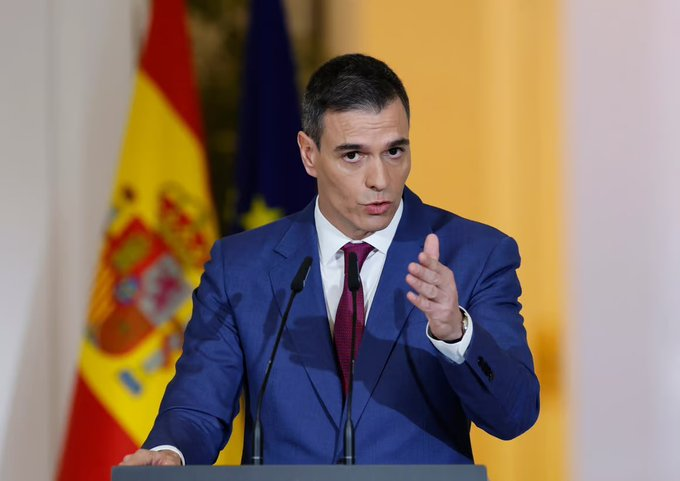
Spain has emerged as one of the most vocal critics of the U.S.-Israeli war effort, with Prime Minister Pedro Sanchez calling the strikes “reckless and illegal” . Madrid has not only denied the use of joint bases at Rota and Morón for offensive actions but has also been the only European nation to fully close its airspace to U.S. military planes involved in the conflict .
The Reuters report notes that the Pentagon memo also includes an option to revisit U.S. diplomatic support for certain European territorial claims, specifically mentioning the Falkland Islands, which are administered by the United Kingdom but claimed by Argentina—a country whose libertarian President Javier Milei is a political ally of Donald Trump .
UK Faces Criticism Over ‘Toys’ and Falklands Standoff
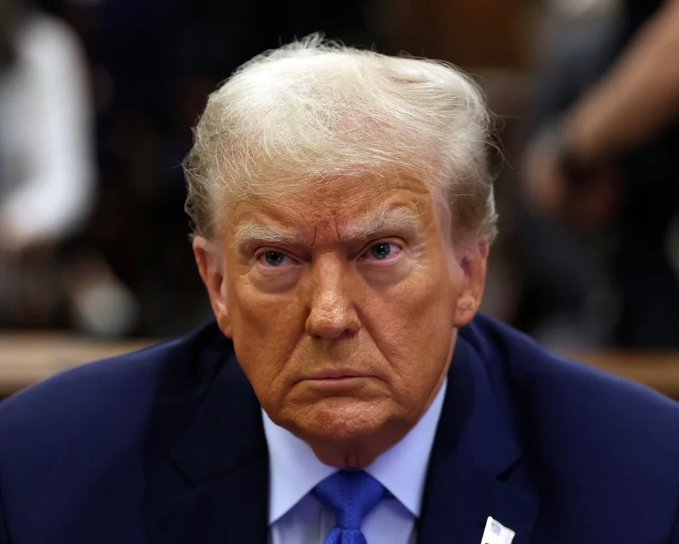
While Spain is the main target of the suspension threat, the United Kingdom has also drawn the administration’s ire. President Donald Trump has publicly criticized Prime Minister Keir Starmer, calling him “cowardly” and “No Winston Churchill” for the UK’s refusal to join offensive strikes, while deriding Royal Navy aircraft carriers as “toys” .
The Pentagon’s apparent willingness to leverage the Falklands dispute highlights the depth of the current transatlantic rift. The suggestion has alarmed British diplomats, who view U.S. recognition of the Islands as British territory as a cornerstone of their strategic alliance since the 1982 war with Argentina .
A ‘One-Way Street’ No Longer
The White House and Pentagon have intensified their rhetoric in recent weeks, arguing that the burden-sharing within NATO is fundamentally unbalanced.
“You don’t have much of an alliance if you have countries that are not willing to stand with you when you need them.”
— Pete Hegseth, Secretary of Defense
Pentagon Press Secretary Kingsley Wilson backed the aggressive posture, stating: “The War Department will ensure that the President has credible options to ensure that our allies are no longer a paper tiger and instead do their part” .
How the Alliance Could Fracture
Spain’s Foreign Minister Jose Manuel Albares responded to the threats by suggesting that the Trump administration’s posture is unwittingly pushing Europe toward greater strategic autonomy. He argued that the EU must “take a leap in terms of our sovereignty and defence matters” and advance toward a “pan-European army” .
As of Thursday evening, NATO officials had not yet commented on the legal mechanisms required to suspend a member state, as such a move would be unprecedented in the alliance’s 76-year history .
Frequently Asked Questions (FAQs)
1. Why does the US want to punish Spain?
Spain refused to grant the US access to its military bases (Rota and Morón) and closed its airspace to US military flights conducting offensive strikes against Iran. Madrid has been a vocal political opponent of the war, calling it illegal .
2. Can the US actually suspend Spain from NATO?
The internal Pentagon email is an exploratory option, and Reuters notes that it is unclear whether an existing mechanism to suspend a member exists. NATO operates by consensus, and such a move would likely face severe legal and political hurdles .
3. How has Spain responded to the threat?
Spain has doubled down on its stance, urging Europe to increase its “sovereignty” in defense matters. Spanish officials argue that the US posture is “pushing Europe to seek security alternatives” .
4. Why is the Falkland Islands included in this dispute?
The Pentagon memo proposed reassessing US support for the UK’s claim to the Falklands as political leverage. The suggestion is aimed at pressuring London, which has also limited its support for the US war effort .
5. Are other European nations at risk?
While Spain is singled out, the email expresses general frustration with other “difficult” NATO members that failed to use their navies to help open the Strait of Hormuz during the conflict .
Questions people ask
What is China's current share of global manufacturing?
China now accounts for twenty eight percent of global manufacturing. This industrial output exceeds the combined manufacturing production of the United States, Japan, and Germany, making China the leading global industrial power according to recent reports.
Why were Andrew Tate and Tristan Tate arrested in Miami?
Andrew Tate and his brother Tristan Tate were taken into custody in Miami by the United States Marshals Service. They face thirty eight new charges in the United Kingdom, including rape and child pornography offences, and prosecutors are seeking their extradition.
What warning did Moscow issue about oil prices?
Kirill Dmitriev, the Chief Executive of the Russian Direct Investment Fund, warned that a tsunami of skyrocketing oil prices is approaching. Moscow describes this potential energy shock as a major threat to global markets.
What political shift is projected for Benjamin Netanyahu's coalition?
Political polls project that Prime Minister Benjamin Netanyahu's coalition is on track to lose its majority in the upcoming October election. This projection indicates a potential political shift in Jerusalem.
Why did a Russian military aircraft land in Tehran?
A Russian airborne command aircraft, widely known as a doomsday plane, landed in Tehran. The arrival of the aircraft represents a high stakes show of support from Russia for Iran during a period of heightened regional tensions.
What did President Masoud Pezeshkian claim about the United States and Israel?
Iranian President Masoud Pezeshkian claimed that the United States and Israel failed in a forty eight hour plan to topple the Iranian government. He made these statements during a televised address marking two years since his inauguration.