Reflecto News is an online news platform covering major international political events, global economic developments, and security conflicts. The site provides updates on topics such as Chinese manufacturing dominance, Middle Eastern political tensions, and high profile legal arrests. Readers can access current articles organized by categories like World News, Iran, and USA.
Published on Reflecto News | World News | Economy & Trade
India and the United States held a third round of “constructive” trade talks in Washington this week, with both sides agreeing to remain engaged to maintain momentum toward a proposed Bilateral Trade Agreement (BTA) . A 12-member Indian delegation led by Additional Secretary Darpan Jain met with US officials headed by Assistant USTR Brendan Lynch from April 20-23 .
The discussions were described by India’s Commerce Ministry as having a “constructive and positive spirit, with meaningful and forward-looking discussions enabling progress on key matters” . Indian Foreign Ministry spokesperson Randhir Jaiswal told reporters that “both sides are working towards a balanced, mutually beneficial and forward-looking trade agreement” .
The goal remains to double bilateral goods and services trade from approximately $212 billion in 2024 to $500 billion by 2030 . Talks covered market access, non-tariff measures, technical barriers to trade, customs facilitation, investment promotion, digital trade, and economic security alignment .
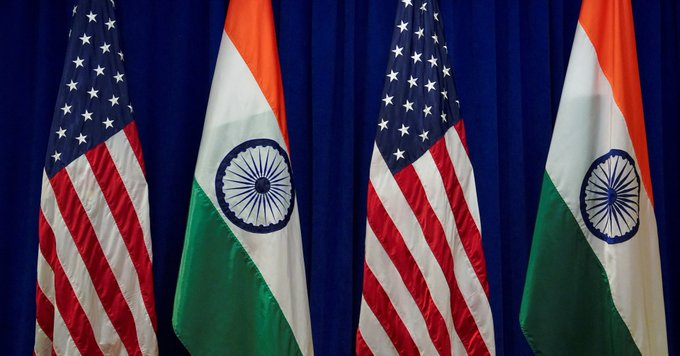
India a ‘Tough Nut to Crack,’ Says US Trade Representative
Despite the positive framing, US Trade Representative Jamieson Greer offered a more measured assessment, telling the House Ways and Means Committee that “India is a tough nut to crack” . Greer acknowledged India’s long-standing protection of its agricultural markets, noting that “they want to protect a lot of that” as part of any deal .
However, he pointed to specific areas where agreement may be possible, citing distillers dried grains (DDGs) used in animal feed as an example of mutual interest . “There are things though where I think we can find mutual agreement,” Greer said .
Supreme Court Ruling Complicates Tariff Framework
The negotiations have been complicated by a February 20 US Supreme Court ruling that invalidated reciprocal tariffs imposed under the International Emergency Economic Powers Act (IEEPA) . That decision has forced both sides to recalibrate their approach.
Previously, under a framework announced on February 7, the US had agreed to reduce tariffs on Indian goods from 50% to approximately 18% . Those reductions included removing a 25% tariff linked to India’s purchase of Russian oil . Under the new circumstances, President Donald Trump announced a temporary 10% duty on imports from all countries in February, further complicating India’s efforts to secure preferential access .
India is now seeking to “recalibrate and redraft” parts of the agreement to protect its interests under the evolving global tariff framework . The country has also expressed intentions to purchase $500 billion of US energy products, aircraft and parts, technology products, and coking coal over the next five years .
What Has India Offered?
As part of the proposed deal, India has offered to eliminate or reduce tariffs on all US industrial goods and a wide range of US food and agricultural products, including dried distillers grains (DDGs), soybean oil, fresh and processed fruit, tree nuts, wine, and spirits . India is also seeking preferential access to US markets relative to competitor countries .
The Ministry of Commerce confirmed that the latest discussions were “intensive” and “in-person,” building on the joint framework established in February . Key matters discussed included the finalization of the first tranche of the agreement, which both sides had previously targeted for signing in March .
Looking Ahead
While no concrete outcome emerged from this week’s talks, officials from both sides have committed to continued engagement . An Indian government official, speaking on condition of anonymity, suggested that most key matters have already been resolved, adding that “there aren’t many loose ends left” . A US official acknowledged that “gaps remain” but declined to provide specifics .
Both sides are also watching Washington’s planned changes to Section 301 tariffs in June, which could reshape duties on key sectors and influence final market access arrangements . The agreement will need to be recalibrated and potentially redrafted to align with the new uniform 10% tariff framework affecting all US trading partners .
Frequently Asked Questions (FAQs)
1. When did the latest round of India-US trade talks take place?
The talks took place in Washington, D.C., from April 20-23, 2026. A 12-member Indian delegation led by Additional Secretary Darpan Jain participated .
2. What is the target for bilateral trade?
India and the US have set a target of doubling bilateral goods and services trade from about $212 billion in 2024 to $500 billion by 2030 .
3. Why has India been described as a “tough nut to crack”?
US Trade Representative Jamieson Greer used this phrase to acknowledge India’s long-standing protection of its agricultural markets, which has been a key point of contention in negotiations .
4. How has the US Supreme Court ruling affected the talks?
The February 20 Supreme Court ruling invalidated reciprocal tariffs imposed under IEEPA, forcing both sides to recalibrate their approach to the agreement .
5. What has India offered in the proposed trade deal?
India has offered to eliminate or reduce tariffs on US industrial goods and various agricultural products, including DDGs, soybean oil, tree nuts, fruits, wine, and spirits .
6. Have both sides confirmed that a deal is near?
Indian officials have suggested that most key matters are close to resolution, with “not many loose ends left.” However, US officials have acknowledged that “gaps remain” .
7. What is the next step?
Both sides have agreed to remain engaged to maintain momentum. The talks are ongoing, with officials continuing to work on the framework following the changed tariff landscape .
Questions people ask
What is China's current share of global manufacturing?
China now accounts for twenty eight percent of global manufacturing. This industrial output exceeds the combined manufacturing production of the United States, Japan, and Germany, making China the leading global industrial power according to recent reports.
Why were Andrew Tate and Tristan Tate arrested in Miami?
Andrew Tate and his brother Tristan Tate were taken into custody in Miami by the United States Marshals Service. They face thirty eight new charges in the United Kingdom, including rape and child pornography offences, and prosecutors are seeking their extradition.
What warning did Moscow issue about oil prices?
Kirill Dmitriev, the Chief Executive of the Russian Direct Investment Fund, warned that a tsunami of skyrocketing oil prices is approaching. Moscow describes this potential energy shock as a major threat to global markets.
What political shift is projected for Benjamin Netanyahu's coalition?
Political polls project that Prime Minister Benjamin Netanyahu's coalition is on track to lose its majority in the upcoming October election. This projection indicates a potential political shift in Jerusalem.
Why did a Russian military aircraft land in Tehran?
A Russian airborne command aircraft, widely known as a doomsday plane, landed in Tehran. The arrival of the aircraft represents a high stakes show of support from Russia for Iran during a period of heightened regional tensions.
What did President Masoud Pezeshkian claim about the United States and Israel?
Iranian President Masoud Pezeshkian claimed that the United States and Israel failed in a forty eight hour plan to topple the Iranian government. He made these statements during a televised address marking two years since his inauguration.