Reflecto News is an online news platform covering major international political events, global economic developments, and security conflicts. The site provides updates on topics such as Chinese manufacturing dominance, Middle Eastern political tensions, and high profile legal arrests. Readers can access current articles organized by categories like World News, Iran, and USA.
Reflecto News | Breaking News | Iran-US Conflict
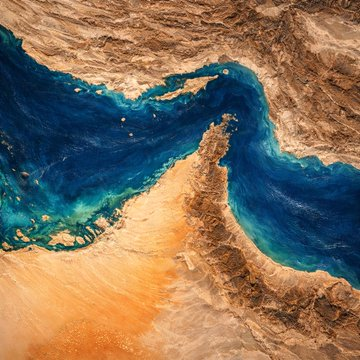
WASHINGTON — The United States military says it “encourages traffic flow through the Strait of Hormuz” despite an attempted attack by Iranian forces on Monday, as President Donald Trump’s “Project Freedom” initiative moves forward to restore commercial shipping through the critical waterway
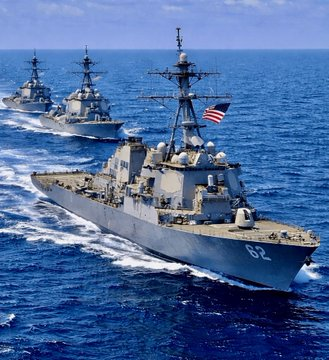
US Central Command (CENTCOM) confirmed that two guided-missile destroyers entered the Arabian Gulf and two US-flagged merchant vessels successfully transited the strait as part of the operation
“American forces are actively assisting efforts to restore transit for commercial shipping. As a first step, two U.S.-flagged merchant vessels have successfully transited through the Strait of Hormuz and are safely headed on their journey.”
— US Central Command (CENTCOM)
🔥 Escalation in the Strait
Hours after “Project Freedom” was announced, Iran’s Islamic Revolutionary Guard Corps (IRGC) launched a coordinated attack involving cruise missiles, drones, and small boats
The US military confirmed it destroyed six Iranian fast-attack boats and intercepted all incoming missiles and drones. No US warships were damaged
CENTCOM’s bullet-by-bullet denial:
🚫 Iranian state media claimed Iran’s IRGC hit a US warship with two missiles.
✅ TRUTH: No US Navy ships have been struck. US forces are supporting Project Freedom and enforcing the naval blockade on Iranian ports .
Admiral Brad Cooper, head of CENTCOM, said the US military “strongly advised” Iranian forces to remain clear of US assets as it launched the operation
“The IRGC has launched multiple cruise missiles, drones and small boats at ships we are protecting. We have defeated each and every one of those threats through the clinical application of defensive munitions.”
— Admiral Brad Cooper, CENTCOM Commander
🚢 ‘Project Freedom’: How It Works
Trump described “Project Freedom” as a humanitarian mission to free commercial vessels—some 2,000 ships with 20,000 seafarers—that have been trapped in the Persian Gulf since the war began on February 28
Key details of the operation:
| Component | Details |
|---|---|
| Military Assets | Guided-missile destroyers, over 100 aircraft, multi-domain drones, 15,000 service members |
| Mission Focus | Provide routing guidance, share intelligence, protect against Iranian attacks |
| No Direct Escorts | Operation focuses on information-sharing rather than direct naval escorts for each vessel, though US Navy ships remain “in the vicinity” if protection is needed |
The US is also building a multinational framework, the “Maritime Freedom Construct,” to coordinate safe passage by sharing intelligence and aligning diplomatic efforts
📈 Regional Fallout
Iranian missile and drone strikes extended beyond the strait. The UAE confirmed it intercepted three missiles fired from Iran, with a fourth crashing into the sea
A fire broke out at the Fujairah Oil Industry Zone following an Iranian drone attack, while Iran also struck an ADNOC-linked oil tanker. The UAE condemned the attack as a “flagrant violation” of UN Security Council Resolution 2817
A South Korean-flagged vessel was also struck but continued its journey with no casualties reported
Iran, for its part, denies US claims that any of its boats were sunk and maintains that “no commercial vessels or oil tankers have passed through the strait,” calling US statements “baseless and completely false”
⚔️ Tit-for-Tat Escalation and Risk
The confrontation marks the first direct military engagement in the strait since the war began, raising the stakes of a conflict that has already destabilized global energy markets.
Trump, asked about further US escalation, warned that if Iran continues to target US ships, it will be “blown off the face of the Earth”
The commander of Iran’s army declared on X: “American destroyers, using the trick of turning off the radar, were approaching the Strait of Hormuz, but our response was fire. Cruise missiles and combat drones took flight. The security of this region is Iran’s red line”
The US continues to enforce a naval blockade on Iranian ports simultaneously with its effort to open the strait
📋 Key Takeaways
| Aspect | Summary |
|---|---|
| Project Freedom | US operation to restore commercial shipping through the strait, launched May 4 |
| First Transit | Two US-flagged merchant vessels successfully crossed with US naval support |
| Iranian Attack | IRGC launched missiles, drones, small boats at US and commercial vessels |
| US Response | Destroyed 6 Iranian boats; intercepted all incoming projectiles |
| Casualties/Damage | No US ships struck; South Korean and UAE commercial vessels damaged |
| Casualties (Iranian) | US says 6 boats sunk; Iran denies claim |
| Iran’s Stance | Calls US statements “baseless”; says strait security is Iran’s “red line” |
| Remaining Threats | Mines, Iranian fast boats, cruise missiles remain risks for commercial shipping |
Follow Reflecto News for continuous updates on “Project Freedom,” Iran-US military escalation, and all breaking news from the Middle East.
Questions people ask
What is China's current share of global manufacturing?
China now accounts for twenty eight percent of global manufacturing. This industrial output exceeds the combined manufacturing production of the United States, Japan, and Germany, making China the leading global industrial power according to recent reports.
Why were Andrew Tate and Tristan Tate arrested in Miami?
Andrew Tate and his brother Tristan Tate were taken into custody in Miami by the United States Marshals Service. They face thirty eight new charges in the United Kingdom, including rape and child pornography offences, and prosecutors are seeking their extradition.
What warning did Moscow issue about oil prices?
Kirill Dmitriev, the Chief Executive of the Russian Direct Investment Fund, warned that a tsunami of skyrocketing oil prices is approaching. Moscow describes this potential energy shock as a major threat to global markets.
What political shift is projected for Benjamin Netanyahu's coalition?
Political polls project that Prime Minister Benjamin Netanyahu's coalition is on track to lose its majority in the upcoming October election. This projection indicates a potential political shift in Jerusalem.
Why did a Russian military aircraft land in Tehran?
A Russian airborne command aircraft, widely known as a doomsday plane, landed in Tehran. The arrival of the aircraft represents a high stakes show of support from Russia for Iran during a period of heightened regional tensions.
What did President Masoud Pezeshkian claim about the United States and Israel?
Iranian President Masoud Pezeshkian claimed that the United States and Israel failed in a forty eight hour plan to topple the Iranian government. He made these statements during a televised address marking two years since his inauguration.