Reflecto News is an online news platform covering major international political events, global economic developments, and security conflicts. The site provides updates on topics such as Chinese manufacturing dominance, Middle Eastern political tensions, and high profile legal arrests. Readers can access current articles organized by categories like World News, Iran, and USA.
Published on Reflecto News | World News | Defense Technology & Geopolitics
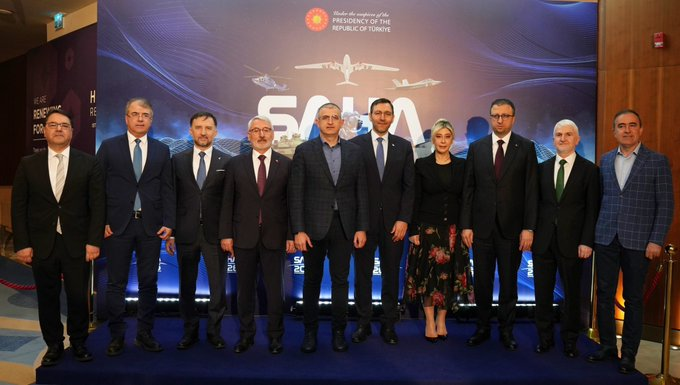
Türkiye has announced an ambitious plan to establish drone production and training centers in all 81 of its provinces, creating a nationwide network capable of rapidly producing millions of unmanned aerial vehicles (UAVs) when needed. The announcement was made by SAHA Istanbul Chairman and BAYKAR CEO Haluk Bayraktar, whose company has become synonymous with Turkish drone warfare, having supplied the Bayraktar TB2 and Akıncı drones to over 35 countries .
“Our goal is to create a nationwide network capable of rapidly producing millions of drones when needed. We will establish drone production and training centers in all 81 provinces.” — Haluk Bayraktar, SAHA Chairman & BAYKAR CEO
Decentralized Production: A National Security Strategy
The plan represents a strategic shift toward distributed, resilient manufacturing. By locating production and training facilities in every province, Ankara ensures that drone manufacturing capacity cannot be crippled by strikes on a single industrial hub — a lesson learned from conflicts where centralized infrastructure has proven vulnerable.
Each provincial center would be capable of producing drones, training operators, and maintaining the fleet, creating a nationwide web of small-scale manufacturing and training hubs rather than relying on a few large factories.
This approach also spreads economic benefits across the country, creating high-tech jobs outside major industrial centers — a political advantage in a nation where regional development has been a persistent challenge.
Why It Matters: Lessons from Ukraine
The war in Ukraine has demonstrated the decisive role of drones in modern combat, with both sides deploying hundreds of thousands of UAVs for reconnaissance, artillery spotting, and direct attack. The conflict has also shown that production capacity matters as much as technological sophistication: Ukraine has ramped up domestic drone production, while Russia has increasingly relied on Iranian-designed Shahed drones.
Türkiye’s plan to create distributed, high-volume drone production capacity reflects the lesson that modern warfare requires not just high-end platforms like the Akıncı or the Kızılelma but also vast quantities of smaller, cheaper drones for attritional warfare.
BAYKAR’s Expansion: From TB2 to Millions
BAYKAR, known globally for its Bayraktar TB2 drone, has been rapidly expanding its product line. The TB2 proved highly effective in conflicts in Ukraine, Libya, Syria, and Nagorno-Karabakh, establishing Türkiye as a leading drone power.
BAYKAR’s recent announcements include:
| Announcement | Details |
|---|---|
| K2 Kamikaze UAV | Autonomous drone with AI targeting |
| Sivrisinek Loitering Munition | Long-range (1,000+ km) loitering munition |
| MİUS Kızılelma | Unmanned fighter jet; carrier-capable version tested |
The nationwide production network would extend beyond BAYKAR’s existing facilities, likely involving partnerships with smaller defense contractors and technology firms across the country.
Training the Operators: The Human Factor
Drone warfare requires skilled pilots and technicians. The nationwide network of training centers would create a deep bench of drone operators, reducing Türkiye’s dependence on a small pool of highly trained personnel.
Millions of citizens could potentially receive basic drone training, creating a reserve of operators who could be mobilized in a national emergency — a modern parallel to marksmanship training in previous eras.
The SAHA 2026 Launchpad
The announcement comes ahead of the SAHA 2026 defense exhibition in Istanbul (May 5-9, 2026), where BAYKAR will unveil new systems. The nationwide production plan is likely timed to generate momentum for Türkiye’s defense industry ambitions at the region’s largest defense expo.
BAYKAR recently unveiled its K2 kamikaze UAV and Sivrisinek loitering munition at a live demonstration on April 17, 2026. Those systems, capable of AI-powered target detection and operation in GPS-denied environments, represent the cutting edge of Turkish drone technology.
Geopolitical Implications
A nationwide drone production network would fundamentally alter Türkiye’s defense posture. With the ability to rapidly produce millions of drones domestically, Ankara could field unprecedented numbers of UAVs in a conflict — overwhelming enemy air defenses through sheer quantity.
Türkiye’s NATO allies may view the buildup as a valuable contribution to collective defense, particularly given the alliance’s focus on drone warfare following lessons from Ukraine. Türkiye could also become a major drone exporter on a scale not yet seen.
However, the plan may also raise concerns among neighbors, particularly Greece. A nationwide production network capable of churning out millions of drones could shift the military balance in the Aegean and the Eastern Mediterranean.
What Comes Next
Establishing production centers in all 81 provinces will take years. Türkiye must secure funding, identify partners, train personnel, and develop supply chains. The initial focus is likely on assembling and maintaining drones, with more advanced manufacturing concentrated in existing hubs.
For now, Haluk Bayraktar’s announcement marks an ambitious vision for Turkish defense industrialization — one that, if realized, would make Türkiye the world’s most distributed drone manufacturing nation.
Frequently Asked Questions (FAQs)
Q1: Is Türkiye really building drone factories in all 81 provinces?
Haluk Bayraktar, SAHA Chairman and CEO of BAYKAR, announced the plan to establish drone production and training centers in all 81 Turkish provinces, though an implementation timeline was not specified.
Q2: Why does Türkiye need millions of drones?
The war in Ukraine has demonstrated that modern warfare requires vast quantities of drones for reconnaissance, artillery spotting, and attack missions. Distributed production capacity ensures resilience against strikes on centralized facilities.
Q3: Who will produce the drones?
BAYKAR is the primary Turkish drone manufacturer, but the nationwide network would likely involve partnerships with smaller defense contractors and technology firms.
Q4: How does this relate to the SAHA 2026 exhibition?
The announcement builds momentum for SAHA 2026 (May 5-9, Istanbul), where BAYKAR will unveil new systems like the K2 kamikaze UAV and Sivrisinek loitering munition.
Q5: Will this affect Türkiye’s relations with its neighbors?
The plan could raise concerns among neighbors like Greece, which may view mass drone production as shifting the military balance in the Aegean and Eastern Mediterranean.
Q6: How much will this cost?
BAYKAR did not provide cost estimates. Establishing production centers in all 81 provinces will require substantial investment over many years.
Stay informed with Reflecto News – Your trusted source for breaking defense technology and geopolitical intelligence. Subscribe for real-time updates on Turkish defense developments, drone warfare, and global security.
Questions people ask
What is China's current share of global manufacturing?
China now accounts for twenty eight percent of global manufacturing. This industrial output exceeds the combined manufacturing production of the United States, Japan, and Germany, making China the leading global industrial power according to recent reports.
Why were Andrew Tate and Tristan Tate arrested in Miami?
Andrew Tate and his brother Tristan Tate were taken into custody in Miami by the United States Marshals Service. They face thirty eight new charges in the United Kingdom, including rape and child pornography offences, and prosecutors are seeking their extradition.
What warning did Moscow issue about oil prices?
Kirill Dmitriev, the Chief Executive of the Russian Direct Investment Fund, warned that a tsunami of skyrocketing oil prices is approaching. Moscow describes this potential energy shock as a major threat to global markets.
What political shift is projected for Benjamin Netanyahu's coalition?
Political polls project that Prime Minister Benjamin Netanyahu's coalition is on track to lose its majority in the upcoming October election. This projection indicates a potential political shift in Jerusalem.
Why did a Russian military aircraft land in Tehran?
A Russian airborne command aircraft, widely known as a doomsday plane, landed in Tehran. The arrival of the aircraft represents a high stakes show of support from Russia for Iran during a period of heightened regional tensions.
What did President Masoud Pezeshkian claim about the United States and Israel?
Iranian President Masoud Pezeshkian claimed that the United States and Israel failed in a forty eight hour plan to topple the Iranian government. He made these statements during a televised address marking two years since his inauguration.