Reflecto News is an online news platform covering major international political events, global economic developments, and security conflicts. The site provides updates on topics such as Chinese manufacturing dominance, Middle Eastern political tensions, and high profile legal arrests. Readers can access current articles organized by categories like World News, Iran, and USA.
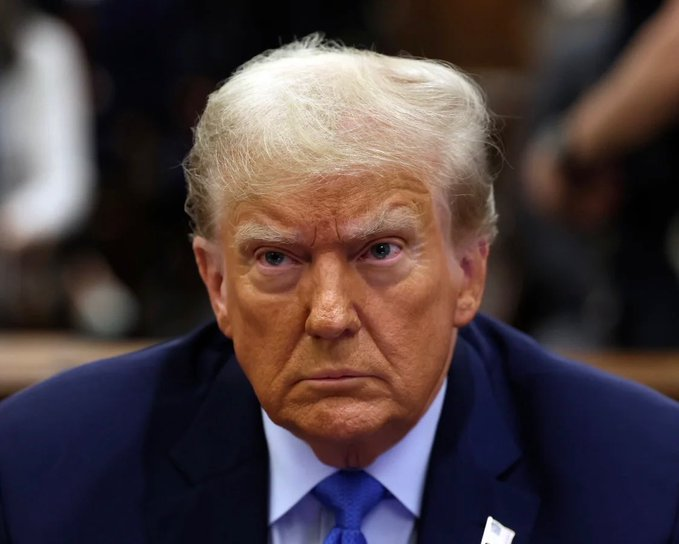
President Donald Trump publicly aired his frustration on Friday, confirming a covert operation to arm anti-government protesters in Iran has ended in failure and murky accountability.
Speaking to reporters, Trump expressed anger that weapons intended to spark an uprising were not used, saying he is “not happy” with the Kurdish groups who were supposed to deliver them.
“I’m not happy with the delivery of the weapons. I’m not thrilled with it. But I’m not happy with what happened with the Kurds. The Kurds did not deliver the weapons.”
— President Donald J. Trump
The admission marks the first time a sitting U.S. president has openly confirmed a covert program to arm civilians inside Iran. It also confirms Tehran’s long-standing accusations that the massive protests that swept the country late last year were “foreign-backed”.
💣 The Covert Plan: From Airwaves to AK-47s
The plan unfolded against the backdrop of nationwide anti-government protests that erupted in Iran in late December.
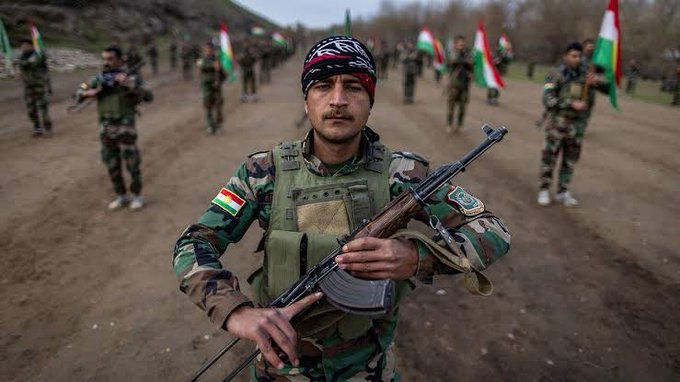
- The Backchannel: Trump revealed that the U.S. had been communicating with “Kurdish groups” based in Sulaymaniyah, in northern Iraq, to serve as intermediaries.
- The Arsenal: The U.S. sent “a lot of guns” with the intended destination being anti-regime protesters inside Iran.
- The Goal: The strategy was to provide the means for Iranians to fight back against the Islamic Revolutionary Guard Corps (IRGC), with Trump believing that even a small number of armed citizens could lead to the regime’s collapse.
🔍 The Kurdish Denials and the ‘Guns for Ourselves’ Theory
Trump believes the operation failed not because of Iranian action, but because of what he describes as a “black market” interception by the Kurdish conduits themselves.
The president’s frustration stems from his conclusion that the weapons were never delivered to the protesters. He theorizes that the Kurds, upon receiving the advanced American weaponry, simply decided to keep them to bolster their own fighting forces, telling him, “This is great, we’re going to keep it for ourselves”.
Multiple Iranian Kurdish opposition groups have publicly denied this. Leaders from parties such as the Democratic Party of Iranian Kurdistan (PDKI) and the Kurdistan Freedom Party (PAK) stated they received no such shipments and that Trump’s allegation could make them a target for Iranian retaliation.
“We’ll see who has them”
Perhaps most alarmingly for U.S. military accountability, when asked about the current whereabouts of the arsenal—which included a “small amount of weapons” as well as “a lot of guns”—President Trump admitted he has no idea. “We’ll see who has them,” he told reporters, suggesting the federal government does not currently have a fix on the location of the missing arms.
⚖️ The Strategic and Political Fallout
- Bolstering Tehran’s Narrative: The admission plays directly into the hands of the Iranian regime, which has consistently claimed the protests were not an organic uprising but a “hybrid war” fomented by the United States and Israel.
- A Complicated Backdrop: This covert action took place while the Trump administration was simultaneously engaged in back-channel negotiations with Iran over its nuclear program, revealing a “maximum pressure” strategy that combined diplomacy with efforts at destabilization.
Questions people ask
What is China's current share of global manufacturing?
China now accounts for twenty eight percent of global manufacturing. This industrial output exceeds the combined manufacturing production of the United States, Japan, and Germany, making China the leading global industrial power according to recent reports.
Why were Andrew Tate and Tristan Tate arrested in Miami?
Andrew Tate and his brother Tristan Tate were taken into custody in Miami by the United States Marshals Service. They face thirty eight new charges in the United Kingdom, including rape and child pornography offences, and prosecutors are seeking their extradition.
What warning did Moscow issue about oil prices?
Kirill Dmitriev, the Chief Executive of the Russian Direct Investment Fund, warned that a tsunami of skyrocketing oil prices is approaching. Moscow describes this potential energy shock as a major threat to global markets.
What political shift is projected for Benjamin Netanyahu's coalition?
Political polls project that Prime Minister Benjamin Netanyahu's coalition is on track to lose its majority in the upcoming October election. This projection indicates a potential political shift in Jerusalem.
Why did a Russian military aircraft land in Tehran?
A Russian airborne command aircraft, widely known as a doomsday plane, landed in Tehran. The arrival of the aircraft represents a high stakes show of support from Russia for Iran during a period of heightened regional tensions.
What did President Masoud Pezeshkian claim about the United States and Israel?
Iranian President Masoud Pezeshkian claimed that the United States and Israel failed in a forty eight hour plan to topple the Iranian government. He made these statements during a televised address marking two years since his inauguration.