Reflecto News is an online news platform covering major international political events, global economic developments, and security conflicts. The site provides updates on topics such as Chinese manufacturing dominance, Middle Eastern political tensions, and high profile legal arrests. Readers can access current articles organized by categories like World News, Iran, and USA.
Published on Reflecto News | World News | Energy & Geopolitics
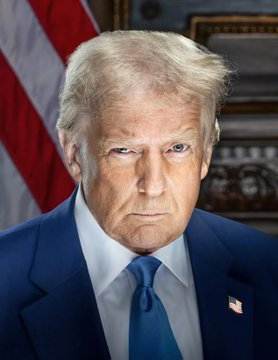
Former President Donald Trump has launched a sharp critique of the United Kingdom’s energy policy, accusing the country of refusing to develop its North Sea oil reserves — which he called “one of the greatest fields in the World.” The comments, posted on Truth Social, come as Europe grapples with an energy crisis exacerbated by the ongoing war in Iran and the effective closure of the Strait of Hormuz .
“The United Kingdom refuses to open the North Sea Oil field. One of the greatest fields in the World. Tragic!!!” — Donald Trump
Trump’s post did not elaborate on his proposal for the North Sea, but his message aligns with his long-standing “Drill, Baby, Drill” philosophy and his criticism of European energy policies that prioritize renewables over fossil fuel extraction .
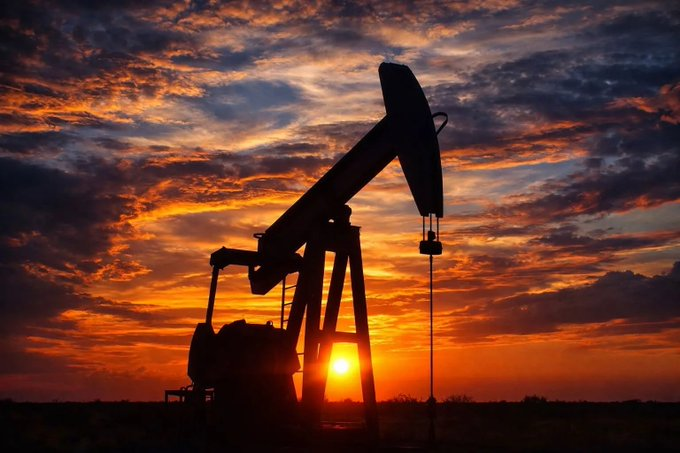
The North Sea’s Potential
The North Sea has been a major source of oil and gas for the UK since the 1970s, but production has declined significantly from its peak in the 1990s. However, significant untapped reserves remain.
| North Sea Metric | Value |
|---|---|
| Remaining recoverable reserves | 2.9 billion barrels of oil equivalent |
| Active oil and gas fields | Approximately 280 |
| Industry employment | ~200,000 jobs |
| Share of UK energy consumption | ~40% of gas, ~70% of oil |
Sources: North Sea Transition Authority, Offshore Energies UK
The UK government has imposed a moratorium on new oil and gas exploration licenses, a policy that has drawn criticism from industry advocates and opposition politicians who argue that domestic production is essential for energy security .
The UK’s Energy Dilemma
Trump’s criticism comes as the UK faces a perfect storm of energy challenges:
- Hormuz closure: The Strait of Hormuz, through which approximately 20% of the world’s oil passes, remains largely restricted due to the Iran war
- Rising prices: Global energy prices have surged, with Brent crude spiking above $100 per barrel
- Import dependence: The UK now imports significant quantities of oil and gas, including from Norway (which Trump noted sells its North Sea oil to Britain at premium prices)
- Cost-of-living crisis: High energy prices have contributed to inflation and household financial strain
The Labour government has maintained its commitment to a ban on new exploration licenses, arguing that new fields “will not take a penny off bills, cannot make us energy secure, and will only accelerate the worsening climate crisis” .
The Political Divide
Trump’s intervention adds to growing political pressure on the Labour government to reconsider its position on North Sea drilling.
| Party | Position on North Sea Drilling |
|---|---|
| Labour (Government) | Moratorium on new exploration licenses |
| Conservatives | Support new licenses; “Cheap Power Plan” |
| Reform UK | “Vital, patriotic duty” to drill |
| SNP | Softened stance; now supports Rosebank and Jackdaw |
The Scottish National Party (SNP), which previously opposed new drilling, has shifted its position, with First Minister John Swinney acknowledging that the war in the Middle East “changes the balance of the arguments” on energy security .
Two major fields — Rosebank (the UK’s largest untapped oil field) and Jackdaw (a gas field) — await regulatory approval, with decisions expected by May 14 .
The Energy Security Argument
Industry advocates argue that domestic production is essential for energy security, particularly in light of global instability.
“This is not an either renewables or oil and gas scenario. We urgently need greater supplies of secure, domestically-produced energy.” — David Whitehouse, CEO of Offshore Energies UK
Supporters of continued North Sea investment argue that replacing US LNG imports with domestic production could reduce emissions overall, though environmental groups dispute that framing. The UK currently produces only about 45% of the gas it consumes .
The Climate Argument
The Labour government has framed its opposition to new drilling as a climate imperative. Energy Secretary Ed Miliband has argued that new fields “will not take a penny off bills, cannot make us energy secure, and will only accelerate the worsening climate crisis.”
The UK has positioned itself as a global leader in offshore wind, with a target of installing up to 50 gigawatts of capacity by 2030. However, critics argue that the rapid transition to renewables has come at the cost of energy security and industrial jobs .
The Norway Contrast
Trump’s post implicitly contrasts the UK with Norway, which has continued to develop its North Sea resources. Norway has treated its oil and gas sector as a long-term national project, maintaining tight state control while continuing regular drilling .
| Norway | UK |
|---|---|
| Continued drilling (49 wells last year) | Moratorium on new licenses |
| $2.1 trillion sovereign wealth fund | No comparable energy fund |
| Energy Minister calls UK “essentially irrelevant” | Industry in decline |
Norway’s approach has generated enormous wealth for the Norwegian people, while the UK’s more restrictive policies have led to what some analysts describe as a “coal mining-style collapse” in oil-producing regions like Aberdeen .
What Comes Next
As the Iran war continues to disrupt global energy supplies and prices remain elevated, pressure on the Labour government to reconsider its position on North Sea drilling is likely to intensify.
| Development | Timeline | Significance |
|---|---|---|
| Rosebank/Jackdaw decisions | Expected by May 14 | Will signal government’s direction |
| Holyrood election | May 7, 2026 | Could shift Scottish political landscape |
| US election outcome | November 2026 | Trump return could increase pressure |
Trump’s intervention adds another layer of complexity to an already contentious debate. His characterization of the North Sea as “one of the greatest fields in the World” — while exaggerated given current production levels — reflects a growing frustration in some quarters with what is seen as the UK’s self-defeating energy policy .
Frequently Asked Questions (FAQs)
1. What did Trump say about the UK’s North Sea oil?
Trump accused the United Kingdom of “refusing to open the North Sea Oil field,” which he called “one of the greatest fields in the World. Tragic!!!”
2. Is the UK actually refusing to develop the North Sea?
The Labour government has imposed a moratorium on new oil and gas exploration licenses, though existing fields continue to operate. Two major fields (Rosebank and Jackdaw) await regulatory approval.
3. How much oil is left in the North Sea?
Remaining recoverable reserves are estimated at approximately 2.9 billion barrels of oil equivalent.
4. Why is the UK restricting North Sea drilling?
The Labour government argues that new fields “will not take a penny off bills, cannot make us energy secure, and will only accelerate the worsening climate crisis.”
5. What is the impact of the Iran war on UK energy?
The effective closure of the Strait of Hormuz has sent global energy prices soaring, increasing the cost of oil and gas imports and contributing to the cost-of-living crisis.
6. Could more North Sea drilling lower UK energy bills?
This is disputed. The government argues oil and gas are priced on global markets, so domestic production wouldn’t lower bills. Industry advocates argue that tax revenues could be used to cut taxes.
7. When will decisions on Rosebank and Jackdaw be made?
Decisions were expected in April but have been delayed until May 14 due to local election purdah.
Stay informed with Reflecto News – Your trusted source for breaking energy, political, and geopolitical intelligence. Subscribe for real-time updates on global energy markets, UK politics, and the Iran war crisis.
Questions people ask
What is China's current share of global manufacturing?
China now accounts for twenty eight percent of global manufacturing. This industrial output exceeds the combined manufacturing production of the United States, Japan, and Germany, making China the leading global industrial power according to recent reports.
Why were Andrew Tate and Tristan Tate arrested in Miami?
Andrew Tate and his brother Tristan Tate were taken into custody in Miami by the United States Marshals Service. They face thirty eight new charges in the United Kingdom, including rape and child pornography offences, and prosecutors are seeking their extradition.
What warning did Moscow issue about oil prices?
Kirill Dmitriev, the Chief Executive of the Russian Direct Investment Fund, warned that a tsunami of skyrocketing oil prices is approaching. Moscow describes this potential energy shock as a major threat to global markets.
What political shift is projected for Benjamin Netanyahu's coalition?
Political polls project that Prime Minister Benjamin Netanyahu's coalition is on track to lose its majority in the upcoming October election. This projection indicates a potential political shift in Jerusalem.
Why did a Russian military aircraft land in Tehran?
A Russian airborne command aircraft, widely known as a doomsday plane, landed in Tehran. The arrival of the aircraft represents a high stakes show of support from Russia for Iran during a period of heightened regional tensions.
What did President Masoud Pezeshkian claim about the United States and Israel?
Iranian President Masoud Pezeshkian claimed that the United States and Israel failed in a forty eight hour plan to topple the Iranian government. He made these statements during a televised address marking two years since his inauguration.