Reflecto News is an online news platform covering major international political events, global economic developments, and security conflicts. The site provides updates on topics such as Chinese manufacturing dominance, Middle Eastern political tensions, and high profile legal arrests. Readers can access current articles organized by categories like World News, Iran, and USA.
Reflecto News | Breaking News | U.S. Politics
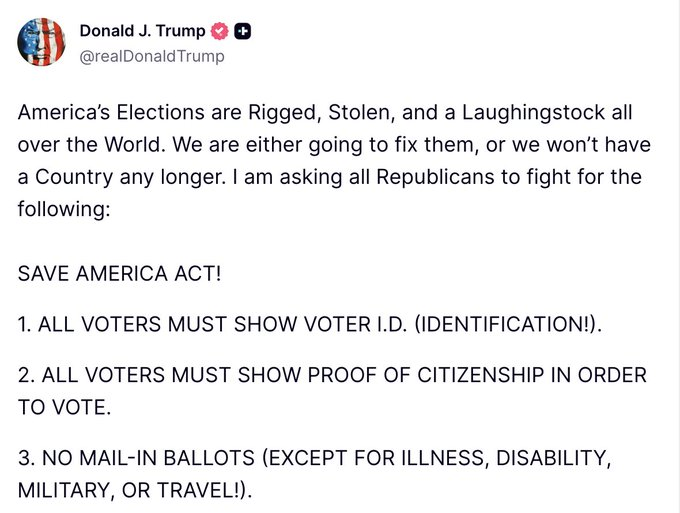
WASHINGTON — Former President Donald Trump launched a sweeping attack on the integrity of the U.S. electoral system on Tuesday, declaring that America’s elections are “rigged, stolen, and a laughingstock all over the world.”
The statement, posted to Truth Social and repeated during a campaign stop, marks a continuation of Trump’s long-running effort to cast doubt on the legitimacy of American elections—a theme that has defined his political identity since the 2020 presidential contest.
“America’s Elections are Rigged, Stolen, and a Laughingstock all over the World.”
— Former President Donald Trump
The ‘Rigged’ Narrative: A Refrain Through Four Election Cycles
Trump’s assertion that American elections are fraudulent has been a constant refrain since he lost the 2020 presidential election to Joe Biden, a result he has never conceded.
His claims have evolved over time but center on several recurring themes:
- Mail-in ballots: Trump has argued that expanded mail-in voting (implemented in many states during the COVID-19 pandemic) is inherently susceptible to fraud, despite a lack of evidence of widespread issues.
- Dominion voting machines: Trump and his allies have alleged that voting machines manufactured by Dominion Voting Systems were programmed to flip votes from Trump to Biden. Dominion has sued multiple Trump allies for defamation, securing settlements from Fox News and other outlets.
- Late-night ballot dumps: Trump has pointed to vote-counting pauses on election night, followed by surges of mail-in ballots counted for Biden, as evidence of fraud—a pattern election officials attribute to legitimate differences in how jurisdictions count mail ballots vs. in-person votes.
- Non-citizen voting: Trump has claimed that large numbers of non-citizens are voting illegally, despite studies showing such instances are vanishingly rare and that voter registration systems include verification measures.
No court, state audit, or federal investigation has found evidence of fraud sufficient to alter the outcome of the 2020 election. Trump’s own Department of Homeland Security, under his administration, called the 2020 election “the most secure in American history” .
‘Stolen’: The Unsubstantiated Claim
Trump’s use of the word “stolen” is a direct reference to the 2020 election. Biden won 306 electoral votes to Trump’s 232, and won the popular vote by over 7 million ballots.
Trump has provided no evidence of election theft. His legal team filed more than 60 lawsuits challenging the results in various states; nearly all were dismissed or lost on the merits. Judges appointed by Trump himself, including some he had nominated to the federal bench, rejected claims of widespread fraud.
Trump’s allies have continued to pursue investigations into the 2020 election. A special grand jury in Georgia resulted in Trump and 18 co-defendants being indicted for their efforts to overturn the state’s results—one of four criminal cases Trump has faced since leaving office .
‘A Laughingstock All Over the World’: International Perception
The claim that America’s elections are a “laughingstock all over the world” appears to reference criticism not of U.S. election procedures themselves, but of the political turmoil that has followed recent presidential contests—particularly the January 6, 2021, attack on the U.S. Capitol by Trump supporters seeking to disrupt certification of Biden’s victory.
International election monitors’ assessments:
| Organization | Assessment of 2020 Election |
|---|---|
| OSCE Office for Democratic Institutions and Human Rights | Noted “unsubstantiated allegations of fraud” and expressed concern about political polarization, but did not find systemic irregularities affecting the outcome |
| The Carter Center | Did not monitor 2020; has historically praised U.S. election administration |
| Freedom House | Rates U.S. electoral process highly but has noted “declining confidence” in recent years |
Trump’s assertion that other nations laugh at U.S. elections is difficult to quantify. However, his repeated claims of widespread fraud—and the resulting political instability—have been cited by anti-democratic movements in other countries as justification for rejecting their own election results. Russian President Vladimir Putin, for example, has cited U.S. election disputes to deflect criticism of Russia’s political system .
The Timing: Why Trump Is Stressing Electoral Fraud Now
Trump’s post comes as Republicans and Democrats gear up for the 2026 midterm elections, which will determine control of Congress for the remainder of Trump’s second term.
Key races to watch in 2026:
| Race | Candidates/Status |
|---|---|
| Senate control | Democrats defending 23 seats; Republicans defending 11 |
| House control | All 435 seats up for election; narrow GOP majority |
| Governors | 36 states electing governors |
Trump has repeatedly suggested that if Republicans lose control of Congress, it will be due to fraud—laying the groundwork for challenging election results before votes are cast .
Trump’s post also follows recent reporting that the Department of Government Efficiency (DOGE), led by Elon Musk, has raised concerns about the security of voter registration databases . Musk has claimed without evidence that tens of millions of ineligible voters remain on voting rolls—a number that far exceeds estimates from nonpartisan election administrators .
Trump has also alleged, without evidence, that illegal immigrants are being registered to vote in large numbers—a claim that has been debunked by multiple election officials and fact-checking organizations, given that non-citizens are generally ineligible to vote in federal elections, and states have multiple verification steps before a ballot is counted .
What Comes Next
Trump has called for a series of election reforms, including:
- Voter ID laws – Requiring government-issued photo identification to vote in all states (currently required in some)
- Restrictions on mail voting – Limiting absentee ballots to specific circumstances (illness, military service, travel)
- Paper ballots – Requiring paper ballots to ensure auditable trails (standard in most jurisdictions already)
- Ban on ballot harvesting – Prohibiting third parties from collecting and delivering ballots
Democrats have largely rejected these proposals, arguing they are solutions in search of a problem that would disenfranchise legitimate voters. The debate over election integrity—and Trump’s characterization of U.S. elections as “rigged”—is likely to remain a central feature of the 2026 campaign .
Frequently Asked Questions
Q1. Has any court or investigation found evidence of widespread voter fraud in the 2020 election?
No. Multiple court cases, state audits, and federal investigations have found no evidence of fraud sufficient to change the outcome of the election. Trump’s own Department of Homeland Security called 2020 “the most secure election in American history” .
Q2. Does Trump have evidence that the 2024 election he won was rigged?
Trump has provided no evidence that the 2024 election, which he won, was rigged. His post appears to be a forward-looking statement about future elections, not a claim about 2024.
Q3. What does Trump want to change about U.S. elections?
Trump has called for voter ID laws, restrictions on mail-in voting, paper ballot requirements, and bans on ballot harvesting. Some of these changes have been implemented in certain states; others remain the subject of political debate.
Q4. Did Trump attempt to overturn the 2020 election results?
Yes. Trump and his allies pursued legal challenges, pressured state officials, and attempted to submit alternate slates of electors. He is facing state and federal criminal charges related to these efforts .
Q5. Have other countries criticized U.S. elections as fraudulent?
International election monitors have noted political polarization and unsubstantiated allegations of fraud but have not found systemic irregularities in U.S. elections. Trump’s claims have, however, been cited by authoritarian leaders to justify their own electoral manipulation .
Q6. How do Americans view election integrity?
Polls show a significant partisan divide. Most Republicans say they lack confidence in the accuracy of election results, while most Democrats say they are confident. Belief in Trump’s “rigged election” claims is highly correlated with partisan affiliation .
Key Takeaways
| Aspect | Summary |
|---|---|
| Trump’s statement | Elections are “rigged, stolen, and a laughingstock all over the world” |
| 2020 election | Trump continues to deny loss; no evidence of outcome-altering fraud found |
| 2026 elections | Trump laying groundwork to challenge midterm results if Republicans lose |
| Proposed reforms | Voter ID, mail-in restrictions, paper ballots, ballot-harvesting ban |
| Evidence of fraud | None provided; courts and audits have repeatedly rejected claims |
| International perception | Mixed: monitors note polarization; authoritarian leaders cite U.S. disputes |
| Political impact | Central theme of 2026 campaign; deep partisan divide on election trust |
Follow Reflecto News for continuous updates on the 2026 midterms, election integrity debates, and all breaking news from around the world.
This article is the intellectual property of Reflecto News. Redistribution without attribution is prohibited. For syndication or media inquiries, please contact the editorial team.
Questions people ask
What is China's current share of global manufacturing?
China now accounts for twenty eight percent of global manufacturing. This industrial output exceeds the combined manufacturing production of the United States, Japan, and Germany, making China the leading global industrial power according to recent reports.
Why were Andrew Tate and Tristan Tate arrested in Miami?
Andrew Tate and his brother Tristan Tate were taken into custody in Miami by the United States Marshals Service. They face thirty eight new charges in the United Kingdom, including rape and child pornography offences, and prosecutors are seeking their extradition.
What warning did Moscow issue about oil prices?
Kirill Dmitriev, the Chief Executive of the Russian Direct Investment Fund, warned that a tsunami of skyrocketing oil prices is approaching. Moscow describes this potential energy shock as a major threat to global markets.
What political shift is projected for Benjamin Netanyahu's coalition?
Political polls project that Prime Minister Benjamin Netanyahu's coalition is on track to lose its majority in the upcoming October election. This projection indicates a potential political shift in Jerusalem.
Why did a Russian military aircraft land in Tehran?
A Russian airborne command aircraft, widely known as a doomsday plane, landed in Tehran. The arrival of the aircraft represents a high stakes show of support from Russia for Iran during a period of heightened regional tensions.
What did President Masoud Pezeshkian claim about the United States and Israel?
Iranian President Masoud Pezeshkian claimed that the United States and Israel failed in a forty eight hour plan to topple the Iranian government. He made these statements during a televised address marking two years since his inauguration.