Reflecto News is an online news platform covering major international political events, global economic developments, and security conflicts. The site provides updates on topics such as Chinese manufacturing dominance, Middle Eastern political tensions, and high profile legal arrests. Readers can access current articles organized by categories like World News, Iran, and USA.
Published on Reflecto News | World News | Defense & Geopolitics
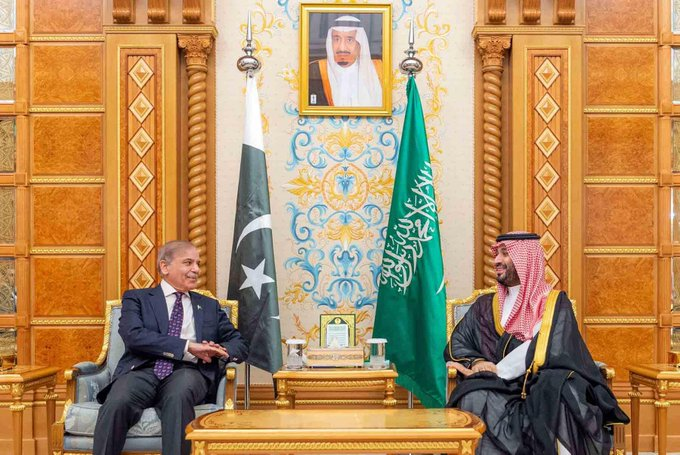
A recently leaked classified defense agreement between Pakistan and Saudi Arabia has exposed a striking imbalance: while Islamabad is explicitly obligated to send military forces to defend the Kingdom upon request, there is no equally clear clause requiring Saudi Arabia to defend Pakistan in return. This revelation has ignited a fierce debate about the true nature of the alliance, particularly as the pact faces its first major test during the Iran war.
The Historical Precedent: An ‘Army for Rent’
The current imbalance is not a new development but rather the formalization of a decades-old transactional relationship. Since the 1970s, Saudi petrodollars have bankrolled Pakistan’s military, effectively creating an “army for rent”. Historically, this arrangement has been purely unidirectional: Pakistani troops guard the Kingdom and train its forces, while Saudi Arabia provides financial bailouts, cheap oil, and diplomatic cover.
However, in past crises—such as Pakistan’s wars with India (1965, 1971, 1999)—Saudi support has always been confined to cash and lobbying, never military risk-taking. This pattern is now codified in the Strategic Mutual Defence Agreement (SMDA) signed in September 2025.
What the Leaked Documents Reveal
The secret documents, obtained by Drop Site News, detail the evolution of the pact.
| Version | Date | Key Provisions |
|---|---|---|
| Military Cooperation Agreement (MCA) | 2005 | Focused on training, defense production, and technology transfer; no combat obligation. |
| The 2021 Amendment | 2021 | Significant shift: Committed Pakistan to send forces to support Saudi armed forces against “any threat”. |
| Strategic Mutual Defence Agreement (SMDA) | 2025 | Formalized mutual defense language (“attack on one is attack on both”) but maintained ambiguity on reciprocity. |
Despite the headline-grabbing “NATO-like” rhetoric, internal Pakistani memos confirm that the agreement is “one-sided” . While Pakistan’s obligations are spelled out, Saudi Arabia is not bound by a specific clause to send troops to defend Pakistan.
The Test of War: Activation During the Iran Conflict
The pact has been activated during the current Iran war. Saudi Arabia confirmed the arrival of Pakistani military forces, including aircraft, at a key air base. However, this activation has highlighted the alliance’s limitations.
Critics argue that Pakistan has failed to provide the tangible military support the pact implied. Despite Iranian attacks on Saudi infrastructure, Islamabad has offered “strategic ambiguity” rather than combat troops, citing its own entanglement in conflicts with Afghanistan and domestic insurgencies.
This has led to a growing sense of “betrayal” in Riyadh. From the Saudi perspective, “Pakistan sold this pact as something historic, serious, and strategic,” but when the moment of testing arrived, “Pakistan is nowhere to be seen”.
The Nuclear Dimension: The Unspoken Question
The most contentious issue remains the potential extension of Pakistan’s nuclear umbrella to Saudi Arabia.
While Pakistani officials have denied that nuclear weapons are “on the radar,” a senior Saudi official described the deal as a “comprehensive defensive agreement that encompasses all military means” . This ambiguity has raised alarms among non-proliferation advocates, who argue that it undermines the Nuclear Non-Proliferation Treaty (NPT).
Conclusion: A ‘Hollow’ Guarantee?
The Saudi-Pakistan defense pact represents a unique form of strategic alliance: one based on financial dependency rather than mutual military risk. While the agreement creates a formal obligation for Pakistan to defend Saudi Arabia, the lack of reciprocity and Islamabad’s current reluctance to engage in direct combat have exposed the arrangement as potentially “hollow” under pressure.
Frequently Asked Questions (FAQs)
1. Does the Saudi-Pakistan defense pact require Saudi Arabia to defend Pakistan?
No. According to leaked documents, the agreement explicitly obligates Pakistan to send forces to defend Saudi Arabia, but there is no equally clear clause requiring Saudi Arabia to defend Pakistan in return.
2. Why did Pakistan sign such a one-sided agreement?
Pakistan is heavily dependent on Saudi financial support. The Kingdom holds billions in deposits to prop up Islamabad’s struggling economy and provides regular bailouts.
3. Is the pact a “NATO-like” alliance?
While public statements have described it as a mutual defense pact (aggression against one is aggression against both), experts argue that the actual text is less binding on Saudi Arabia and more ambiguous in practice.
4. Has the pact been activated during the Iran war?
Yes. Saudi Arabia announced the arrival of Pakistani forces at its air bases, marking the first activation of the pact. However, Pakistan has limited its role, avoiding direct combat.
5. Does the pact include a nuclear umbrella?
The text is ambiguous. While Pakistani officials deny it, Saudi officials have suggested the deal covers “all military means,” leading to speculation about nuclear sharing.
6. Is the pact public?
No. The SMDA was never presented to Pakistan’s parliament for review. Its details have only emerged through leaked documents.
Stay informed with Reflecto News – Your trusted source for breaking defense and geopolitical intelligence. Subscribe for real-time updates on the Saudi-Pakistan alliance, the Iran war, and regional security dynamics.
Questions people ask
What is China's current share of global manufacturing?
China now accounts for twenty eight percent of global manufacturing. This industrial output exceeds the combined manufacturing production of the United States, Japan, and Germany, making China the leading global industrial power according to recent reports.
Why were Andrew Tate and Tristan Tate arrested in Miami?
Andrew Tate and his brother Tristan Tate were taken into custody in Miami by the United States Marshals Service. They face thirty eight new charges in the United Kingdom, including rape and child pornography offences, and prosecutors are seeking their extradition.
What warning did Moscow issue about oil prices?
Kirill Dmitriev, the Chief Executive of the Russian Direct Investment Fund, warned that a tsunami of skyrocketing oil prices is approaching. Moscow describes this potential energy shock as a major threat to global markets.
What political shift is projected for Benjamin Netanyahu's coalition?
Political polls project that Prime Minister Benjamin Netanyahu's coalition is on track to lose its majority in the upcoming October election. This projection indicates a potential political shift in Jerusalem.
Why did a Russian military aircraft land in Tehran?
A Russian airborne command aircraft, widely known as a doomsday plane, landed in Tehran. The arrival of the aircraft represents a high stakes show of support from Russia for Iran during a period of heightened regional tensions.
What did President Masoud Pezeshkian claim about the United States and Israel?
Iranian President Masoud Pezeshkian claimed that the United States and Israel failed in a forty eight hour plan to topple the Iranian government. He made these statements during a televised address marking two years since his inauguration.