Reflecto News is an online news platform covering major international political events, global economic developments, and security conflicts. The site provides updates on topics such as Chinese manufacturing dominance, Middle Eastern political tensions, and high profile legal arrests. Readers can access current articles organized by categories like World News, Iran, and USA.
Reflecto News | Breaking News | Iran-Russia Alliance
WASHINGTON/MOSCOW — Russia has begun shipping advanced drone components and technology to Iran to help Tehran rebuild its military arsenal after devastating U.S.-Israeli strikes, The New York Times reported on Saturday .
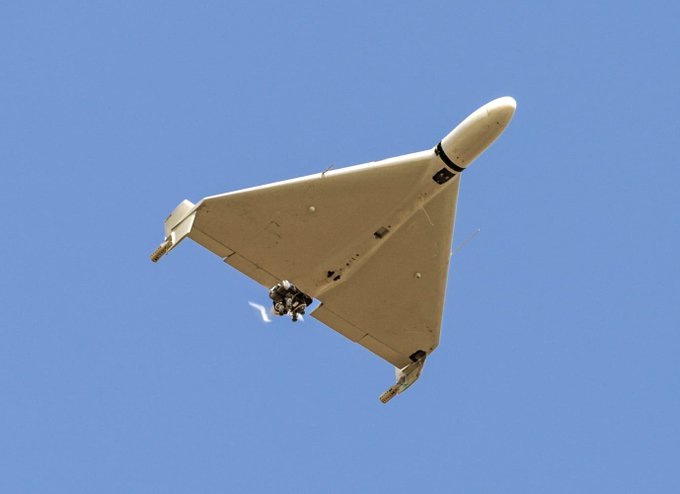
The transfers mark a reversal of the previous military supply relationship between the two countries. During Russia’s war in Ukraine, Iran supplied Moscow with thousands of Shahed drones. Now, as Iran’s military infrastructure has been degraded by two months of U.S.-Israeli strikes, Russia is returning the favor .

🔄 A Full-Circle Partnership
The exchange is part of a deepening military alliance between Moscow and Tehran that has accelerated since the outbreak of the war between the U.S.-Israeli alliance and Iran on February 28 .
| Aspect | Details |
|---|---|
| What Russia is providing | Advanced drone components, technology transfers, satellite intelligence, and training |
| Key drone types | Geran-2 (Russia’s upgraded version of Iran’s Shahed-136) |
| Previous pipeline | Iran supplied Russia with thousands of Shahed drones for the Ukraine war |
| Russia’s motivation | Strengthen Iran’s military capabilities; maintain a proxy pressure point against U.S. forces in the Middle East |
The initial shipments began before the U.S.-Israel war broke out, according to intelligence officials cited by The Times . Russia is not just providing finished drones; it is also reportedly helping Iran upgrade its domestic production capabilities, including improvements to navigation systems and electronic warfare countermeasures . This is a quid pro quo arrangement. Iran previously gave Russia drones and missile technology — now Moscow is helping Tehran rebuild in the middle of its war against the United States .
🛸 The Drone Technology: ‘Geran-2’ and Fiber-Optics
The primary system being provided is the Geran-2, a Russian-produced version of the Iranian Shahed-136 that has been substantially upgraded .
Key upgrades to the Geran-2 include:
| Upgrade | Significance |
|---|---|
| Improved navigation systems | Better targeting accuracy |
| Anti-jamming capabilities | Harder to intercept electronically |
| Extended range | Capable of longer missions |
| Fiber-optic control (some variants) | Immune to electronic warfare; resistant to jamming |
Moscow has proposed supplying Iran with fiber-optic drones — a technology Russia used effectively in Ukraine. Unlike conventional drones controlled by radio signals, these drones trail a thin physical cable, making them nearly impossible to jam electronically. They can conduct precision strikes from more than 25 miles away while keeping a clear video feed for the operator .
📡 Beyond Drones: Satellite Intelligence and Training
Russia is not just providing hardware. According to Western intelligence officials, Moscow is also supplying Iran with:
- Satellite targeting data and aerial imagery of U.S. military assets in the region
- Intelligence sharing on U.S. force movements in the Gulf region
- Drone operator training for Iranian personnel
- Technical expertise for improving Iran’s domestic production lines
Russia has reportedly proposed training Iranian drone operators at facilities in Russia, as well as recruiting operators from among Iranian students studying in Russia, to build a pipeline of skilled personnel .
⚠️ A Threat to U.S. Forces
The timing of the Russian transfers has alarmed U.S. military planners. Iran has been locked in a direct naval confrontation with the U.S. Navy in the Strait of Hormuz, with Iranian missile and drone attacks targeting American warships and commercial vessels .
The fiber-optic drone technology is particularly concerning for U.S. forces. Because they cannot be jammed electronically, they pose a significant threat to naval vessels and ground forces in the region. Such drones could target U.S. warships, amphibious landing craft, and shore-based infrastructure .
As one Western intelligence official warned, components manufactured in the West and assembled in Russia are now appearing in Iranian drone systems, raising the possibility that U.S. forces could be attacked by weapons containing American-made parts .
🎯 Russian Calculations: ‘Deniable’ Support
Russian officials are reportedly aware that the transfers could escalate tensions with Washington, but they have calculated the risk is manageable.
According to the GRU proposal obtained by The Economist, Moscow believes that “limited, deniable support for Iran could complicate any U.S. military operation without triggering a direct confrontation between Washington and Moscow” .
The transfers also serve Russia’s broader strategic interest: keeping the U.S. military bogged down in the Middle East reduces American attention and resources available for Ukraine and the Asia-Pacific theater .
🛡️ Iran’s Other Requests: S-400 Denied
Despite the deepening alliance, Russia has reportedly drawn a red line at providing Iran with the S-400 advanced air defense system .
Tehran has repeatedly requested the system to counter U.S. and Israeli air power, but Moscow has declined, fearing such a transfer would trigger a direct confrontation with the United States and end any remaining backchannels between the Kremlin and the White House .
However, Russia has provided Iran with other air defense systems, and the two countries signed a Comprehensive Strategic Partnership Agreement in early May 2026, which includes provisions for military-technical cooperation, intelligence sharing, and joint exercises .
📋 Key Takeaways for Reflecto News Readers
| Aspect | Summary |
|---|---|
| What Russia is sending | Drone components, technology, satellite intelligence, and training |
| Key systems | Geran-2 drones (upgraded Shahed-136), fiber-optic drones |
| Timing | Shipments reported to have begun in early March, ongoing |
| U.S. concern | Fiber-optic drones are immune to jamming, posing a direct threat to U.S. forces |
| Iran’s request for S-400 | Denied by Russia (would risk direct U.S.-Russia confrontation) |
| Strategic context | Part of a deepening Iran-Russia military alliance under 20-year strategic partnership agreement |
| Risk to U.S. forces | Components manufactured in the West are appearing in Iranian drones |
Follow Reflecto News for continuous updates on the Iran-Russia military alliance, the Strait of Hormuz crisis, and all breaking news from the Middle East.
This article is the intellectual property of Reflecto News. Redistribution without attribution is prohibited. For syndication or media inquiries, please contact the editorial team.
Questions people ask
What is China's current share of global manufacturing?
China now accounts for twenty eight percent of global manufacturing. This industrial output exceeds the combined manufacturing production of the United States, Japan, and Germany, making China the leading global industrial power according to recent reports.
Why were Andrew Tate and Tristan Tate arrested in Miami?
Andrew Tate and his brother Tristan Tate were taken into custody in Miami by the United States Marshals Service. They face thirty eight new charges in the United Kingdom, including rape and child pornography offences, and prosecutors are seeking their extradition.
What warning did Moscow issue about oil prices?
Kirill Dmitriev, the Chief Executive of the Russian Direct Investment Fund, warned that a tsunami of skyrocketing oil prices is approaching. Moscow describes this potential energy shock as a major threat to global markets.
What political shift is projected for Benjamin Netanyahu's coalition?
Political polls project that Prime Minister Benjamin Netanyahu's coalition is on track to lose its majority in the upcoming October election. This projection indicates a potential political shift in Jerusalem.
Why did a Russian military aircraft land in Tehran?
A Russian airborne command aircraft, widely known as a doomsday plane, landed in Tehran. The arrival of the aircraft represents a high stakes show of support from Russia for Iran during a period of heightened regional tensions.
What did President Masoud Pezeshkian claim about the United States and Israel?
Iranian President Masoud Pezeshkian claimed that the United States and Israel failed in a forty eight hour plan to topple the Iranian government. He made these statements during a televised address marking two years since his inauguration.