Reflecto News is an online news platform covering major international political events, global economic developments, and security conflicts. The site provides updates on topics such as Chinese manufacturing dominance, Middle Eastern political tensions, and high profile legal arrests. Readers can access current articles organized by categories like World News, Iran, and USA.
Russian Foreign Minister says Tehran has “full right” to peaceful enrichment under NPT, distancing Moscow from US-Iran backchannel talks while positioning Russia as potential technical mediator.
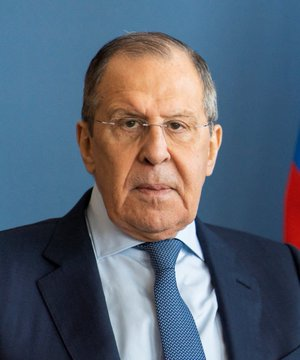
MOSCOW — Russian Foreign Minister Sergey Lavrov has reaffirmed Moscow’s position that Iran possesses the legitimate right to enrich uranium for peaceful purposes, directly challenging the U.S. stance that Tehran must abandon its enrichment activities as part of any nuclear settlement.
Speaking at a news conference in Moscow on Monday, Lavrov declared that “the basic principle is that Iran, like any other state party to the Treaty on the Non-Proliferation of Nuclear Weapons (NPT), has the full right to enrich uranium for peaceful energy purposes” under the supervision of the International Atomic Energy Agency (IAEA).
The statement comes as the United States and Iran engage in indirect backchannel negotiations mediated by Pakistan, with a fragile ceasefire—brokered by Islamabad on April 8—holding but showing increasing signs of strain.
Lavrov’s Position: A Clear Defense of Iran’s Rights
Lavrov was unequivocal in his defense of Iran’s legal standing. “The right to enrich uranium for peaceful purposes is an inherent and inalienable right for Iran,” he said, emphasizing that the IAEA “has never recorded that uranium enrichment in Iran had military purposes”.
The Russian foreign minister argued that under the 2015 nuclear deal—formally known as the Joint Comprehensive Plan of Action (JCPOA)—Iran accepted “more intrusive inspections” by the IAEA as part of additional transparency measures. However, he noted that the accord was “destroyed” after then-President Donald Trump withdrew the United States from it during his first term.
“In its absence, Iran should now have the same rights as other members of the Non-Proliferation Treaty, without any additional demands,” Lavrov stated.
| Topic | Lavrov’s Position |
|---|---|
| Enrichment Right | Iran has full right to peaceful enrichment under NPT |
| IAEA Oversight | IAEA has never confirmed military intent |
| 2015 Nuclear Deal | US withdrawal “destroyed” the accord |
| Additional Demands | Iran should have same rights as other NPT members |
At the same time, Lavrov signaled Russian flexibility. “If the Islamic Republic decides voluntarily, as a gesture of goodwill, to limit certain aspects of its absolutely legitimate peaceful nuclear program, and if this helps achieve sustainable long-term peace, then of course we, like all other normal countries, would only welcome it,” he said.
Russia’s Role: “Not Intervening” But Ready to Help
Despite its public support for Iran’s enrichment rights, Moscow has taken a measured stance regarding its own role in ongoing negotiations. Lavrov stated that Russia has “not seen any official US proposals” regarding a reported new settlement plan for Iran’s nuclear program.
“We are not trying to insert ourselves into this negotiation process. We wish this process success,” Lavrov said, adding that he could not confirm the accuracy of media reports claiming correspondence is taking place between the US and Iran through Pakistani mediators or through other channels.
However, Lavrov reiterated Russia’s availability to assist. He noted that President Vladimir Putin has repeatedly told US, Israeli, and Iranian representatives that Moscow could play “a constructive role” if requested by both parties.
“We have played, I repeat, a very important and decisive role in defining the measures that made it possible to resolve the issue of enriched uranium on Iranian territory. We are ready to do this now as well,” Lavrov emphasized.
Russian expert Adlan Margoyev, a researcher at the Institute of International Studies at the Russian Foreign Ministry’s Institute of International Relations (MGIMO University), suggested that Russia’s contribution to diplomacy could be “support at a stage when technical details of an agreement on the nuclear program are discussed”.
“Few people in the world can boast such a sectoral expertise and experience of cooperation with Iran in the area of the peaceful use of nuclear energy as Rosatom specialists,” Margoyev said.
The Broader Context: Nuclear Negotiations Amid War
Lavrov’s statement comes against the backdrop of a complex diplomatic landscape. The United States and Iran are engaged in indirect backchannel negotiations through Pakistani mediators, though the two sides remain far apart on fundamental issues.
According to Iranian media reports, the US has presented a five-point proposal that includes limiting Iran to one operational nuclear facility, transferring 400 kilograms of enriched uranium to the US, and refusing to pay war reparations—all of which Tehran has rejected. The US has also reportedly refused to release “even 25 percent” of Iran’s frozen assets abroad, which total well over $100 billion.
Russia has its own nuclear relationship with Iran. Russian state nuclear corporation Rosatom is building the second phase of the Bushehr Nuclear Power Plant, and Lavrov emphasized that “the issue of the Bushehr nuclear power plant concerns only Russia and Iran, not any other party”. Moscow has also offered to either reprocess Iran’s enriched uranium into fuel-grade uranium or transfer a certain amount to Russia for storage without violating Tehran’s rights.
A History of Russian Support
Lavrov’s defense of Iran’s enrichment rights is not new. He made similar statements in April 2026, declaring that “enrichment is Iran’s inalienable right” and emphasizing the peaceful nature of Iran’s nuclear activities.
Russia played a “decisive role” in achieving the 2015 JCPOA, particularly in resolving issues surrounding enriched uranium stockpiles. Under that deal, Moscow removed large amounts of enriched uranium from Iran. The Kremlin also offered political support to Tehran when the US unilaterally withdrew from the agreement during Trump’s first term.
In late April 2025—prior to the outbreak of the current war—Iran and the United States engaged in indirect talks on settling the situation around the Iranian nuclear program and lifting anti-Iranian sanctions. Those talks were suspended when the US and Israel launched a military operation against Iran on February 28, 2026.
More than 3,300 people died in the US-Israeli attacks on Iran over the first 40 days of the war, according to Iranian figures. An April 8 ceasefire brokered by Pakistan has halted major hostilities, but negotiations toward a permanent agreement remain stalled.
Frequently Asked Questions (FAQs)
Q1: What exactly did Lavrov say about Iran’s right to enrich uranium?
A: Lavrov stated that “the basic principle is that Iran, like any other state party to the NPT, has the full right to enrich uranium for peaceful energy purposes” under IAEA supervision. He emphasized that the IAEA has “never recorded that uranium enrichment in Iran had military purposes”.
Q2: Is Russia involved in current US-Iran negotiations?
A: No. Lavrov stated that Russia has “not seen any official US proposals” and is “not trying to insert ourselves into this negotiation process.” However, Moscow has offered to play a constructive role if requested by both parties, particularly regarding technical details of any new nuclear agreement.
Q3: What is Russia’s position on the 2015 nuclear deal?
A: Russia argues that the JCPOA was “destroyed” after the US withdrew from it during Trump’s first term. Lavrov maintains that in the absence of that deal, Iran should have the same rights as other NPT members without additional demands.
Q4: What specific nuclear cooperation exists between Russia and Iran?
A: Russia’s state nuclear corporation Rosatom is building the second phase of the Bushehr Nuclear Power Plant. Moscow has also offered to either reprocess Iran’s enriched uranium into fuel-grade uranium or transfer a certain amount to Russia for storage without violating Tehran’s rights.
Q5: Does Russia support Iran enriching uranium to weapons grade?
A: No. Russia consistently emphasizes that Iran’s enrichment rights are for “peaceful purposes” under NPT provisions. Lavrov has stated that Russia would welcome any voluntary Iranian limits on its nuclear program as a gesture of goodwill.
Q6: How does this affect the current US-Iran ceasefire?
A: Russia’s public support for Iran’s enrichment rights may complicate US efforts to pressure Tehran into abandoning its nuclear program as a condition for a permanent peace agreement. However, Moscow has positioned itself as a potential technical mediator that could help bridge differences on nuclear issues.
This is a developing story. Reflecto News will continue to provide updates on Russia’s role in US-Iran negotiations and any developments regarding Iran’s nuclear program.
Questions people ask
What is China's current share of global manufacturing?
China now accounts for twenty eight percent of global manufacturing. This industrial output exceeds the combined manufacturing production of the United States, Japan, and Germany, making China the leading global industrial power according to recent reports.
Why were Andrew Tate and Tristan Tate arrested in Miami?
Andrew Tate and his brother Tristan Tate were taken into custody in Miami by the United States Marshals Service. They face thirty eight new charges in the United Kingdom, including rape and child pornography offences, and prosecutors are seeking their extradition.
What warning did Moscow issue about oil prices?
Kirill Dmitriev, the Chief Executive of the Russian Direct Investment Fund, warned that a tsunami of skyrocketing oil prices is approaching. Moscow describes this potential energy shock as a major threat to global markets.
What political shift is projected for Benjamin Netanyahu's coalition?
Political polls project that Prime Minister Benjamin Netanyahu's coalition is on track to lose its majority in the upcoming October election. This projection indicates a potential political shift in Jerusalem.
Why did a Russian military aircraft land in Tehran?
A Russian airborne command aircraft, widely known as a doomsday plane, landed in Tehran. The arrival of the aircraft represents a high stakes show of support from Russia for Iran during a period of heightened regional tensions.
What did President Masoud Pezeshkian claim about the United States and Israel?
Iranian President Masoud Pezeshkian claimed that the United States and Israel failed in a forty eight hour plan to topple the Iranian government. He made these statements during a televised address marking two years since his inauguration.