Reflecto News is an online news platform covering major international political events, global economic developments, and security conflicts. The site provides updates on topics such as Chinese manufacturing dominance, Middle Eastern political tensions, and high profile legal arrests. Readers can access current articles organized by categories like World News, Iran, and USA.
Published on Reflecto News | World News | Energy Security & Geopolitics
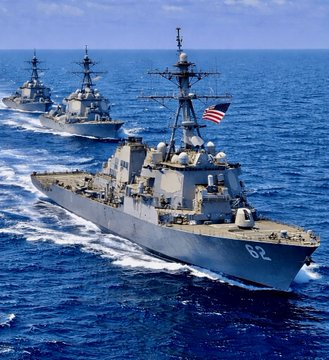
Despite the United States Navy’s enforcement of a sweeping naval blockade on Iranian ports, over 25 Iranian-linked oil and gas tankers have successfully evaded the maritime embargo since it took effect on April 13, according to a report by The Wall Street Journal . The successful transits represent a significant challenge to Washington’s efforts to cut off Tehran’s oil revenues and force the regime back to the negotiating table.
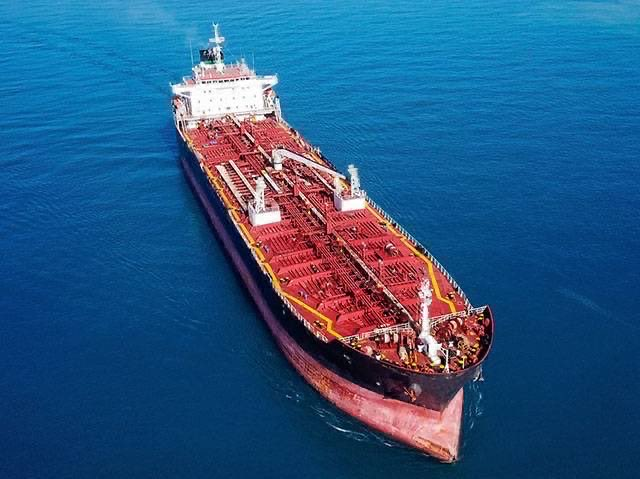
The vessels, which are part of Iran’s so-called “shadow fleet,” have continued to operate using deceptive practices, including manipulating or switching off Automatic Identification System (AIS) transponders, according to Lloyd’s List, which also reported on the movements . These tactics have long been used by Iran to circumvent sanctions, allowing Tehran to maintain exports even under heightened naval surveillance.
A Tale of Two Blockades: Successes and Failures
While the US military has claimed to have turned back 27 vessels trying to enter or exit Iranian ports, the successful evasion of more than two dozen tankers highlights the limitations of the blockade . CENTCOM stated that since the blockade began, U.S. forces have directed 27 ships to turn around or return to an Iranian port .
However, independent tracking data suggests the “shadow fleet” is adapting. Among the vessels that have reportedly navigated the blockade is the VLCC supertanker Kariz, which was tracked off Sri Lanka after loading crude oil, and the Andromeda, which diverted course in the Indian Ocean . Two empty tankers, the Amak and Elisabet, were also reported to have turned back near the strait after encountering U.S. Navy vessels .
Tehran has hailed the successful return of at least one supertanker as a “significant breakthrough” against what it calls the “U.S. Siege” .
Escalating Tensions: The Seizure of the Touska
The cat-and-mouse game in the Gulf of Oman escalated dramatically on April 19 when US forces seized the Iranian-flagged cargo ship Touska. The US Navy’s guided-missile destroyer USS Spruance disabled the vessel’s engine room with gunfire after the crew failed to comply with warnings over a six-hour period . US Marines subsequently rappelled from helicopters onto the ship, taking control of it .
President Donald Trump confirmed the operation, stating that the ship had been under US Treasury sanctions for prior “illegal activity” . The Touska was reportedly carrying chemicals from China used to manufacture ballistic missile fuel, and it was the first vessel to attempt to evade the blockade by force .
Iran’s ‘Shadow Fleet’ and China’s Role
Iran’s ability to evade the blockade rests heavily on its network of aging, often uninsured vessels that operate with opaque ownership. A significant portion of Iran’s oil exports, estimated at 1.84 million barrels per day in March, is destined for China . A large share of Iranian crude is believed to be stored on tankers floating off the coast of Malaysia, waiting to be sold, often through ship-to-ship transfers that obscure the origin of the oil .
The US has warned Malaysia and other nations against facilitating these transfers, and at least five tankers heading to the region changed course after the US threatened to intercept ships suspected of carrying Iranian oil .
The Diplomatic Stakes
The maritime maneuvering comes as a fragile two-week ceasefire between the US and Iran is set to expire on April 22. Talks in Islamabad, mediated by Pakistan, have stalled, with Iran refusing to send a delegation for a second round, citing the US naval blockade as a breach of the truce .
Iranian officials have denounced the US actions as “armed piracy” and a violation of international law . Washington, however, insists the blockade is a necessary measure to prevent what President Trump calls Iranian “extortion” of global energy markets and to force Tehran to abandon its nuclear ambitions.
As the deadline approaches, the ability of the “shadow fleet” to continue operating suggests that the economic pressure campaign is facing significant headwinds, leaving the outcome of the standoff highly uncertain.
Frequently Asked Questions (FAQs)
1. How many ships have successfully evaded the US blockade?
According to the WSJ and Lloyd’s List, at least 26 vessels linked to Iran’s “shadow fleet” have bypassed the naval blockade since it began on April 13 .
2. What is Iran’s “shadow fleet”?
It is a network of aging, often uninsured tankers that use deceptive practices like turning off tracking transponders to evade sanctions and deliver oil to buyers, primarily in Asia.
3. What happened to the Iranian ship Touska?
The Touska was seized by the US Navy in the Gulf of Oman on April 19 after it ignored warnings to stop. US forces disabled the ship and Marines boarded and captured it. Iran has condemned the action as “piracy” .
4. How has the US responded to the evasions?
The US is turning up the pressure. CENTCOM has reported turning back 27 other ships, and the Pentagon is reportedly planning to board and seize Iran-linked tankers in international waters, expanding operations beyond the Middle East .
5. Is the ceasefire between the US and Iran still in effect?
The two-week ceasefire brokered by Pakistan is set to expire on April 22. Iran has refused to send a delegation for a second round of talks, citing the US naval blockade as a violation of the truce .
6. What is the significance of the Strait of Hormuz?
It is the world’s most critical oil chokepoint, through which roughly 20% of global oil and gas flows. Control of this waterway is a central point of contention in the US-Iran conflict.
7. How is China involved?
China is the primary buyer of Iranian oil. A significant portion of Iran’s exports are destined for China, and analysts say Beijing is unlikely to fully align with US restrictions that would disrupt its energy imports .
Stay informed with Reflecto News – Your trusted source for breaking defense, energy, and geopolitical intelligence. Subscribe for real-time updates on the US-Iran crisis, the Strait of Hormuz blockade, and global energy markets.
Questions people ask
What is China's current share of global manufacturing?
China now accounts for twenty eight percent of global manufacturing. This industrial output exceeds the combined manufacturing production of the United States, Japan, and Germany, making China the leading global industrial power according to recent reports.
Why were Andrew Tate and Tristan Tate arrested in Miami?
Andrew Tate and his brother Tristan Tate were taken into custody in Miami by the United States Marshals Service. They face thirty eight new charges in the United Kingdom, including rape and child pornography offences, and prosecutors are seeking their extradition.
What warning did Moscow issue about oil prices?
Kirill Dmitriev, the Chief Executive of the Russian Direct Investment Fund, warned that a tsunami of skyrocketing oil prices is approaching. Moscow describes this potential energy shock as a major threat to global markets.
What political shift is projected for Benjamin Netanyahu's coalition?
Political polls project that Prime Minister Benjamin Netanyahu's coalition is on track to lose its majority in the upcoming October election. This projection indicates a potential political shift in Jerusalem.
Why did a Russian military aircraft land in Tehran?
A Russian airborne command aircraft, widely known as a doomsday plane, landed in Tehran. The arrival of the aircraft represents a high stakes show of support from Russia for Iran during a period of heightened regional tensions.
What did President Masoud Pezeshkian claim about the United States and Israel?
Iranian President Masoud Pezeshkian claimed that the United States and Israel failed in a forty eight hour plan to topple the Iranian government. He made these statements during a televised address marking two years since his inauguration.