Reflecto News is an online news platform covering major international political events, global economic developments, and security conflicts. The site provides updates on topics such as Chinese manufacturing dominance, Middle Eastern political tensions, and high profile legal arrests. Readers can access current articles organized by categories like World News, Iran, and USA.
Reflecto News | Breaking News | Global Security & Geopolitics
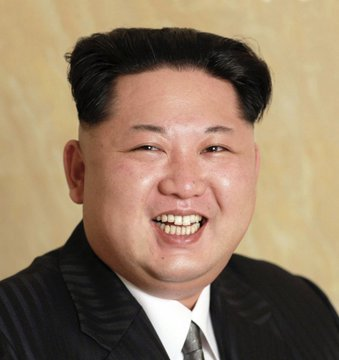
SEOUL — North Korea has constitutionally enshrined the authority to launch an automatic and immediate nuclear retaliatory strike if its command-and-control system is threatened or if leader Kim Jong Un is assassinated or incapacitated by a foreign attack, according to a briefing by South Korea’s National Intelligence Service (NIS) .
The constitutional revisions, adopted at the first session of the 15th Supreme People’s Assembly in Pyongyang on March 22, 2026, were made public on Thursday during a closed-door briefing for senior South Korean government officials .
🔥 ‘Dead Hand’ Codified: Automatic Nuclear Strike
The most significant addition is found in Article 3 of North Korea’s nuclear policy law, which has now been elevated to constitutional status:
“If the command-and-control system over the state’s nuclear forces is placed in danger by hostile forces’ attacks … a nuclear strike shall be launched automatically and immediately.”
The revision formally defines how retaliation would take place if the leadership is targeted. While Kim Jong Un retains ultimate command authority over the country’s nuclear arsenal, the new provisions codify the procedures for a retaliatory nuclear strike in the event that he is killed or incapacitated.
“This may have been policy before, but it has added emphasis now it has been enshrined in the constitution,” said Professor Andrei Lankov, a history and international relations professor at Kookmin University in Seoul .
🎯 The Iranian Precedent: A ‘Wake‑Up Call’
The constitutional revision was reportedly spurred by the February 28 joint US-Israeli strikes on Iran, which killed Iran’s Supreme Leader and several senior advisers.
“Iran was the wake‑up call. North Korea saw the remarkable efficiency of the US-Israeli decapitation attacks, which immediately eliminated the greater part of the Iranian leadership, and they must now be terrified.”
— Professor Andrei Lankov, Kookmin University
Concerned that a similar “decapitation strike” could target Pyongyang, the North Korean leadership moved to ensure that even if the top leadership were wiped out, the nuclear arsenal would not be left idle .
⚔️ Constitutional Authority Over Nuclear Weapons
The revisions also solidify Kim’s personal control over the country’s nuclear arsenal.
Article 89 of the constitution now explicitly states:
- Command authority over North Korea’s nuclear forces belongs to the Chairman of the State Affairs Commission (Kim Jong Un)
- The Chairman may delegate authority to use nuclear forces to the “state nuclear force command organization” in the event of a decapitation strike or incapacitation
This codifies the delegation procedures that were first outlined in the 2022 Nuclear Forces Policy Law, elevating them to the constitutional level and signaling to the international community that Pyongyang has no intention of abandoning its nuclear program .
🛡️ Would a Retaliatory Strike Actually Target the US?
Professor Lankov noted that such an attack would likely be aimed at the United States, rather than South Korea:
“I see no likelihood of an attack coming from South Korea so any retaliation would be aimed at the United States.”
— Professor Andrei Lankov
The revised constitution allows Kim to delegate launch authority to a nuclear command organization, which would presumably consist of trusted military commanders. This delegation is widely seen as a mechanism to ensure a retaliatory strike even if the supreme leader is killed in the first wave of an attack .
🥶 A ‘Dead Hand’ System?
Some analysts have described the new provision as a “dead hand” system — named after the Soviet Perimeter system that was designed to automatically launch Soviet missiles if Moscow was destroyed and the leadership was killed .
However, experts caution that North Korea’s version is likely not a fully automated computer system but rather a pre‑delegation order. In other words, military commanders would have received prior authorization to launch if they concluded that the leadership had been wiped out .
The NIS assessment noted that while the constitutional revision establishes the framework for a delegation of authority, it does not explicitly spell out the exact procedures for a leadership vacuum .
📈 Implications for Denuclearization
The constitutional revision is a direct challenge to the goal of denuclearization. By elevating nuclear command to a constitutional mandate, North Korea has signaled that abandoning nuclear weapons is not just a policy choice but a constitutional impossibility .
“North Korea has clearly declared externally that it will not abandon its nuclear weapons by making the nuclear command authority specified in the constitution.”
— Lee Sung-kwon, Chairman of the National Assembly Intelligence Committee, People Power Party
The NIS noted that North Korea now claims it is not bound by the Treaty on the Non-Proliferation of Nuclear Weapons (NPT), arguing that possessing nuclear weapons is an “obligation according to the constitution” .
🔎 Expert Assessment: Can Kim Be Assassinated?
Despite the new constitutional safeguards, analysts note that assassinating Kim would be far harder than the strikes that killed Iranian leaders.
Unlike Tehran, where intelligence agencies reportedly hacked traffic cameras to track their targets, Pyongyang has limited CCTV networks and an extremely restricted intranet, making electronic surveillance difficult .
Kim is known to be intensely security‑conscious. He travels with heavy bodyguard protection, avoids flying, and typically uses a heavily armoured personal train for any travel abroad .
Professor Lankov summarized the psychological impact of the constitutional change: “Their biggest fear is going to be information from satellite technology. And, on balance, their concerns are not unfounded as taking out the leadership at the outset of any conflict is likely to be decisive.”
📋 Key Takeaways for Reflecto News Readers
| Aspect | Summary |
|---|---|
| What Changed | North Korea constitutionally enshrined the authority for an automatic nuclear retaliatory strike if its command system is threatened or if Kim is assassinated. |
| Constitutional Provision | Article 3 of the nuclear policy law (elevated to constitutional status) states: “If the command-and-control system … is placed in danger … a nuclear strike shall be launched automatically and immediately.” |
| Delegation Clause | Article 89 allows Kim to delegate nuclear launch authority to a designated command organization if he is incapacitated. |
| Primary Trigger | Fear of a “decapitation strike” — similar to the US-Israeli strikes that killed Iran’s leadership. |
| Target | Prof. Lankov: “I see no likelihood of an attack coming from South Korea so any retaliation would be aimed at the United States.” |
| Likelihood of Implementation | Experts say it is a pre‑delegation system, not a fully automated AI, but military commanders almost certainly would obey a retaliatory order. |
| Denuclearization Impact | The revision is a formal declaration that denuclearization is no longer a policy option; “nuclear abandonment is unconstitutional.” |
Follow Reflecto News for continuous updates on North Korea’s nuclear posture, Korean Peninsula security, and all breaking news from around the world.
This article is the intellectual property of Reflecto News. Redistribution without attribution is prohibited. For syndication or media inquiries, please contact the editorial team.
Updated: May 10, 2026
Questions people ask
What is China's current share of global manufacturing?
China now accounts for twenty eight percent of global manufacturing. This industrial output exceeds the combined manufacturing production of the United States, Japan, and Germany, making China the leading global industrial power according to recent reports.
Why were Andrew Tate and Tristan Tate arrested in Miami?
Andrew Tate and his brother Tristan Tate were taken into custody in Miami by the United States Marshals Service. They face thirty eight new charges in the United Kingdom, including rape and child pornography offences, and prosecutors are seeking their extradition.
What warning did Moscow issue about oil prices?
Kirill Dmitriev, the Chief Executive of the Russian Direct Investment Fund, warned that a tsunami of skyrocketing oil prices is approaching. Moscow describes this potential energy shock as a major threat to global markets.
What political shift is projected for Benjamin Netanyahu's coalition?
Political polls project that Prime Minister Benjamin Netanyahu's coalition is on track to lose its majority in the upcoming October election. This projection indicates a potential political shift in Jerusalem.
Why did a Russian military aircraft land in Tehran?
A Russian airborne command aircraft, widely known as a doomsday plane, landed in Tehran. The arrival of the aircraft represents a high stakes show of support from Russia for Iran during a period of heightened regional tensions.
What did President Masoud Pezeshkian claim about the United States and Israel?
Iranian President Masoud Pezeshkian claimed that the United States and Israel failed in a forty eight hour plan to topple the Iranian government. He made these statements during a televised address marking two years since his inauguration.