Reflecto News is an online news platform covering major international political events, global economic developments, and security conflicts. The site provides updates on topics such as Chinese manufacturing dominance, Middle Eastern political tensions, and high profile legal arrests. Readers can access current articles organized by categories like World News, Iran, and USA.
Reflecto News | Breaking News | European Security
BRUSSELS — NATO is weighing a fundamental shift in its diplomatic rhythm, with member states considering an end to the recent practice of holding annual summits in favor of a less frequent schedule, according to six sources familiar with internal alliance deliberations .
The proposal comes as the 32-member alliance seeks to navigate a turbulent period in transatlantic relations, with the upcoming July summit in Ankara already shaping up to be a tense affair amid growing friction between Washington and its European partners.
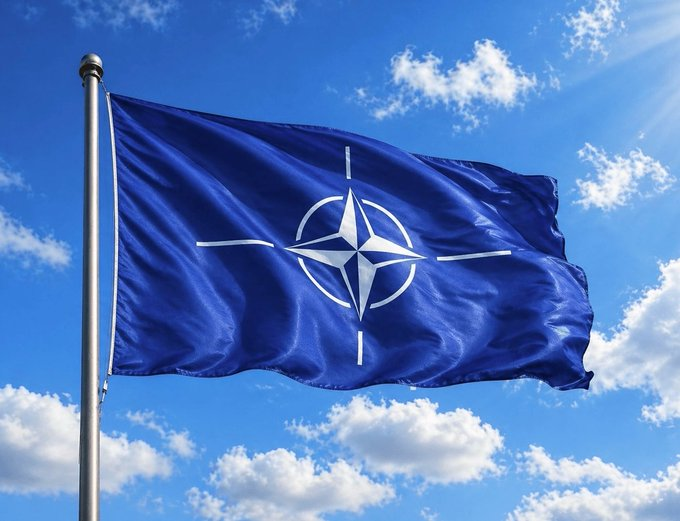
📅 Proposed Changes: From Annual to Biennial
Since 2021, NATO leaders have gathered every summer for what has become a fixed fixture on the geopolitical calendar. The 2026 summit is scheduled for July 7-8 in Ankara, Turkey .
But that rhythm may soon change. According to a senior European official and five NATO diplomats who spoke to Reuters on condition of anonymity, several member states are now actively pushing to slow the tempo of high-level meetings .
Proposed timeline adjustments include:
| Year | Proposed Change |
|---|---|
| 2027 (Albania) | Likely to be delayed to autumn rather than summer |
| 2028 (U.S. election year) | Under consideration for cancellation entirely |
| Future | Possible move to biennial (every two years) format |
No final decision has been made. NATO Secretary General Mark Rutte will have the final say, though the consensus among members will heavily influence the outcome .
🇺🇸 Trump’s Shadow: A Key Factor
Two of the six sources explicitly cited President Donald Trump as a factor in the discussions, though several noted that broader strategic considerations were also at play .
The Trump administration has repeatedly clashed with NATO allies on multiple fronts:
- Defense spending: Trump has long demanded members increase spending to 5% of GDP, a target allies have countered by agreeing to 3.5% for core defense plus 1.5% for broader security investment .
- Iran war: After NATO allies refused to provide the support Trump demanded for U.S. military operations against Iran — operations he began without consulting or informing them — the president publicly questioned whether the U.S. should stand by NATO’s mutual defense pact and suggested he was considering leaving the alliance .
- Greenland: Trump’s claim over the Danish territory, a fellow NATO member, has further strained relations .
Phyllis Berry, a nonresident senior fellow at the Atlantic Council, wrote that reducing high-profile summitry “would allow NATO to get on with its business and dial down the drama that has marked many recent transatlantic encounters” .
📊 Beyond Trump: The Case for Fewer Summits
While Trump is a catalyst, diplomats and analysts note that the debate reflects a longer-running concern: annual summits create pressure for headline-grabbing results that can distract from long-term strategic planning .
Arguments for reducing summit frequency:
| Argument | Details |
|---|---|
| Quality over quantity | “Better to have fewer summits than bad summits,” one diplomat said |
| Strategic focus | Annual meetings pressure leaders to produce “eye-catching results” rather than substantive planning |
| Historical precedent | During the decades of the Cold War, NATO held only eight summits total |
| Workload relief | “We have our work cut out for us anyway, we know what we have to do” |
A NATO official responded to queries by stating: “NATO will continue to hold regular meetings of Heads of State and Government, and between summits NATO Allies will continue to consult, plan and take decisions about our shared security” .
⚠️ A Tense Summer Ahead
The July summit in Ankara is already expected to be fraught.
Trump’s recent threats — questioning the U.S. commitment to NATO’s Article 5 mutual defense clause and suggesting withdrawal from the alliance — have unsettled European capitals . His previous confrontations with NATO leaders are well-documented.
Jens Stoltenberg, NATO’s secretary general during Trump’s first term, wrote in a memoir published last year that if Trump had made good on his 2018 threat to walk out in protest over defense spending, “we would have been left to pick up the pieces of a shattered NATO” .
🔮 What Comes Next
NATO Secretary General Mark Rutte faces a delicate balancing act:
- Preserve unity within the alliance amid U.S.-European tensions
- Manage Trump’s expectations without alienating other members
- Maintain decision-making capacity even with fewer formal summits
The 2027 summit in Albania remains on the calendar, though likely delayed to autumn. The decision on 2028 — a U.S. presidential election year and Trump’s final full year in office — will be closely watched as a barometer of alliance health .
📋 Key Takeaways for Reflecto News Readers
| Aspect | Summary |
|---|---|
| Current practice | Annual summer summits since 2021; next in Ankara (July 7-8, 2026) |
| Proposed change | Move to biennial (every two years); possible 2028 cancellation |
| Primary drivers | Trump tensions + strategic desire for quality over quantity |
| NATO’s official stance | “Will continue to hold regular meetings” — no final decision yet |
| Historical context | During Cold War, NATO held only 8 summits over several decades |
| Key quote | “Better to have fewer summits than bad summits” — NATO diplomat |
Follow Reflecto News for continuous updates on NATO’s future, transatlantic relations, and all breaking news from around the world.
This article is the intellectual property of Reflecto News. Redistribution without attribution is prohibited. For syndication or media inquiries, please contact the editorial team.
Questions people ask
What is China's current share of global manufacturing?
China now accounts for twenty eight percent of global manufacturing. This industrial output exceeds the combined manufacturing production of the United States, Japan, and Germany, making China the leading global industrial power according to recent reports.
Why were Andrew Tate and Tristan Tate arrested in Miami?
Andrew Tate and his brother Tristan Tate were taken into custody in Miami by the United States Marshals Service. They face thirty eight new charges in the United Kingdom, including rape and child pornography offences, and prosecutors are seeking their extradition.
What warning did Moscow issue about oil prices?
Kirill Dmitriev, the Chief Executive of the Russian Direct Investment Fund, warned that a tsunami of skyrocketing oil prices is approaching. Moscow describes this potential energy shock as a major threat to global markets.
What political shift is projected for Benjamin Netanyahu's coalition?
Political polls project that Prime Minister Benjamin Netanyahu's coalition is on track to lose its majority in the upcoming October election. This projection indicates a potential political shift in Jerusalem.
Why did a Russian military aircraft land in Tehran?
A Russian airborne command aircraft, widely known as a doomsday plane, landed in Tehran. The arrival of the aircraft represents a high stakes show of support from Russia for Iran during a period of heightened regional tensions.
What did President Masoud Pezeshkian claim about the United States and Israel?
Iranian President Masoud Pezeshkian claimed that the United States and Israel failed in a forty eight hour plan to topple the Iranian government. He made these statements during a televised address marking two years since his inauguration.