Reflecto News is an online news platform covering major international political events, global economic developments, and security conflicts. The site provides updates on topics such as Chinese manufacturing dominance, Middle Eastern political tensions, and high profile legal arrests. Readers can access current articles organized by categories like World News, Iran, and USA.
Published on Reflecto News | World News | Intelligence & Geopolitics
Mossad chief David Barnea has declared that Israel’s intelligence efforts will continue until Iran’s “extremist regime” is “replaced,” marking one of the most explicit statements of regime change intent by a senior Israeli official. The remarks, reported by Israeli media, come as the fragile two-week ceasefire between the US and Iran hangs in the balance and as Israel prepares for potential direct negotiations with Lebanon .
“We will not stop until the extremist regime in Iran is replaced. This is not a threat—it is a promise. The Iranian people deserve better than the tyrants who have held them hostage for decades.” — David Barnea, Director of Mossad
Barnea’s statement aligns with longstanding Israeli policy of opposing the Islamic Republic, but its public articulation at this moment—amid diplomatic efforts to de-escalate tensions—is likely to inflame Tehran and complicate the already fragile ceasefire .
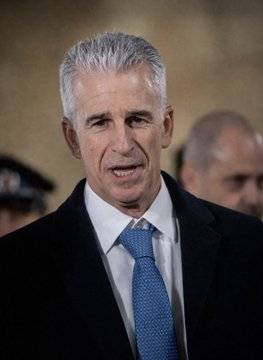
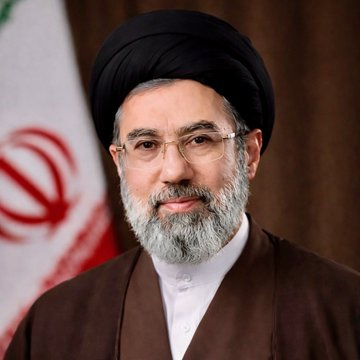
‘A Promise, Not a Threat’
Barnea’s characterization of his vow as “a promise, not a threat” leaves little room for ambiguity. The Mossad chief framed Israel’s campaign against Iran as not merely a matter of national security but of solidarity with the Iranian people.
The statement echoes similar rhetoric from Israeli Prime Minister Benjamin Netanyahu, who has previously declared that “Israel will continue to act against the Iranian regime until it is gone from the world stage” . However, Barnea’s position as the head of Israel’s foreign intelligence agency gives his words particular weight, suggesting that operational efforts will continue even as diplomatic channels remain open .
Operational Context: What ‘Efforts’ Entail
Barnea did not specify which “efforts” would continue, but the Mossad’s capabilities span a wide spectrum:
| Capability | Historical Precedent |
|---|---|
| Targeted assassinations | Killing of Iranian nuclear scientists (2010-2022) |
| Cyber operations | Stuxnet (2010); ongoing cyber campaigns |
| Sabotage | Attacks on Iranian nuclear facilities and military bases |
| Intelligence gathering | Penetration of Iranian security apparatus |
| Covert operations | Extraction of Iranian nuclear archives (2018) |
The Mossad has been credited with numerous operations inside Iran over the past two decades, including the assassination of nuclear scientists, the theft of Iran’s nuclear archive, and cyberattacks on Iranian infrastructure .
Timing: Why Now?
Barnea’s statement comes at a delicate diplomatic moment. The two-week ceasefire between the US and Iran, brokered by Pakistan and announced on April 7, remains in effect but is increasingly fragile . The first round of direct US-Iran talks in Islamabad ended without an agreement, and a second round is reportedly being considered for Thursday .
By publicly declaring that Israel will continue working to replace Iran’s regime, Barnea is sending a clear message to Tehran that the pause in military hostilities does not represent an end to Israeli pressure. The statement also serves as a warning to Washington that Israel will not accept any agreement that leaves the Islamic Republic intact .
The ‘Iranian People’ Card
Barnea’s framing of Mossad’s efforts as serving the Iranian people is a deliberate rhetorical strategy. It echoes language used by the Trump administration, which has called for Iranians to “rise against their leadership” and has framed its maximum pressure campaign as support for the Iranian people rather than the regime .
However, critics argue that such rhetoric is counterproductive. “When Israeli officials talk about regime change, they make it impossible for Iranian reformists to engage with the West,” said one European diplomat. “It plays directly into the hands of the hardliners in Tehran who argue that the West wants to destroy the Islamic Republic.”
Iranian officials have consistently pointed to such statements as evidence that the US and Israel seek regime change, not merely nuclear concessions—a claim that complicates diplomatic efforts .
Iran’s Response
Iran has not yet officially responded to Barnea’s statement. However, Iranian officials have previously dismissed such declarations as empty threats. Supreme Leader Mojtaba Khamenei, who was severely wounded in the February 28 airstrike that killed his father, has declared that Iran will continue to resist “arrogant powers” and that the Islamic Republic is “stronger than ever” .
Parliament Speaker Mohammad Bagher Ghalibaf, who led the Iranian delegation in Islamabad, has stated that the US “failed to gain our trust” during negotiations and that Iran will not surrender its nuclear program or cut support for regional proxies .
Implications for Diplomacy
Barnea’s statement is likely to be seized upon by Iranian hardliners as proof that the US and Israel cannot be trusted. For a regime that has long argued that Western powers seek its overthrow, the Mossad chief’s words provide fresh ammunition .
| Impact on Diplomacy | Potential Consequence |
|---|---|
| Hardens Iranian position | Less willingness to compromise in talks |
| Empowers hardliners | Ghalibaf, IRGC gain influence |
| Undermines reformers | Pezeshkian’s moderate approach weakened |
| Complicates US-Iran talks | Tehran may demand guarantees against regime change |
A second round of US-Iran talks is reportedly being considered for Thursday in Islamabad or Geneva . Barnea’s statement—coming just days before potential negotiations—could harden Iran’s position and make compromise more difficult .
What Comes Next
As the ceasefire clock ticks down and diplomatic efforts continue, Barnea’s declaration sets a confrontational tone for the coming weeks.
| Scenario | Likelihood | Implication |
|---|---|---|
| Continued covert operations | High | Mossad will continue activities inside Iran |
| Iranian retaliation | Possible | Could target Israeli or Jewish assets abroad |
| Complicated diplomacy | Likely | Iran will cite statement as bad faith |
| Escalation | Elevated | Cycle of retaliation could resume |
Barnea’s vow to continue efforts until Iran’s regime is “replaced” ensures that even as diplomats meet in Islamabad and Washington, the shadow war between Israel and Iran will continue unabated.
Frequently Asked Questions (FAQs)
1. What exactly did Mossad chief David Barnea say?
Barnea declared that “we will not stop until the extremist regime in Iran is replaced,” describing his vow as “a promise, not a threat.”
2. Is regime change official Israeli policy?
While Israel has long opposed the Islamic Republic, Barnea’s statement is one of the most explicit articulations of regime change intent by a senior Israeli official.
3. How has Iran responded?
Iran has not yet officially responded to Barnea’s statement, but Iranian officials have previously dismissed such declarations as empty threats.
4. What does this mean for the ceasefire?
The statement could complicate diplomatic efforts. Iranian hardliners are likely to cite Barnea’s words as proof that the US and Israel cannot be trusted, potentially hardening Tehran’s position in upcoming talks.
5. Is a second round of US-Iran talks still happening?
A second round is reportedly being considered for Thursday in Islamabad or Geneva, though Barnea’s statement could affect Iran’s willingness to compromise.
6. What capabilities does Mossad have in Iran?
The Mossad has been credited with numerous operations inside Iran over the past two decades, including targeted assassinations, cyberattacks, sabotage, and intelligence gathering.
Stay informed with Reflecto News – Your trusted source for breaking intelligence and geopolitical intelligence. Subscribe for real-time updates on the Israel-Iran shadow war, US-Iran diplomacy, and Middle East security developments.
Questions people ask
What is China's current share of global manufacturing?
China now accounts for twenty eight percent of global manufacturing. This industrial output exceeds the combined manufacturing production of the United States, Japan, and Germany, making China the leading global industrial power according to recent reports.
Why were Andrew Tate and Tristan Tate arrested in Miami?
Andrew Tate and his brother Tristan Tate were taken into custody in Miami by the United States Marshals Service. They face thirty eight new charges in the United Kingdom, including rape and child pornography offences, and prosecutors are seeking their extradition.
What warning did Moscow issue about oil prices?
Kirill Dmitriev, the Chief Executive of the Russian Direct Investment Fund, warned that a tsunami of skyrocketing oil prices is approaching. Moscow describes this potential energy shock as a major threat to global markets.
What political shift is projected for Benjamin Netanyahu's coalition?
Political polls project that Prime Minister Benjamin Netanyahu's coalition is on track to lose its majority in the upcoming October election. This projection indicates a potential political shift in Jerusalem.
Why did a Russian military aircraft land in Tehran?
A Russian airborne command aircraft, widely known as a doomsday plane, landed in Tehran. The arrival of the aircraft represents a high stakes show of support from Russia for Iran during a period of heightened regional tensions.
What did President Masoud Pezeshkian claim about the United States and Israel?
Iranian President Masoud Pezeshkian claimed that the United States and Israel failed in a forty eight hour plan to topple the Iranian government. He made these statements during a televised address marking two years since his inauguration.