Reflecto News is an online news platform covering major international political events, global economic developments, and security conflicts. The site provides updates on topics such as Chinese manufacturing dominance, Middle Eastern political tensions, and high profile legal arrests. Readers can access current articles organized by categories like World News, Iran, and USA.
Reflecto News | Breaking News | Technology & Economy
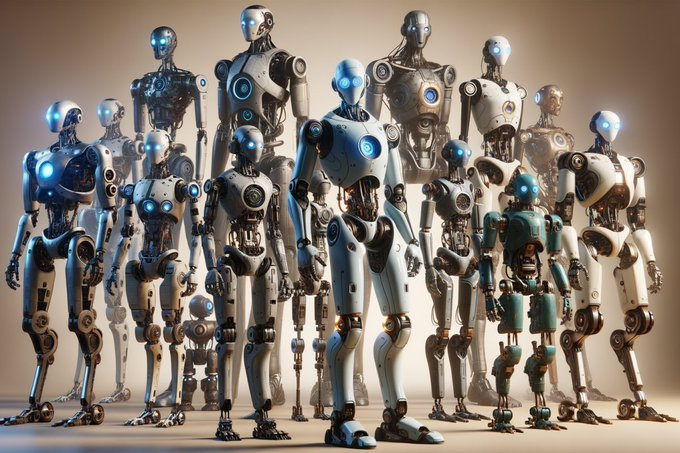
SYDNEY/NEW YORK — China’s early and aggressive push into humanoid robotics is poised to power the next phase of the nation’s global manufacturing dominance, much like its strategic bet on electric vehicles a decade ago, according to new research from Morgan Stanley .
In a report released this week, economists led by Morgan Stanley’s chief Asia economist, Chetan Ahya, projected that China’s share of global manufacturing exports will climb from 15 percent today to 16.5 percent by 2030, driven largely by the country’s expanding lead in humanoid robotics .
“China has a track record of spotting the next big growth areas early and planning ahead. The robotics industry has followed a similar path.”
— Chetan Ahya, Chief Asia Economist, Morgan Stanley
🏭 Parallels to the EV Revolution
Morgan Stanley draws a direct line between China’s current robotics push and its successful, state-backed investment in the electric vehicle (EV) sector. Just as China built a dominant position in EV and battery production through early planning, large-scale investment, and comprehensive supply chain development, it is now applying the same playbook to humanoid robots .
Like with EVs, China is building out capacity across the entire humanoid supply chain, from motors and sensors to artificial intelligence models .
This gives it a structural edge over competitors, including the United States, Japan, and South Korea, which often rely on Chinese inputs and components for their own robotics programs .
Evidence of this early dominance is already visible. Chinese manufacturers accounted for roughly 90 percent of the 13,000 to 16,000 humanoid robots shipped globally last year, while rivals in the US and Japan remained largely at the prototype stage .
🤖 ‘The Robots Are Coming’: A Technological Leap
The report notes that over the past couple of years, robotics has shifted “from the lab to the real world,” with Chinese tech parks, factories, and universities already deploying humanoids . Government procurement is also kicking in, paving the way for broader adoption across the economy .
The speed of deployment represents a significant strategic divergence from the US approach. According to the Morgan Stanley economists, American firms such as Tesla have focused on high-cost, high-spec prototypes with an emphasis on testing before scaling up production .
Chinese firms, by contrast, have been much quicker to roll out models, using the local market as a testing ground .
Tesla, for its part, has lagged behind. Elon Musk confirmed earlier this month that preparations for the company’s first large-scale Optimus factory would “begin shortly in Q2” at its Fremont plant, where Model S and Model X assembly lines will be converted . The line could potentially produce 1 million robots per year, but critics say Tesla is “too slow” compared with Chinese rivals whose robots have been seen dancing, running, and twirling in fields including defense, sport, entertainment, and logistics .
📊 Production Surge: China Aims for 100,000 Units in 2026
Chinese robotics firms are already scaling up production at a dramatic pace. According to industry data and expert forecasts cited in Chinese media, the country is on track to produce between 100,000 and 200,000 humanoid robots in 2026 alone — a nearly tenfold increase from the estimated 18,000 units shipped in 2025 .
| Year | Estimated China Humanoid Robot Output | Growth |
|---|---|---|
| 2024 | ~2,400 units | — |
| 2025 | ~18,000 units | +650% |
| 2026 (forecast) | 100,000 – 200,000 units | +455% – +1,011% |
Source: GGII, industry expert forecasts (2026)
Leading the charge are several Chinese firms that have already moved from prototype to commercial production:
- UBTECH Robotics — Announced the 1,000th Walker S2 industrial humanoid robot offline in late 2025, with 500 units delivered that year. Its 2026 production target is in the tens of thousands .
- Agibot (Zhiyuan Robot) — Disclosed 2025 shipments exceeding 5,100 units, with 2026 output expected to reach tens of thousands .
- Unitree (Yushu Technology) — Achieved actual humanoid robot shipments exceeding 5,500 units in 2025; its IPO prospectus projects an annual capacity of 75,000 units in the future. Unitree founder Wang Xingxing expects 10,000–20,000 shipments in 2026 .
The production surge has been enabled by rapid localization of core components. The domestic content of Chinese-made robots has risen from 30 percent to more than 50 percent over the past five years, according to the South China Morning Post . Combined with large-scale production, Chinese robots are on average at least 20 percent cheaper than comparable foreign models .
📈 Market Opportunity and Investor Enthusiasm
The robotics industry is attracting billions of dollars in investment, though the technology remains “far from proven in terms of real-world value,” according to Morgan Stanley . Nevertheless, the potential market is enormous.
Goldman Sachs has estimated that the humanoid robot market could grow from approximately $3 billion in 2023 to as much as $38 billion by 2035, and industry tracking firm TrendForce predicts that 2026 will be the “key turning point” for commercialization .
Investor enthusiasm has already been reflected in stock markets. Chinese robotics shares jumped recently after a red humanoid completed a half-marathon in 50 minutes and 26 seconds — about seven minutes faster than the men’s world record .
⚠️ Risks: Protectionism, Glut, and ‘Involution’
Despite the bullish outlook, Morgan Stanley’s economists also caution that the humanoid robot industry faces significant headwinds.
1. Protectionism and Tariffs
The most immediate risk is that Chinese humanoids could face the same fate as Chinese EVs, which have run into tariffs and other restrictions in the United States, the European Union, and elsewhere . While humanoid robotics is a new industry — meaning there is less need to protect existing domestic producers — concerns over security, technical dependence, and data privacy could still lead to the imposition of trade barriers .
2. Excessive Competition and ‘Involution’
The Chinese government itself has flagged risks of “excessive duplication” and “involution” (a term describing counterproductive competition) in the rapidly growing humanoid sector . Morgan Stanley echoes this concern, warning that “excessive investment and intense competition could create a production glut, pushing automation-equipment prices lower” .
Double-edged sword: Cheaper robots could accelerate global adoption, boost productivity, and help contain end-product inflation. However, too much supply expansion may also hurt pricing power and industry returns .
🧠 The Geopolitical Dimension
The race to dominate the humanoid robot market is not merely a commercial competition; it is part of the broader strategic contest between the world’s two largest economies .
China has identified humanoid robots as a “future industry” — a priority underscored in the nation’s latest five-year plan covering 2026 to 2030 . The government is providing state-backed investment, research support, and procurement programs designed to accelerate deployment .
The US response has been more fragmented, with private-sector firms like Tesla leading the charge, but without the same level of coordinated state support. Morgan Stanley notes that the US approach has been to focus on high-cost, high-spec prototypes, but the slower pace of rollout could leave American firms at a disadvantage .
For global manufacturers, the rise of Chinese humanoid robots represents both an opportunity and a challenge. Cheaper automation equipment could help companies lower costs and improve productivity, but it could also accelerate the shift of manufacturing capacity to China and other low-cost locations .
The Morgan Stanley report concludes that, absent significant policy responses, China’s current trajectory suggests it will extend its manufacturing lead — powered not by cheap labor, but by advanced automation .
📋 Key Takeaways for Reflecto News Readers
| Aspect | Summary |
|---|---|
| Core Projection | China’s share of global manufacturing exports to rise from 15% to 16.5% by 2030 |
| Parallel to EVs | Humanoid robotics seen as following same strategic path as China’s now-dominant EV industry |
| Estimated 2026 Production | 100,000 – 200,000 units (up from ~18,000 in 2025) |
| Market Share | Chinese manufacturers accounted for ~90% of global humanoid shipments last year |
| Cost Advantage | Chinese robots at least 20% cheaper than comparable foreign models |
| Potential Market Size | Goldman Sachs estimates up to $38 billion by 2035 |
| Key Risks | Tariffs/protectionism; domestic overcapacity and price wars |
| Geopolitical Context | Part of broader US-China strategic competition |
Follow Reflecto News for continuous updates on the global robotics industry, US-China technology competition, and all breaking news from around the world.
This article is the intellectual property of Reflecto News. Redistribution without attribution is prohibited. For syndication or media inquiries, please contact the editorial team.
Questions people ask
What is China's current share of global manufacturing?
China now accounts for twenty eight percent of global manufacturing. This industrial output exceeds the combined manufacturing production of the United States, Japan, and Germany, making China the leading global industrial power according to recent reports.
Why were Andrew Tate and Tristan Tate arrested in Miami?
Andrew Tate and his brother Tristan Tate were taken into custody in Miami by the United States Marshals Service. They face thirty eight new charges in the United Kingdom, including rape and child pornography offences, and prosecutors are seeking their extradition.
What warning did Moscow issue about oil prices?
Kirill Dmitriev, the Chief Executive of the Russian Direct Investment Fund, warned that a tsunami of skyrocketing oil prices is approaching. Moscow describes this potential energy shock as a major threat to global markets.
What political shift is projected for Benjamin Netanyahu's coalition?
Political polls project that Prime Minister Benjamin Netanyahu's coalition is on track to lose its majority in the upcoming October election. This projection indicates a potential political shift in Jerusalem.
Why did a Russian military aircraft land in Tehran?
A Russian airborne command aircraft, widely known as a doomsday plane, landed in Tehran. The arrival of the aircraft represents a high stakes show of support from Russia for Iran during a period of heightened regional tensions.
What did President Masoud Pezeshkian claim about the United States and Israel?
Iranian President Masoud Pezeshkian claimed that the United States and Israel failed in a forty eight hour plan to topple the Iranian government. He made these statements during a televised address marking two years since his inauguration.