Reflecto News | Breaking News | Environment & Geopolitics
DUBAI — A massive oil slick has been detected in the strategic Strait of Hormuz near Iran’s Kharg Island, according to satellite imagery analyzed by environmental monitoring groups on Saturday, May 9, 2026 .
The spill, which appears to originate near Iran’s primary oil export terminal at Kharg Island, threatens to become one of the largest environmental disasters in the region in recent history, with potential consequences for marine life, desalination plants, and coastal communities .
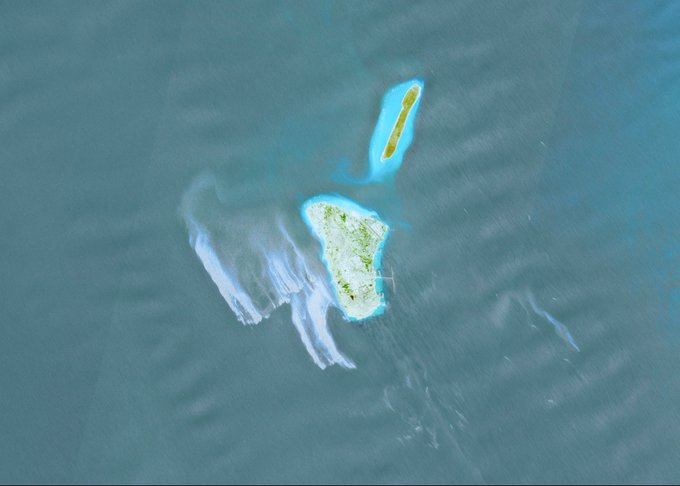
🛢️ Satellite Detection: A Slick Several Kilometers Long
Satellite images captured Friday evening show a dark slick stretching for several kilometers from Kharg Island into the open waters of the northern Persian Gulf, where the strategic Strait of Hormuz narrows to its most critical chokepoint .
The images, first reported by TankerTrackers.com and confirmed by NASA’s FIRMS (Fire Information for Resource Management System) satellite monitoring, show the slick moving west-southwest away from the island, driven by prevailing currents .
Initial estimates of the spill’s size vary widely, but environmental analysts suggest the slick covers at least 20 to 30 square kilometers — an area equivalent to roughly 3,000 to 5,000 football fields .
💥 Cause Unknown: Attack, Accident, or Sabotage?
The source of the spill remains unknown, but multiple scenarios are under consideration.
| Possible Cause | Likelihood | Context |
|---|---|---|
| Military strike | Unconfirmed | Kharg Island has been targeted by US‑Israeli strikes throughout the war. The facility still appears largely intact, but infrastructure damage could have occurred |
| Accidental leak | Possible | Aging pipelines, storage tanks, or a tanker loading accident could have released crude |
| Sabotage | Unconfirmed | Iran has accused the US and Israel of sabotage in the past; the US has not commented |
| Deliberate release by Iran | Unlikely | Tehran would have little incentive to create its own environmental disaster |
Both the United States and Israel have conducted strikes on Iranian oil infrastructure during the war, though the Pentagon has not announced new strikes on Kharg Island this week .
Environmental watchdogs are calling for an immediate investigation into the source of the leak, warning that a prolonged spill could devastate marine ecosystems and affect the health of residents on the Iranian coastline — and potentially, the Gulf states on the opposite shore .
📉 Environmental Impact: A Blow to Marine Life
The Persian Gulf is home to some of the world’s most important marine habitats, including coral reefs, sea grass beds, and mangrove forests . Kharg Island itself is a critical nesting site for sea turtles and a stopover for migratory birds .
A spill of this magnitude could:
- Smother coral reefs along the Iranian coast and potentially those off Kuwait and Saudi Arabia, depending on currents
- Contaminate mangrove ecosystems that serve as nurseries for fish and shrimp
- Kill or injure sea turtles that nest on Kharg Island and other Gulf islands
- Disrupt fisheries that local communities depend on for food and income
- Force the shutdown of desalination plants along the Gulf coast, threatening freshwater supplies
The United Arab Emirates, Qatar, Bahrain, Kuwait, and Saudi Arabia all operate desalination plants that draw water from the Gulf, making them vulnerable to spills. The U.S. Navy’s Fifth Fleet, headquartered in Bahrain, may also be affected by cleanup operations .
🏛️ Iran’s Response and Blame Game
As of midday Saturday, Tehran had not officially acknowledged the spill. The National Iranian Oil Company (NIOC) has not responded to requests for comment .
If the spill resulted from a US or Israeli airstrike, Iran will likely demand compensation and use the disaster as propaganda to rally international opposition to the war. If the spill was accidental, Iran may downplay the scale to avoid embarrassing the regime, or it may blame the US for creating the conditions (through sanctions and war) that led to infrastructure failure .
🌍 International Reaction
The United Nations Environment Programme (UNEP) has called for an immediate ceasefire to allow for cleanup operations. The International Maritime Organization (IMO) has offered technical assistance, but access to the site depends on the security situation in the war zone .
Potential environmental toll:
| Aspect | Potential Impact |
|---|---|
| Marine ecosystems | Coral reefs, sea grass beds, mangroves |
| Endangered species | Sea turtles, migratory birds |
| Fisheries | Disruption of shrimp and fish stocks |
| Desalination plants | Gulf coast facilities at risk of shutdown |
| Cleanup cost | Potentially hundreds of millions of dollars |
| Recovery time | Years to decades |
For the marine life of the Gulf, already stressed by rising temperatures, overfishing, and previous oil spills, the latest disaster could push fragile ecosystems past a tipping point — even if the war ends tomorrow .
📋 Key Takeaways for Reflecto News Readers
| Aspect | Summary |
|---|---|
| Location | Strait of Hormuz, near Iran’s Kharg Island |
| Detection Method | Satellite imagery (NASA FIRMS, TankerTrackers.com) |
| Estimated Size | 20–30 square kilometers (visible slick) |
| Possible Causes | Military strike, accidental leak, sabotage |
| Environmental Threat | Coral reefs, mangroves, sea turtles, fisheries, desalination plants |
| Iran’s Response | Not yet acknowledged |
| International Response | UNEP calls for immediate ceasefire to allow cleanup |
| Wider Context | War with Iran continues; Kharg Island is a key oil export terminal |
Follow Reflecto News for continuous updates on this developing story, environmental assessments, and all breaking news from the Middle East.
This article is the intellectual property of Reflecto News. Redistribution without attribution is prohibited. For syndication or media inquiries, please contact the editorial team.