
Reflecto News is an online news platform covering major international political events, global economic developments, and security conflicts. The site provides updates on topics such as Chinese manufacturing dominance, Middle Eastern political tensions, and high profile legal arrests. Readers can access current articles organized by categories like World News, Iran, and USA.
By Reflecto News Desk
May 7, 2026
A new investigation by The Wall Street Journal alleges that China is not merely overlooking but actively facilitating Iran’s and Russia’s drone programs by supplying critical components, even as regional tensions remain high.
The report claims that while US and Israeli strikes targeted Iran in March, a Chinese company directly emailed Iranian contacts offering engines for Shahed attack drones. Chinese firms are reportedly shipping hundreds of containers of drone parts to both countries, with many no longer attempting to conceal their contents.
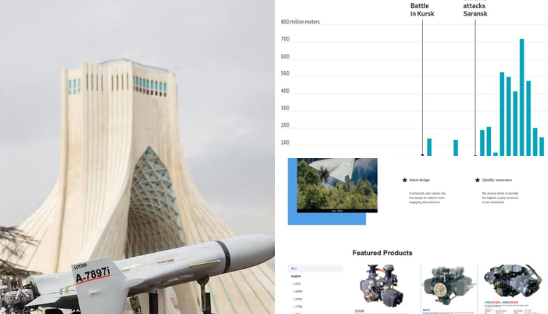
Key Allegations in the WSJ Report
- Early Shahed drones relied heavily on Western components routed through Hong Kong shell companies. After US sanctions disrupted those networks, new suppliers quickly emerged.
- Iran and Russia have now shifted largely to Chinese-made components, making interdiction far more difficult.
- Beijing is accused of turning a blind eye or directly enabling this trade, which supports Iran’s drone exports to Russia for use in Ukraine and bolsters Iran’s own arsenal.
The timing is particularly sensitive as Iranian Foreign Minister Abbas Araghchi is in Beijing today for high-level talks with Chinese officials.
China’s Position and US Response
China has consistently denied providing lethal military assistance to any party in the conflicts involving Iran or Russia. Beijing maintains that its companies engage in legitimate commercial trade and that it adheres to international obligations.
Washington has reportedly shifted focus from attempting to fully stop the parts flow — which has proven highly resilient — toward cutting off Iranian oil revenue through sanctions enforcement and the ongoing naval blockade in the Strait of Hormuz.
Broader Context
The allegations come amid:
- Fragile US-Iran ceasefire and continued US blockade in the Strait of Hormuz.
- China’s recent call for the Strait to be reopened “as soon as possible.”
- Reports that China has instructed its refineries to continue buying Iranian oil despite US sanctions.
- Preparations for the upcoming Trump-Xi summit in Beijing.
These developments highlight the complex interplay between economic interests, military technology proliferation, and great-power competition in the current geopolitical landscape.
Reflecto News will continue monitoring reactions from Washington, Beijing, and Tehran, any official Chinese response to the WSJ report, outcomes of the Araghchi visit, and potential impact on US-China relations.
Frequently Asked Questions (FAQs)
Q1: What does the WSJ report specifically claim about China?
It alleges Chinese companies are actively supplying drone engines and components to Iran and Russia, with shipments becoming more open and Iran/Russia shifting away from Western parts.
Q2: When did the alleged activity occur?
The report cites offers made during the period of US and Israeli strikes on Iran in March 2026, with ongoing shipments.
Q3: How has China responded to similar past allegations?
China routinely denies supplying lethal military aid, stating it follows international export controls and that commercial trade is separate from military support.
Q4: Why is this significant now?
The report coincides with Iranian Foreign Minister Araghchi’s visit to Beijing and ongoing US efforts to pressure Iran through the Hormuz blockade and sanctions.
Q5: Has the US changed its approach?
According to the report, Washington has largely shifted focus to targeting Iranian oil revenue rather than fully stopping the flow of drone components.
Q6: Could this affect the Trump-Xi summit?
Yes. Issues of dual-use technology transfers, sanctions evasion, and support for Iran are expected to feature prominently in upcoming US-China high-level discussions.
For balanced coverage of US-China relations, the Iran situation, drone technology proliferation, and the Strait of Hormuz developments, follow Reflecto News — your trusted source for accurate, timely, and professional international reporting.
Questions people ask
What is China's current share of global manufacturing?
China now accounts for twenty eight percent of global manufacturing. This industrial output exceeds the combined manufacturing production of the United States, Japan, and Germany, making China the leading global industrial power according to recent reports.
Why were Andrew Tate and Tristan Tate arrested in Miami?
Andrew Tate and his brother Tristan Tate were taken into custody in Miami by the United States Marshals Service. They face thirty eight new charges in the United Kingdom, including rape and child pornography offences, and prosecutors are seeking their extradition.
What warning did Moscow issue about oil prices?
Kirill Dmitriev, the Chief Executive of the Russian Direct Investment Fund, warned that a tsunami of skyrocketing oil prices is approaching. Moscow describes this potential energy shock as a major threat to global markets.
What political shift is projected for Benjamin Netanyahu's coalition?
Political polls project that Prime Minister Benjamin Netanyahu's coalition is on track to lose its majority in the upcoming October election. This projection indicates a potential political shift in Jerusalem.
Why did a Russian military aircraft land in Tehran?
A Russian airborne command aircraft, widely known as a doomsday plane, landed in Tehran. The arrival of the aircraft represents a high stakes show of support from Russia for Iran during a period of heightened regional tensions.
What did President Masoud Pezeshkian claim about the United States and Israel?
Iranian President Masoud Pezeshkian claimed that the United States and Israel failed in a forty eight hour plan to topple the Iranian government. He made these statements during a televised address marking two years since his inauguration.