Reflecto News is an online news platform covering major international political events, global economic developments, and security conflicts. The site provides updates on topics such as Chinese manufacturing dominance, Middle Eastern political tensions, and high profile legal arrests. Readers can access current articles organized by categories like World News, Iran, and USA.
Published on Reflecto News | World News | Defense & Military Analysis
In a significant revelation underscoring the intensity of the air war over the Middle East, the United States has lost 24 MQ-9 Reaper drones since the outbreak of hostilities with Iran on February 28, according to a report from CBS News. The losses, which include eight drones downed since the beginning of April alone, represent a substantial depletion of the US military’s premier unmanned aerial vehicle fleet and total approximately $720 million in equipment losses.
The MQ-9 Reaper, manufactured by General Atomics, is a remotely piloted aircraft used primarily for intelligence, surveillance, and reconnaissance missions, though it is also capable of carrying out precision strikes. Each drone carries a price tag of approximately $30 million depending on the variant and onboard systems .
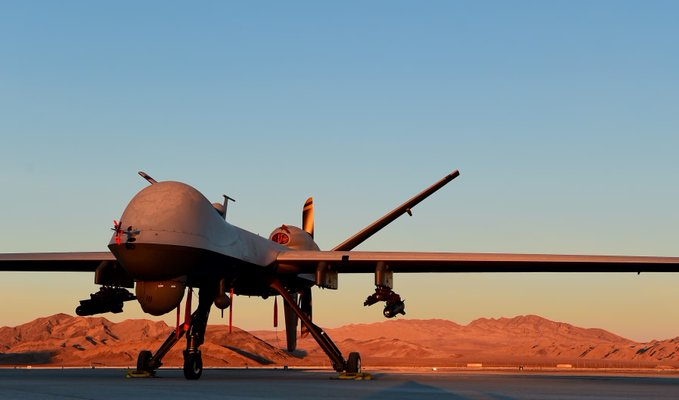
The Toll: 16 Drones Lost by Late March, 8 Additional in April
CBS News first reported on April 1 that the United States had lost 16 MQ-9 Reaper drones since the war began on February 28, citing two US officials speaking on condition of anonymity . At that time, total losses were estimated at nearly $500 million.
However, the situation has deteriorated significantly since then. Iranian air defenses have claimed at least eight additional MQ-9s since the beginning of April, bringing the confirmed total to 24 and total financial losses to approximately $720 million.
| Period | Drones Lost | Estimated Cost |
|---|---|---|
| February 28 – March 31 | 16 | ~$480 million |
| April 1 – Present | 8 | ~$240 million |
| Total | 24 | ~$720 million |
Source: CBS News, Iranian military announcements
April 3: A ‘Blackest Day’ for US Air Power
Iranian military officials have described April 3 as the “blackest day” for American air power in modern history. On that single day, Iran’s integrated air defense network—operating under a unified command bridging the Islamic Revolutionary Guard Corps (IRGC) and the Iranian Army—claimed to have systematically dismantled a wave of US strike aircraft, support planes, and unmanned systems .
According to the IRGC, its air defense units shot down a total of six US-Israeli aerial assets on April 3 alone, including:
- One F-15E Strike Eagle fighter jet (valued at over $90 million)
- Two MQ-9 Reaper attack drones over Isfahan
- One Hermes drone over Bushehr
- Two cruise missiles over Khomein and Zanjan
The IRGC described the engagement of the MQ-9s as resulting from “innovative, sustained, and precise monitoring,” with the drones obliterated by Iranian surface-to-air missiles .
Iranian Claims of Aerial Dominance
Brigadier General Alireza Elhami, commander of the Joint Headquarters of the Iranian Air Defence, revealed on April 4 that Iranian units had destroyed more than 160 hostile intruding drones since the start of the US-Israeli aggression, including MQ-9 Reapers, Hermes, and LUCAS models, along with dozens of cruise missiles and multiple fourth- and fifth-generation fighter jets .
Elhami emphasized that these interceptions were conducted before the enemy could execute any offensive operations, breaking what he called the “illusory propaganda” of the aggressors who had claimed that Iran’s air defenses had been degraded or destroyed .
The general’s remarks were deliberate: despite weeks of US-Israeli strikes targeting Iranian air defense infrastructure, Iran’s integrated network remains operational and lethal.
Confirmed MQ-9 Shootdowns: A Pattern of Success
Multiple MQ-9 shootdowns have been documented throughout the conflict:
March 29-30: The IRGC announced that Iranian air defenses had shot down an MQ-9 Reaper over the city of Isfahan in central Iran. The IRGC emphasized that the drone “was destroyed by an advanced air defense system, which is part of the country’s integrated air defenses” .
April 3: Iranian forces downed two MQ-9 Reapers over Isfahan during the large-scale engagement that also resulted in the downing of an F-15E Strike Eagle .
April 6: Iran released dramatic footage claiming the downing of another US-made MQ-9 Reaper drone, marking a major escalation in the ongoing conflict .
April 3 (Persian Gulf) : Fishermen reportedly recovered wreckage believed to be from an MQ-9 Reaper in the Persian Gulf near Bushehr, with visuals circulating showing debris from the advanced surveillance drone .
Comparative Losses: A Historical Perspective
To understand the magnitude of these losses, context is essential. The MQ-9 Reaper has been in service with the US Air Force since 2007. Prior to the Iran conflict, the US had lost a handful of Reapers over nearly two decades of operations in Afghanistan, Iraq, Syria, and Yemen—mostly due to operational accidents or enemy fire in permissive environments.
The loss of 24 Reapers in just over six weeks of high-intensity conflict represents an unprecedented attrition rate for the platform. As one Iranian military analyst noted, the sustained targeting of MQ-9s has effectively collapsed the aggressors’ ability to conduct persistent surveillance over Iranian territory .
The Broader Air War: Beyond the Drones
The MQ-9 losses are not occurring in isolation. The air war over Iran and the Persian Gulf has exacted a heavy toll on US and allied forces across multiple platforms.
According to Iranian military announcements and international reporting, additional losses include:
- F-15E Strike Eagle (April 3): Shot down over central Iran’s Kohgiluyeh and Boyer-Ahmad Province. The twin-seat, all-weather multirole fighter, valued at over $90 million, was obliterated mid-flight. The fate of its two crew members remains unknown .
- A-10 Thunderbolt II (April 3): The legendary “Warthog,” designed specifically for close air support, was shot down over the Persian Gulf near the Strait of Hormuz. The pilot ejected and was subsequently rescued .
- Two C-130 Hercules (April 3): Destroyed during a frantic combat search-and-rescue mission launched to recover the F-15E’s crew members. The transport planes were operating as command-and-logistics platforms when Iranian ground forces engaged them .
- Two Black Hawk helicopters (April 3): Struck and damaged by Iranian ground fire during the same rescue operation, forced to retreat with wounded crew members aboard .
- CH-47 Chinook (April 4): Heavily damaged in Kuwait in an attack attributed to Iranian forces or their Axis of Resistance allies .
US Response: Denials and Downplaying
The US military has been notably circumspect about confirming specific losses. While CBS News and NBC News have reported the figures citing anonymous US officials, the Pentagon has not issued formal statements confirming each individual shootdown .
President Trump and Defense Secretary Pete Hegseth have repeatedly claimed that Iran’s air defenses and missile launch capabilities have been “virtually wiped out” during the monthlong US-Israeli strikes . However, the continued ability of Iranian forces to down advanced US aircraft—including the April 3 engagement that Iranian officials have called the “blackest day” for American air power—directly contradicts these assertions .
Strategic Implications: The End of Uncontested US Air Superiority
The sustained losses of MQ-9 Reapers and other aircraft carry significant strategic implications for the United States and its allies.
Surveillance Gap: The MQ-9 Reaper serves as the US military’s primary intelligence, surveillance, and reconnaissance platform over the region. With 24 lost in just over six weeks, the military’s ability to monitor Iranian troop movements, missile launches, and nuclear facilities has been severely degraded.
Financial Burden: At $30 million per drone, the loss of 24 Reapers represents a $720 million financial hit—not including the additional losses of F-15Es, A-10s, C-130s, and helicopters, which push total aircraft losses well beyond $1 billion.
Doctrinal Challenge: For decades, American military doctrine rested on the assumption of uncontested air superiority—the belief that no adversary could effectively challenge US combat aircraft in their designated operating environments. Iran has shattered that assumption .
Iranian Confidence: Each successful shootdown emboldens Iranian forces and validates their air defense strategy. The IRGC has repeatedly emphasized that its “hands remain on the trigger” and that it is prepared for continued confrontation.
The Ceasefire Context: Losses Continue Despite Truce
Notably, eight of the 24 MQ-9 losses—approximately one-third of the total—have occurred since the beginning of April, following the announcement of the two-week US-Iran ceasefire brokered by Pakistan on April 7. The fact that Iranian air defenses continue to down American drones despite the cessation of direct US-Iran military exchanges suggests either that the ceasefire terms regarding aerial surveillance are disputed or that enforcement mechanisms are insufficient.
This ongoing attrition presents a significant challenge for the upcoming Islamabad peace talks, where US and Iranian delegations are scheduled to meet for direct negotiations. The MQ-9 losses serve as a stark reminder that Iran retains significant military capabilities and is willing to use them—even as diplomacy proceeds.
Conclusion: A Costly Air War
The loss of 24 MQ-9 Reaper drones in the Iran conflict—including eight since the beginning of April—represents one of the costliest unmanned aerial vehicle campaigns in US military history. At approximately $720 million in equipment losses, the financial toll is substantial. The strategic toll—in degraded surveillance capabilities, damaged US prestige, and emboldened Iranian resistance—may prove even more significant.
As the Islamabad talks approach, both sides will carry these losses into the negotiation room. For the United States, the losses are a painful reminder that air superiority is no longer guaranteed. For Iran, each downed drone is a trophy—proof that the Islamic Republic can defend its skies against the world’s most powerful military.
The ceasefire may have paused the bombing, but as the continued downing of MQ-9s demonstrates, the air war over Iran is far from over.
Frequently Asked Questions (FAQs)
1. How many MQ-9 Reaper drones has the US lost in the Iran conflict?
According to CBS News, the United States has lost 24 MQ-9 Reaper drones since the war began on February 28—16 by late March and an additional 8 since the beginning of April .
2. How much does each MQ-9 Reaper cost?
Each MQ-9 Reaper drone costs approximately $30 million depending on the variant and onboard systems, bringing total losses to approximately $720 million .
3. What other aircraft has the US lost in the conflict?
According to Iranian military announcements, additional losses include an F-15E Strike Eagle, an A-10 Thunderbolt II, two C-130 Hercules transport planes, two Black Hawk helicopters, and a CH-47 Chinook damaged in Kuwait .
4. What happened on April 3, 2026?
Iranian military officials have described April 3 as the “blackest day” for American air power in modern history. On that single day, Iran’s air defense network claimed to have shot down an F-15E, two MQ-9 Reapers, one Hermes drone, two cruise missiles, and engaged multiple support aircraft .
5. Have US officials confirmed these losses?
CBS News and NBC News have reported the figures citing anonymous US officials. However, the Pentagon has not issued formal statements confirming each individual shootdown .
6. Are losses continuing despite the ceasefire?
Yes. Eight of the 24 MQ-9 losses—approximately one-third of the total—have occurred since the beginning of April, following the announcement of the two-week US-Iran ceasefire on April 7 .
7. What is the MQ-9 Reaper used for?
The MQ-9 Reaper is a remotely piloted aircraft used primarily for intelligence, surveillance, and reconnaissance missions, though it is also capable of carrying out precision strikes .
8. How does this compare to historical MQ-9 losses?
Prior to the Iran conflict, the US had lost a handful of Reapers over nearly two decades of operations in Afghanistan, Iraq, Syria, and Yemen. The loss of 24 Reapers in just over six weeks represents an unprecedented attrition rate for the platform.
Stay informed with Reflecto News – Your trusted source for breaking defense and geopolitical intelligence. Subscribe for real-time updates on the Iran conflict and the Islamabad peace talks.
Questions people ask
What is China's current share of global manufacturing?
China now accounts for twenty eight percent of global manufacturing. This industrial output exceeds the combined manufacturing production of the United States, Japan, and Germany, making China the leading global industrial power according to recent reports.
Why were Andrew Tate and Tristan Tate arrested in Miami?
Andrew Tate and his brother Tristan Tate were taken into custody in Miami by the United States Marshals Service. They face thirty eight new charges in the United Kingdom, including rape and child pornography offences, and prosecutors are seeking their extradition.
What warning did Moscow issue about oil prices?
Kirill Dmitriev, the Chief Executive of the Russian Direct Investment Fund, warned that a tsunami of skyrocketing oil prices is approaching. Moscow describes this potential energy shock as a major threat to global markets.
What political shift is projected for Benjamin Netanyahu's coalition?
Political polls project that Prime Minister Benjamin Netanyahu's coalition is on track to lose its majority in the upcoming October election. This projection indicates a potential political shift in Jerusalem.
Why did a Russian military aircraft land in Tehran?
A Russian airborne command aircraft, widely known as a doomsday plane, landed in Tehran. The arrival of the aircraft represents a high stakes show of support from Russia for Iran during a period of heightened regional tensions.
What did President Masoud Pezeshkian claim about the United States and Israel?
Iranian President Masoud Pezeshkian claimed that the United States and Israel failed in a forty eight hour plan to topple the Iranian government. He made these statements during a televised address marking two years since his inauguration.