Reflecto News is an online news platform covering major international political events, global economic developments, and security conflicts. The site provides updates on topics such as Chinese manufacturing dominance, Middle Eastern political tensions, and high profile legal arrests. Readers can access current articles organized by categories like World News, Iran, and USA.
Trump Issues Firm Ultimatum in Fox Business Interview Amid Stalled Talks and Heightened Middle East Tensions
By Reflecto News Staff
April 15, 2026
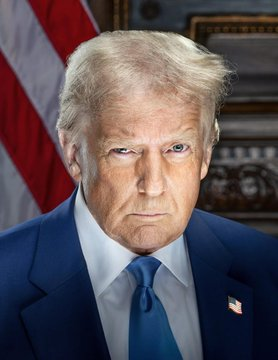
In a decisive statement that underscores the Trump administration’s uncompromising position on nuclear proliferation, U.S. President Donald Trump has declared that Washington will not pursue any agreement with Iran unless Tehran fully abandons its nuclear weapons ambitions.
Speaking in an interview aired Wednesday on Fox Business, Trump left no room for ambiguity: “They cannot have a nuclear weapon. If they don’t, we’re not making a deal.” He added, “You cannot do it. You cannot give Iran a nuclear weapon. The world will blow up.”
The remarks come as recent high-level negotiations between the United States and Iran collapsed, with nuclear disarmament emerging as the core impasse. Vice President JD Vance led the U.S. delegation in marathon talks that spanned over 21 hours, yet both sides failed to bridge differences on Iran’s uranium enrichment program and its stockpiles of enriched material.
Trump’s Statement: A Hardline Stance Rooted in Past Policy
President Trump’s latest comments echo his long-standing policy of “maximum pressure” on Iran, first implemented during his first term when he withdrew the United States from the 2015 Joint Comprehensive Plan of Action (JCPOA), commonly known as the Iran nuclear deal. Trump has repeatedly criticized the Obama-era agreement as “the worst deal ever made,” arguing it failed to prevent Iran from eventually acquiring nuclear weapons.
In the Fox Business interview, Trump highlighted the impact of recent U.S. and Israeli military actions, claiming they have significantly degraded Iran’s capabilities. “Everything’s been wiped out… They have no air force… no radar,” he stated, while noting that a resolution to the conflict could come “fairly soon.”
The president also reiterated that the United States retains overwhelming military options, including the ability to target Iranian infrastructure, but expressed hope that diplomacy—or the current pressure—could yield results without further escalation.
Background: The 2025–2026 U.S.-Iran Negotiations and Conflict
The current standoff is the latest chapter in a years-long confrontation. Following Trump’s return to the White House in 2025, the administration revived maximum pressure sanctions and set a 60-day deadline for a new nuclear agreement. When talks stalled, coordinated U.S.-Israeli strikes targeted Iranian nuclear sites, missile facilities, and naval assets in what officials described as Operation Epic Fury.
Recent negotiations, mediated in part through third countries including Pakistan, focused on several U.S. “red lines”:
- Complete abandonment of uranium enrichment
- Dismantling of key enrichment facilities
- Removal and international oversight of highly enriched uranium stockpiles
- Cessation of support for regional proxy groups
- Reopening of the Strait of Hormuz to unrestricted shipping
Iranian officials, including Parliament Speaker Mohammad Bagher Qalibaf, have pushed back, insisting on their sovereign right to peaceful nuclear energy and demanding guarantees against future military action. Tehran has described U.S. demands as overreach and rejected any framework that eliminates its enrichment capabilities entirely.
Historical Context: From JCPOA to Maximum Pressure
The Iran nuclear issue dates back decades. The JCPOA, signed in 2015 by the P5+1 powers and Iran, limited Tehran’s enrichment activities in exchange for sanctions relief. President Trump withdrew the U.S. in 2018, reimposing sanctions and arguing the deal was fundamentally flawed.
Under the Biden administration, indirect talks aimed at reviving the deal made limited progress but ultimately failed. The second Trump term has seen a return to direct confrontation, with the administration stating that “Iran can never have a nuclear weapon” as a non-negotiable objective.
Potential Implications for Global Security and the Economy
A prolonged deadlock carries significant risks:
- Regional Stability: Further military action could destabilize the Persian Gulf, drawing in proxy forces from Hezbollah, the Houthis, and others.
- Energy Markets: Threats to the Strait of Hormuz—a chokepoint for roughly 20% of global oil trade—have already caused volatility in energy prices. Trump has warned of potential U.S. naval enforcement to keep the waterway open.
- Nuclear Proliferation: Experts warn that without verifiable limits, Iran could accelerate its program, prompting a regional arms race.
Map of the Strait of Hormuz – a critical global oil transit route at the center of U.S.-Iran tensions.
What Happens Next?
Trump has signaled optimism that Iran may eventually concede under sustained pressure, describing the current Iranian leadership as “pretty reasonable by comparison” to previous regimes. However, both sides remain far apart on core issues. The coming days will be critical as the administration weighs diplomatic next steps against military readiness.
Frequently Asked Questions (FAQs)
Q1: What exactly did President Trump say about the Iran deal?
A: In his Fox Business interview on April 15, 2026, Trump stated, “They cannot have a nuclear weapon. If they don’t, we’re not making a deal,” emphasizing that any agreement requires Iran to abandon nuclear weapons ambitions entirely.
Q2: Why did the latest U.S.-Iran talks fail?
A: Negotiations broke down primarily over Iran’s refusal to commit to zero enrichment and the removal of its enriched uranium stockpiles—key U.S. demands for preventing a nuclear breakout capability.
Q3: What is Iran’s position on its nuclear program?
A: Iran maintains that its nuclear activities are for peaceful civilian energy purposes and insists on its right to enrich uranium under international law. It has rejected demands for complete dismantlement.
Q4: How does this affect global oil prices and the Strait of Hormuz?
A: Any disruption to the Strait of Hormuz could spike oil prices worldwide. The U.S. has signaled readiness to enforce open passage if Iran attempts to close the waterway.
Q5: Could this lead to further military action?
A: While Trump has highlighted U.S. military superiority, he has also indicated that a deal remains possible “very soon.” The situation remains fluid.
Q6: How does this compare to the 2015 JCPOA?
A: Unlike the JCPOA, which allowed limited enrichment under strict monitoring, the current U.S. position demands permanent and verifiable elimination of any pathway to nuclear weapons.
Reflecto News Analysis
President Trump’s unequivocal message sends a clear signal: the United States will not accept a nuclear-armed Iran under any circumstances. As diplomatic channels remain open but strained, the world watches closely to see whether sustained pressure will force a breakthrough or lead to renewed confrontation.
For the latest updates on U.S.-Iran relations, Middle East security, and global energy markets, stay tuned to Reflecto News—your trusted source for accurate, timely international coverage.
Related Coverage:
- Trump Administration’s Maximum Pressure Campaign: Timeline and Impact
- Satellite Imagery Reveals Extent of Damage to Iranian Nuclear Sites
- How the Strait of Hormuz Blockade Could Reshape Global Trade
Images sourced from public domain and news archives for illustrative purposes.
Questions people ask
What is China's current share of global manufacturing?
China now accounts for twenty eight percent of global manufacturing. This industrial output exceeds the combined manufacturing production of the United States, Japan, and Germany, making China the leading global industrial power according to recent reports.
Why were Andrew Tate and Tristan Tate arrested in Miami?
Andrew Tate and his brother Tristan Tate were taken into custody in Miami by the United States Marshals Service. They face thirty eight new charges in the United Kingdom, including rape and child pornography offences, and prosecutors are seeking their extradition.
What warning did Moscow issue about oil prices?
Kirill Dmitriev, the Chief Executive of the Russian Direct Investment Fund, warned that a tsunami of skyrocketing oil prices is approaching. Moscow describes this potential energy shock as a major threat to global markets.
What political shift is projected for Benjamin Netanyahu's coalition?
Political polls project that Prime Minister Benjamin Netanyahu's coalition is on track to lose its majority in the upcoming October election. This projection indicates a potential political shift in Jerusalem.
Why did a Russian military aircraft land in Tehran?
A Russian airborne command aircraft, widely known as a doomsday plane, landed in Tehran. The arrival of the aircraft represents a high stakes show of support from Russia for Iran during a period of heightened regional tensions.
What did President Masoud Pezeshkian claim about the United States and Israel?
Iranian President Masoud Pezeshkian claimed that the United States and Israel failed in a forty eight hour plan to topple the Iranian government. He made these statements during a televised address marking two years since his inauguration.