Reflecto News is an online news platform covering major international political events, global economic developments, and security conflicts. The site provides updates on topics such as Chinese manufacturing dominance, Middle Eastern political tensions, and high profile legal arrests. Readers can access current articles organized by categories like World News, Iran, and USA.
Published on Reflecto News | World News | Geopolitics & Defense
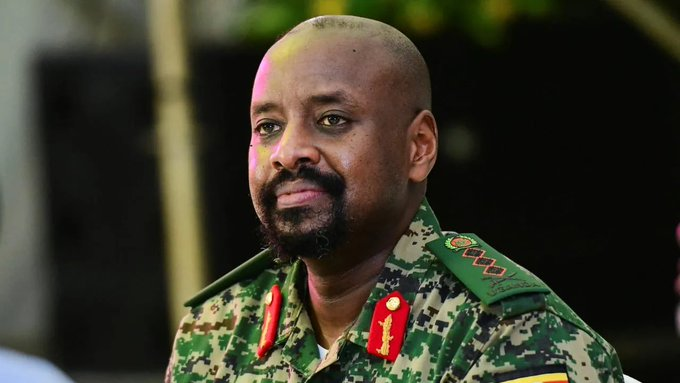
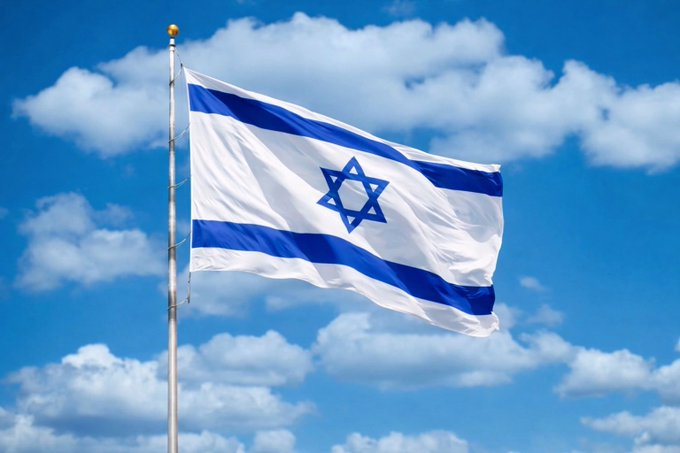
In a stunning declaration that has reverberated across international diplomatic circles, Uganda’s Chief of Defence Forces, General Muhoozi Kainerugaba, has publicly offered to deploy 100,000 Ugandan soldiers to Israel, declaring he would personally command the force to defend “the Holy Land” and “the land of Jesus Christ our God” .
The dramatic pledge, posted on X on Friday evening, represents an unprecedented offer of military intervention from an African nation in the ongoing Middle East conflict. It marks a significant escalation from the general’s previous statements of solidarity with Israel, specifying for the first time a massive troop deployment of 100,000 soldiers—a figure that would represent more than double Uganda’s estimated active military strength .
‘I’m Ready to Deploy’: Kainerugaba’s Statement
General Muhoozi Kainerugaba, who is also the son of long-serving Ugandan President Yoweri Museveni and widely viewed as a potential successor, was unequivocal in his post on X.
“I’m ready to deploy 100,000 Ugandan soldiers in Israel. Under my command. To protect the Holy Land. The land of Jesus Christ our God!” — General Muhoozi Kainerugaba, Chief of Defence Forces, Uganda People’s Defence Force
The statement continues a pattern of provocative, faith-driven declarations from the general, who has earned the nickname the “Tweeting General” due to his frequent and often controversial social media posts on military, political, and religious matters .
The Rationale: Faith and Historical Gratitude
General Kainerugaba has justified his强硬 stance toward the Middle East conflict by citing both Christian faith and historical gratitude toward the Jewish state.
Religious Motivation
In previous posts, the general has explicitly framed Uganda’s support for Israel in biblical terms. “We stand with Israel because we are Christians. Saved by the Holy Son of God … Jesus Christ the only One who can forgive sins,” he wrote in late March. He quoted Deuteronomy 33:29—“Blessed are you Israel! Who is like you, a people saved by the Lord? He is your shield and helper and your glorious sword”—to support his position .
Historical Gratitude
Beyond religious conviction, Kainerugaba has emphasized Israel’s past support for Uganda during its most vulnerable periods. “Israel stood with us when we were nobodys in the 1980s and 1990s. Why wouldn’t we defend her now that our GDP is $100 billion? One of the largest in Africa,” he wrote .
During that period, Israel provided substantial military, technical, and advisory assistance to Uganda in rebuilding and training its army after internal conflicts. According to international experts, this support was part of Israel’s broader strategy to restore ties in East Africa after a period of hostility under the dictator Idi Amin (1971–1979) .
A Pattern of Provocative Statements
The current offer to deploy 100,000 soldiers follows a series of increasingly bellicose statements from the Ugandan military chief over the past several weeks.
In late March, as the US-Israeli military campaign against Iran intensified, Kainerugaba wrote: “We want the war in the Middle East to end now. The world is tired of it. But any talk of destroying or defeating Israel will bring us into the war. On the side of Israel!” .
He went further in now-deleted posts, suggesting that a single Ugandan brigade could “capture Tehran” and that Ugandan forces “could have captured Tehran in 72 hours without any bombing” .
Kainerugaba has also announced plans to erect a statue at Entebbe International Airport honoring IDF Lt. Col. Yonatan Netanyahu—the older brother of Israeli Prime Minister Benjamin Netanyahu—who was killed in action during the 1976 Entebbe rescue operation .
The Numbers: Can Uganda Actually Deploy 100,000 Troops?
The scale of the proposed deployment has raised significant questions about its feasibility.
| Metric | Figure |
|---|---|
| Proposed deployment | 100,000 soldiers |
| Estimated UPDF active strength | ~45,000 personnel |
| Additional reserves needed | ~55,000 |
| Current UPDF total strength | ~45,000 active + reserves |
The Uganda People’s Defence Force (UPDF) has an estimated active strength of approximately 45,000 personnel, with additional reserves . A deployment of 100,000 soldiers would therefore require mobilization of reserves and potentially conscription—a significant national undertaking.
Any large-scale overseas deployment of this magnitude would require formal approval from the Ugandan government and President Museveni, as well as substantial logistical planning and international coordination that would take months or years to execute .
Official Status: Personal Declaration or Government Policy?
A critical question surrounding the offer is whether it represents official Ugandan government policy or the personal views of its outspoken military chief.
The Ugandan presidency and government have issued no official comment confirming the offer as national policy . Kainerugaba has previously acknowledged that his views expressed on social media do not necessarily reflect those of the state, though analysts frequently interpret his comments as signals of government policy .
General Kainerugaba serves as both Chief of Defence Forces and Senior Presidential Advisor on Special Operations—positions that lend significant weight to his public statements, even when they are not formally endorsed by the government .
Reactions: International Silence and Domestic Implications
Israel
Israeli officials have not yet publicly responded to the latest offer to deploy 100,000 soldiers . Previous statements from Kainerugaba have drawn no official reaction from Jerusalem, suggesting that Israel may view the general’s provocative statements as personal rather than official.
United States
The general’s posts have caused friction with some legislators in Washington. Republican Senator Jim Risch, as chair of the Senate Foreign Relations Committee, warned that Muhoozi’s previous posts “crossed a red line” and could cause a review of a US-Uganda security cooperation agreement .
Iran
Unsurprisingly, the Ugandan general’s statements have made Kampala an adversary in Tehran’s eyes. Analysts have noted that while Kainerugaba’s words may be largely performative, “in Tehran, Kampala has found a real adversary” .
Cyberattacks
Following his earlier pro-Israel posts in March, Kainerugaba reported that Uganda “experienced numerous cyberattacks” from unidentified actors. “We shall investigate all of them. We will take strong action against those who sent and supported those attacks,” he said at the time .
Analysis: Rhetoric, Politics, and Realism
Several factors suggest that General Kainerugaba’s offer should be interpreted as political theater and personal messaging rather than a concrete military plan.
Domestic Political Ambitions
Kainerugaba is widely viewed as a potential successor to his father, President Yoweri Museveni, who has ruled Uganda since 1986. The general’s provocative statements—both on Israel and previously on threatening to invade Kenya—are seen by analysts as efforts to cultivate the image of a decisive and tough leader with an eye toward a future presidential run .
Uganda’s Limited Capacity
Even if politically approved, Uganda lacks the logistical capacity to transport, supply, and sustain 100,000 soldiers thousands of miles from home. The country’s military budget and infrastructure are not designed for power projection on this scale.
No Official Request
Israel has not requested Ugandan military assistance. The offer appears to be unilateral and unsolicited .
Analysis of Intent
As one analysis concluded: “Objectively, Kampala is not in a position to confront Tehran—geographically, logistically, or, even more so, militarily. Given this, the statements of the Ugandan general are more of a message to the international community that Uganda aligns with Israel in the Middle Eastern confrontation. They also serve as a publicity move aimed at strengthening ties with the US and Israel and reinforcing Uganda’s image as a leading African ally” .
The Entebbe Connection: A Personal Tie to the Netanyahu Family
Kainerugaba’s pro-Israel stance is reinforced by a personal and symbolic connection to the Netanyahu family.
The general has announced plans to erect a statue at Entebbe International Airport honoring IDF Lt. Col. Yonatan Netanyahu, the older brother of Israeli Prime Minister Benjamin Netanyahu. Yonatan Netanyahu was killed in action on July 4, 1976, while commanding the Israeli commando raid that rescued more than 100 hostages from a hijacked Air France plane at Entebbe Airport .
The statue, which Kainerugaba has described as “soon to be unveiled,” is intended to be placed at the exact spot where Yonatan Netanyahu was killed . This gesture has been interpreted as a powerful symbol of Uganda’s gratitude to Israel for the rescue operation, which ended the hostage crisis that had threatened the lives of Israeli and Jewish passengers.
The Broader Context: Israel’s African Alliances
General Kainerugaba’s offer comes amid a broader realignment of African nations toward Israel. Despite South Africa’s genocide case against Israel at the International Court of Justice, many African countries have chosen to maintain or deepen ties with Jerusalem .
Israel has been able to maintain strong relationships through agreements with multiple East African nations, including Uganda, Kenya, Ethiopia, and Rwanda. These relationships span military cooperation, economic development, and counterterrorism operations against Islamist groups such as Al-Shabaab in Somalia .
Uganda, in particular, has participated in a number of security operations and programs alongside the US and Israel, including peacekeeping missions in South Sudan and operations against Al-Shabaab .
What Comes Next
As the international community digests General Kainerugaba’s extraordinary offer, several developments will be critical to watch:
| Factor | Current Status |
|---|---|
| Official Ugandan government response | No official comment confirming or denying the offer as national policy |
| Israeli government response | No official response to the 100,000-troop offer |
| US response | Previous statements from Senator Risch warning of “red line” |
| Practical implementation | Logistically improbable; no known planning underway |
For now, General Kainerugaba’s offer remains a dramatic statement of intent rather than a concrete military plan. Whether it represents a genuine offer, a political stunt, or a signal of Uganda’s broader alignment with Israel in the Middle East conflict—or some combination of all three—the world will be watching.
Frequently Asked Questions (FAQs)
1. What exactly did Uganda’s military chief offer to Israel?
General Muhoozi Kainerugaba offered to deploy 100,000 Ugandan soldiers to Israel, stating he would personally command the force to protect “the Holy Land” and “the land of Jesus Christ our God” .
2. Does this offer represent official Ugandan government policy?
No. The Ugandan presidency and government have not issued any official comment confirming the offer as national policy. Kainerugaba has previously stated that his personal views do not necessarily reflect those of the state .
3. Can Uganda actually deploy 100,000 soldiers?
The Uganda People’s Defence Force has an estimated active strength of approximately 45,000 personnel, with additional reserves. A deployment of 100,000 soldiers would require mobilization of most of the country’s military capacity—a significant national undertaking requiring government approval and extensive logistical planning .
4. Why does General Kainerugaba support Israel?
He cites two primary reasons: Christian faith (“We stand with Israel because we are Christians”) and historical gratitude for Israel’s military and technical assistance to Uganda during the 1980s and 1990s .
5. How has Israel responded?
Israeli officials have not yet publicly responded to the offer to deploy 100,000 soldiers .
6. Who is General Muhoozi Kainerugaba?
He is Uganda’s Chief of Defence Forces, the son of long-serving President Yoweri Museveni, and is widely viewed as a potential successor to his father. He is known for his frequent and provocative social media posts, earning him the nickname the “Tweeting General” .
7. What is the Entebbe statue General Kainerugaba has mentioned?
He has announced plans to erect a statue at Entebbe International Airport honoring IDF Lt. Col. Yonatan Netanyahu, the older brother of Israeli Prime Minister Benjamin Netanyahu, who was killed in action during the 1976 Entebbe rescue operation .
Stay informed with Reflecto News – Your trusted source for breaking geopolitical and defense intelligence. Subscribe for real-time updates on the Middle East conflict and international responses to the crisis.
Questions people ask
What is China's current share of global manufacturing?
China now accounts for twenty eight percent of global manufacturing. This industrial output exceeds the combined manufacturing production of the United States, Japan, and Germany, making China the leading global industrial power according to recent reports.
Why were Andrew Tate and Tristan Tate arrested in Miami?
Andrew Tate and his brother Tristan Tate were taken into custody in Miami by the United States Marshals Service. They face thirty eight new charges in the United Kingdom, including rape and child pornography offences, and prosecutors are seeking their extradition.
What warning did Moscow issue about oil prices?
Kirill Dmitriev, the Chief Executive of the Russian Direct Investment Fund, warned that a tsunami of skyrocketing oil prices is approaching. Moscow describes this potential energy shock as a major threat to global markets.
What political shift is projected for Benjamin Netanyahu's coalition?
Political polls project that Prime Minister Benjamin Netanyahu's coalition is on track to lose its majority in the upcoming October election. This projection indicates a potential political shift in Jerusalem.
Why did a Russian military aircraft land in Tehran?
A Russian airborne command aircraft, widely known as a doomsday plane, landed in Tehran. The arrival of the aircraft represents a high stakes show of support from Russia for Iran during a period of heightened regional tensions.
What did President Masoud Pezeshkian claim about the United States and Israel?
Iranian President Masoud Pezeshkian claimed that the United States and Israel failed in a forty eight hour plan to topple the Iranian government. He made these statements during a televised address marking two years since his inauguration.