Reflecto News is an online news platform covering major international political events, global economic developments, and security conflicts. The site provides updates on topics such as Chinese manufacturing dominance, Middle Eastern political tensions, and high profile legal arrests. Readers can access current articles organized by categories like World News, Iran, and USA.
Published on Reflecto News | World News | Defense & Geopolitics
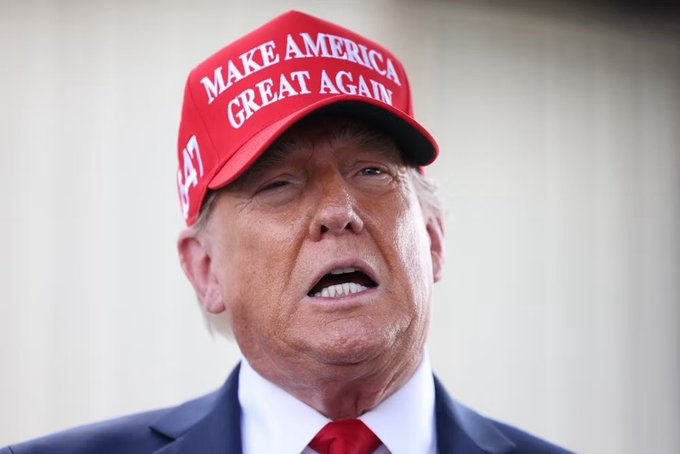
President Donald Trump has renewed his threat to strike critical Iranian civilian infrastructure, warning that the United States could target the country’s water desalination plants and electric generating facilities if Iran does not agree to a deal. In an interview with Fox News, Trump escalated his rhetoric, stating that such infrastructure would be “very easy to hit” and that America could leave Iran without electricity for a decade .
“I would hate to do it, but it’s their water, their desalinization plans, their electric generating plants, which are very easy to hit. We could have them all down, and I mean down like you couldn’t have electricity for 10 years.” — President Donald Trump
The renewed threat comes as the White House weighs limited military strikes following the collapse of direct negotiations in Islamabad, and as a US naval blockade of the Strait of Hormuz went into effect Monday morning .
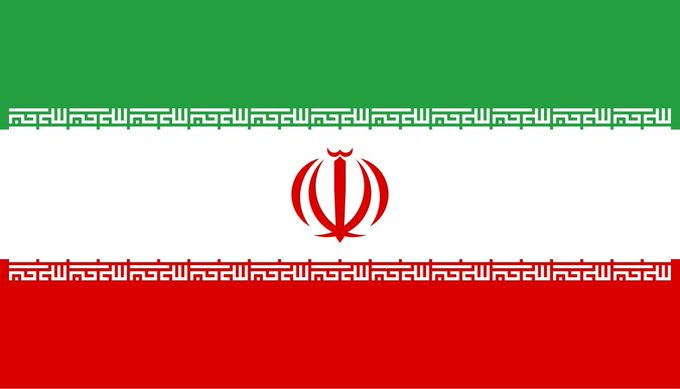
Targeting Civilian Infrastructure: A Controversial Approach
Trump’s explicit threat to target water and electricity infrastructure — essential for civilian survival — has drawn sharp criticism from human rights organizations and international law experts. Such facilities are generally protected under the Geneva Conventions as civilian infrastructure, and attacking them could constitute a war crime .
The president’s previous threats during the war to destroy Iranian civilian infrastructure, including warnings that “a whole civilization will die tonight,” were condemned by UN officials and human rights groups .
Trump has dismissed such concerns, insisting that the Iranian people “would be willing to suffer that in order to have freedom” .
‘Very Easy to Hit’
Trump’s characterization of Iranian infrastructure as “very easy to hit” reflects the US military’s overwhelming superiority in precision strike capabilities. However, targeting such facilities carries significant strategic and humanitarian risks.
Potential targets mentioned by Trump:
- Water desalination plants: Essential for drinking water in arid regions of Iran
- Electric generating facilities: Power for hospitals, homes, and businesses
- Other unspecified infrastructure
The threat to leave Iran without electricity for “10 years” suggests a sustained campaign against the country’s power grid — an effort that would require repeated strikes to prevent repairs and would have catastrophic humanitarian consequences .
The Naval Blockade: Enacted Monday
Trump’s infrastructure threat accompanies the implementation of a US naval blockade of the Strait of Hormuz, which went into effect Monday at 10 a.m. ET .
| Blockade Element | Details |
|---|---|
| Effective date | April 13, 2026, 10 a.m. ET |
| Enforcement | “Impartially against vessels of all nations entering or departing Iranian ports and coastal areas” |
| Purpose | Pressure Iran economically by choking off oil exports |
| Status | Active |
The blockade is seen by some analysts as the most realistic option for now, as it pressures Iran economically without requiring a full-scale bombing campaign .
Why Now: Collapse of Talks
Trump’s renewed threats come after direct US-Iran negotiations in Islamabad ended without an agreement. Iran reportedly refused key US demands, including:
- Fully reopening the Strait of Hormuz
- Ending all uranium enrichment
- Dismantling enrichment facilities
- Handing over its highly enriched uranium stockpile
- Ending support for regional proxies
The talks, led by Vice President JD Vance, were the first direct US-Iranian meeting in more than a decade and the highest-level discussions since Iran’s 1979 Islamic Revolution .
International Law Concerns
Targeting civilian water and electricity infrastructure raises serious questions under international humanitarian law.
| Legal Principle | Application |
|---|---|
| Distinction | Parties must distinguish between military objectives and civilian objects |
| Proportionality | Attacks must not cause incidental loss of civilian life excessive to military advantage |
| Precaution | All feasible precautions must be taken to protect civilians |
| Essential infrastructure | Water and power are generally protected as civilian objects |
The International Criminal Court (ICC) has previously investigated attacks on civilian infrastructure as potential war crimes. Trump’s explicit threat could be cited as evidence of intent .
The Broader Strategy: Maximum Pressure
Trump’s infrastructure threat is part of a broader “maximum pressure” campaign designed to force Iran’s capitulation.
Elements of current US strategy:
- Naval blockade of the Strait of Hormuz
- Threats of limited military strikes
- Threats of strikes on civilian infrastructure
- Economic sanctions (existing)
- Diplomatic isolation
Critics argue that threatening civilian infrastructure is counterproductive, as it could unite the Iranian public behind the regime rather than turning them against it .
Iran’s Response
Iran has not yet officially responded to Trump’s latest threat. However, Iranian officials have consistently maintained that the Islamic Republic is prepared for any scenario.
Following the collapse of talks, President Pezeshkian stated that agreement is possible if the US “abandons its totalitarianism and respects the rights of the Iranian nation” .
The Islamic Revolutionary Guard Corps (IRGC) has also threatened to trap enemy vessels in “deadly whirlpools” in the Strait of Hormuz and has warned that any attempt by military ships to cross will be met with “utmost firmness” .
What Comes Next
As the naval blockade takes effect and Trump renews threats against Iranian infrastructure, several scenarios are possible:
| Scenario | Likelihood | Implications |
|---|---|---|
| Iran concedes | Unlikely | Regime would not survive such capitulation |
| Limited strikes on military targets | Possible | Escalation but not full war |
| Strikes on civilian infrastructure | Possible but controversial | Would draw international condemnation |
| Prolonged blockade | Likely | Economic pressure without direct strikes |
| Diplomatic revival | Possible | Third-party mediation could succeed |
Trump’s infrastructure threat represents a significant escalation in rhetoric. Whether it is a bluff designed to pressure Tehran, or a genuine warning of what is to come, will become clear in the coming days .
Frequently Asked Questions (FAQs)
1. What infrastructure did President Trump threaten to strike?
Trump threatened to strike Iran’s water desalination plants and electric generating facilities, stating they are “very easy to hit” and that the US could leave Iran without electricity for 10 years .
2. Is targeting civilian infrastructure legal under international law?
Water and electricity infrastructure are generally protected as civilian objects under the Geneva Conventions. Attacking such facilities could constitute a war crime, though military use of such infrastructure can affect their protected status .
3. Why is Trump making these threats now?
The threats come after direct US-Iran negotiations in Islamabad collapsed without an agreement, and as a US naval blockade of the Strait of Hormuz went into effect .
4. What is the status of the naval blockade?
The blockade began Monday, April 13, 2026, at 10 a.m. ET, enforced against vessels of all nations entering or departing Iranian ports .
5. How has Iran responded?
Iran has not yet officially responded to Trump’s latest threat. President Pezeshkian has stated that agreement is possible if the US changes its approach .
6. Could the US actually destroy Iran’s infrastructure for 10 years?
Sustaining strikes to prevent repairs over a decade would require a prolonged military campaign, but the US has the capability to inflict catastrophic damage on Iran’s power grid and water infrastructure .
7. What happens next?
The naval blockade continues, and Trump is weighing limited military strikes. The diplomatic channel remains open, but Iran has not signaled willingness to accept US terms .
Stay informed with Reflecto News – Your trusted source for breaking defense and geopolitical intelligence. Subscribe for real-time updates on the US-Iran crisis, military threats, and regional security developments.
Questions people ask
What is China's current share of global manufacturing?
China now accounts for twenty eight percent of global manufacturing. This industrial output exceeds the combined manufacturing production of the United States, Japan, and Germany, making China the leading global industrial power according to recent reports.
Why were Andrew Tate and Tristan Tate arrested in Miami?
Andrew Tate and his brother Tristan Tate were taken into custody in Miami by the United States Marshals Service. They face thirty eight new charges in the United Kingdom, including rape and child pornography offences, and prosecutors are seeking their extradition.
What warning did Moscow issue about oil prices?
Kirill Dmitriev, the Chief Executive of the Russian Direct Investment Fund, warned that a tsunami of skyrocketing oil prices is approaching. Moscow describes this potential energy shock as a major threat to global markets.
What political shift is projected for Benjamin Netanyahu's coalition?
Political polls project that Prime Minister Benjamin Netanyahu's coalition is on track to lose its majority in the upcoming October election. This projection indicates a potential political shift in Jerusalem.
Why did a Russian military aircraft land in Tehran?
A Russian airborne command aircraft, widely known as a doomsday plane, landed in Tehran. The arrival of the aircraft represents a high stakes show of support from Russia for Iran during a period of heightened regional tensions.
What did President Masoud Pezeshkian claim about the United States and Israel?
Iranian President Masoud Pezeshkian claimed that the United States and Israel failed in a forty eight hour plan to topple the Iranian government. He made these statements during a televised address marking two years since his inauguration.