Reflecto News is an online news platform covering major international political events, global economic developments, and security conflicts. The site provides updates on topics such as Chinese manufacturing dominance, Middle Eastern political tensions, and high profile legal arrests. Readers can access current articles organized by categories like World News, Iran, and USA.
Published on Reflecto News | World News | Defense & Geopolitics
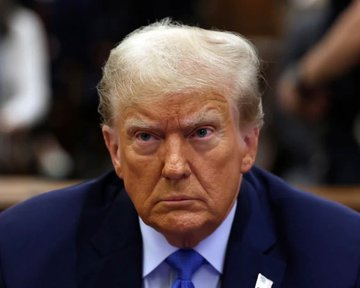
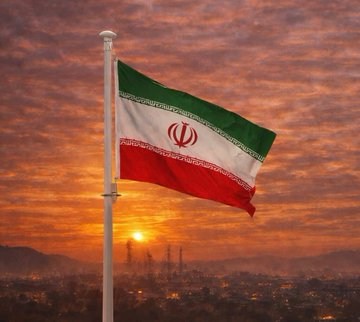
President Donald Trump is weighing the resumption of limited military strikes against Iran following the collapse of high-stakes negotiations in Islamabad, according to a report from The Wall Street Journal citing administration officials and people familiar with the situation . The potential strikes are being considered alongside the recently announced naval blockade of the Strait of Hormuz as the White House seeks to break the diplomatic stalemate.
While a return to a full-scale bombing campaign remains on the table, officials indicated it is less likely due to concerns over further destabilizing the Middle East and President Trump’s stated aversion to prolonged military conflicts .
The Menu of Options: Limited Strikes and Blockade
According to the WSJ report, the options under consideration include targeted raids on specific Iranian infrastructure, a strengthened temporary blockade of the strait, or a combination of both . A large-scale military campaign appears less probable given the risks of regional escalation and domestic political costs ahead of the November midterm elections .
Trump has publicly threatened to target critical Iranian infrastructure, including water desalination plants, electric generating facilities, and oil infrastructure. “I would hate to do it, but it’s their water, their desalinization plants, their electric-generating plants, which are very easy to hit,” Trump said in a Fox News interview on Sunday .
The naval blockade ordered by Trump went into effect Monday at 10 a.m. ET, with CENTCOM announcing it would be enforced “impartially against vessels of all nations entering or departing Iranian ports and coastal areas” . This blockade is seen by some analysts as the most realistic option for now, as it pressures Iran economically by choking off its oil exports—the engine of its economy .
White House Response: ‘All Additional Options on the Table’
White House press office staff member Olivia Wales declined to discuss Trump’s specific options, stating: “The president has already ordered a naval blockade on the Strait of Hormuz, ending the Iranian extortion, and wisely keeps all additional options on the table. Those telling The Wall Street Journal they know what President Trump will do next are purely speculating” .
Despite the military posture, aides said Trump remains open to a diplomatic solution . An official close to the U.S. negotiating team indicated that an offer remains on the table for Iran to return to negotiations.
Why the Talks Failed: Iran’s Nuclear Refusal
The negotiations in Islamabad, which ran from Saturday into early Sunday, were the first direct U.S.-Iranian meeting in more than a decade and the highest-level discussions since Iran’s 1979 Islamic Revolution . The talks, led by Vice President JD Vance, broke down after Iran refused to abandon its nuclear program .
U.S. conditions for any agreement include:
- Iran fully opening the Strait of Hormuz free of tolls for passage
- Ending all uranium enrichment and dismantling enrichment facilities
- Handing over its highly enriched uranium stockpile
- Accepting a broader security framework that includes regional allies
- Ending funding of proxies such as Hezbollah in Lebanon and Yemen’s Houthi rebels
Trump has stated that preventing Iran from acquiring nuclear weapons is a significant factor in why he launched the war .
The Risks: Any Choice Carries Major Burdens
U.S. officials acknowledge that any option Trump chooses next faces major risks .
Full-scale war resumption could:
- Further drain critical U.S. munitions and military supplies
- Expose the president to backlash from a voting base skeptical of Middle East conflicts
- Risk escalating regional instability
Conversely, scaling back military operations while the regime is battered but intact—with its nuclear ambitions and control of the strait—would be viewed as a victory for Tehran .
The naval blockade, while seen as the most realistic option, also carries risks:
- U.S. naval ships operating in the narrow strait just off Iran’s coast could face new missile and drone attacks with little warning to react
- The Iranian government has yet to bow to economic pressure from the U.S., including decades of crippling sanctions, and remains defiant
Diplomatic Path Remains Open
Despite the military preparations, Trump has shifted his stance multiple times during the war and left room for diplomatic solutions . An official close to the U.S. negotiating team said an offer remains on the table for Iran.
Reza Amiri Moghadam, a senior member of the Iranian delegation at the talks, called the Islamabad negotiations “the beginning of a process,” writing on social media that they “laid the foundation for a diplomatic process that, if trust and will are strengthened, can create a sustainable framework for the interests of all parties” .
What Comes Next
As the naval blockade takes effect and military options remain under consideration, several factors will shape the coming days:
| Factor | Current Status |
|---|---|
| Naval blockade | Implemented April 13, 10 a.m. ET |
| Limited strike options | Under review by White House |
| Diplomatic channel | Remains open; offer still stands |
| Iran’s position | Has not signaled willingness to accept U.S. terms |
| Ceasefire | Fragile; uncertain future |
The WSJ analysis concluded that Trump’s options all carry significant burdens, and the president has changed directions repeatedly during the war . Whether he pursues military action, maintains the blockade, or returns to diplomacy will likely become clear in the coming days as the White House finalizes its strategy.
Frequently Asked Questions (FAQs)
1. What military options is President Trump considering against Iran?
Trump is weighing limited military strikes on Iranian targets in addition to the naval blockade of the Strait of Hormuz. A return to full-scale bombing is considered less likely due to risks of regional destabilization and Trump’s aversion to prolonged conflicts .
2. When did the naval blockade of the Strait of Hormuz begin?
CENTCOM announced the blockade would begin Monday, April 13, 2026, at 10 a.m. ET, enforced impartially against vessels entering or departing Iranian ports .
3. Why did the US-Iran talks in Islamabad fail?
The talks, led by Vice President JD Vance, broke down after Iran refused to abandon its nuclear program, including ending uranium enrichment and dismantling enrichment facilities .
4. What are the US conditions for an agreement with Iran?
U.S. conditions include fully opening the Strait of Hormuz free of tolls, ending all uranium enrichment, handing over highly enriched uranium, accepting a broader security framework, and ending support for regional proxies .
5. Is the diplomatic path completely closed?
No. Aides said Trump remains open to a diplomatic solution, and an official close to the U.S. negotiating team said an offer remains on the table for Iran .
6. What risks does the naval blockade pose?
U.S. naval ships operating in the narrow strait could face missile and drone attacks with little warning. Additionally, Iran has not bowed to economic pressure despite decades of sanctions .
Stay informed with Reflecto News – Your trusted source for breaking defense and geopolitical intelligence. Subscribe for real-time updates on the US-Iran crisis, military developments, and regional security.
Questions people ask
What is China's current share of global manufacturing?
China now accounts for twenty eight percent of global manufacturing. This industrial output exceeds the combined manufacturing production of the United States, Japan, and Germany, making China the leading global industrial power according to recent reports.
Why were Andrew Tate and Tristan Tate arrested in Miami?
Andrew Tate and his brother Tristan Tate were taken into custody in Miami by the United States Marshals Service. They face thirty eight new charges in the United Kingdom, including rape and child pornography offences, and prosecutors are seeking their extradition.
What warning did Moscow issue about oil prices?
Kirill Dmitriev, the Chief Executive of the Russian Direct Investment Fund, warned that a tsunami of skyrocketing oil prices is approaching. Moscow describes this potential energy shock as a major threat to global markets.
What political shift is projected for Benjamin Netanyahu's coalition?
Political polls project that Prime Minister Benjamin Netanyahu's coalition is on track to lose its majority in the upcoming October election. This projection indicates a potential political shift in Jerusalem.
Why did a Russian military aircraft land in Tehran?
A Russian airborne command aircraft, widely known as a doomsday plane, landed in Tehran. The arrival of the aircraft represents a high stakes show of support from Russia for Iran during a period of heightened regional tensions.
What did President Masoud Pezeshkian claim about the United States and Israel?
Iranian President Masoud Pezeshkian claimed that the United States and Israel failed in a forty eight hour plan to topple the Iranian government. He made these statements during a televised address marking two years since his inauguration.