Reflecto News is an online news platform covering major international political events, global economic developments, and security conflicts. The site provides updates on topics such as Chinese manufacturing dominance, Middle Eastern political tensions, and high profile legal arrests. Readers can access current articles organized by categories like World News, Iran, and USA.
Pentagon Holds Preliminary Talks with GM, Ford, and Others for Rapid Surge in Munitions and Equipment Manufacturing, Echoing WWII-Style Industrial Mobilization
By Reflecto News Staff
April 17, 2026
The Trump administration is actively engaging major U.S. automakers and manufacturers to expand their role in weapons and military supplies production, as ongoing conflicts in Iran and continued support for Ukraine have significantly depleted American defense stockpiles.
Senior Pentagon officials have held preliminary discussions with executives from companies including General Motors (GM), Ford Motor, GE Aerospace, and vehicle/machinery maker Oshkosh, exploring ways to leverage their large-scale factory capacity, workforce expertise, and supply chains to boost output of munitions, missiles, counter-drone systems, and other tactical equipment.
U.S. military munitions and equipment stockpiles have been strained by simultaneous demands from the Iran conflict and Ukraine aid.

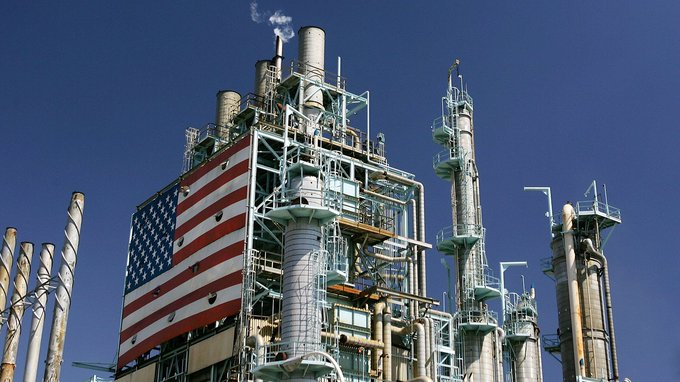
Talks Aimed at Wartime-Style Production Surge
According to multiple reports, including from The Wall Street Journal, the discussions — which began before the escalation with Iran but have gained urgency — focus on whether automakers could rapidly shift some production lines to defense work if needed. Officials have asked about the feasibility of pausing or repurposing civilian vehicle manufacturing to backstop traditional defense contractors.
This approach draws parallels to World War II-era mobilization, when U.S. automakers famously converted assembly lines to produce tanks, aircraft, and other war materiel. Defense sources emphasize that automakers’ advanced manufacturing capabilities, skilled labor, and nationwide facilities could provide the surge capacity required to replenish depleted inventories.
The push comes as the Trump administration has requested a massive increase in the military budget, with reports citing a potential jump toward $1.5 trillion amid heightened global demands.
Map illustrating U.S. defense industrial base and key automotive manufacturing hubs that could be tapped for expanded production.
Context: Depleted Stockpiles from Dual Conflicts
U.S. munitions and advanced weapons stocks have faced significant strain from:
- Sustained military operations and strikes related to the Iran conflict.
- Ongoing security assistance to Ukraine against Russian aggression.
Key items reportedly affected include precision-guided munitions, air defense systems, missiles (such as Tomahawks), and other high-demand equipment. The Pentagon views commercial manufacturers as a critical “backstop” to accelerate replenishment and maintain readiness for potential future contingencies.
Talks remain preliminary and wide-ranging, covering contractual barriers, technical feasibility, and the speed of any transition. No final commitments have been announced, but the outreach signals a broader strategy to diversify and strengthen the U.S. defense industrial base beyond traditional contractors.
Potential Implications
If implemented, such a shift could:
- Accelerate production of critical supplies.
- Utilize underused or idle automotive capacity.
- Create new revenue streams for automakers while supporting national security.
However, challenges include retooling costs, supply chain adjustments, workforce training, and balancing civilian production needs (including ongoing electric vehicle transitions). Analysts note that any large-scale conversion would require careful planning to avoid disrupting broader economic output.
This development aligns with the administration’s emphasis on “America First” industrial policy and rapid defense modernization.
Frequently Asked Questions (FAQs)
Q1: Which companies has the Pentagon approached?
A: Discussions have involved General Motors (CEO Mary Barra), Ford Motor (CEO Jim Farley), GE Aerospace, Oshkosh, and other manufacturers.
Q2: Why is the administration turning to automakers now?
A: Wars in Iran and sustained support for Ukraine have depleted U.S. munitions and equipment stockpiles, creating urgency to expand production capacity beyond traditional defense firms.
Q3: Is this a full conversion of auto factories to military production?
A: Talks are preliminary. The focus is on exploring rapid surge capacity and potential repurposing of some lines or facilities, not an immediate nationwide shutdown of civilian production.
Q4: Does this resemble WWII mobilization?
A: Yes. Officials and reports explicitly reference World War II, when U.S. automakers shifted from cars to tanks, planes, and other war equipment.
Q5: What specific items could automakers produce?
A: Discussions center on munitions, missiles, counter-drone systems, and other tactical military equipment using existing manufacturing expertise.
Q6: How does this fit with Trump’s broader policy?
A: It supports efforts to strengthen domestic defense manufacturing, reduce reliance on limited contractors, and respond aggressively to global security demands.
Reflecto News Analysis
The Trump administration’s outreach to U.S. automakers marks a significant step toward expanding and diversifying America’s defense industrial base amid simultaneous pressures from the Iran conflict and Ukraine. By tapping the vast capacity of companies like GM and Ford, the Pentagon aims to achieve the kind of rapid production surge historically associated with total war economies — without yet declaring one.
While preliminary, these talks highlight growing concerns over stockpiles and the need for industrial resilience in an era of great-power competition and multiple active theaters. Success could bolster U.S. military readiness, but it will require balancing national security imperatives with economic realities, including impacts on civilian markets and supply chains.
As discussions advance, observers will watch closely for any concrete agreements or legislative support to facilitate such a shift.
For the latest updates on U.S. defense policy, industrial mobilization efforts, and developments in the Iran and Ukraine conflicts, stay tuned to Reflecto News — your trusted source for accurate, timely international coverage.
Related Coverage:
- U.S. Defense Stockpiles: Impact of Iran and Ukraine Conflicts
- Trump Administration’s Push for Expanded Military Budget
- Historical Precedents: U.S. Industry in Wartime Production
Images used for illustrative purposes from public and news sources.
Questions people ask
What is China's current share of global manufacturing?
China now accounts for twenty eight percent of global manufacturing. This industrial output exceeds the combined manufacturing production of the United States, Japan, and Germany, making China the leading global industrial power according to recent reports.
Why were Andrew Tate and Tristan Tate arrested in Miami?
Andrew Tate and his brother Tristan Tate were taken into custody in Miami by the United States Marshals Service. They face thirty eight new charges in the United Kingdom, including rape and child pornography offences, and prosecutors are seeking their extradition.
What warning did Moscow issue about oil prices?
Kirill Dmitriev, the Chief Executive of the Russian Direct Investment Fund, warned that a tsunami of skyrocketing oil prices is approaching. Moscow describes this potential energy shock as a major threat to global markets.
What political shift is projected for Benjamin Netanyahu's coalition?
Political polls project that Prime Minister Benjamin Netanyahu's coalition is on track to lose its majority in the upcoming October election. This projection indicates a potential political shift in Jerusalem.
Why did a Russian military aircraft land in Tehran?
A Russian airborne command aircraft, widely known as a doomsday plane, landed in Tehran. The arrival of the aircraft represents a high stakes show of support from Russia for Iran during a period of heightened regional tensions.
What did President Masoud Pezeshkian claim about the United States and Israel?
Iranian President Masoud Pezeshkian claimed that the United States and Israel failed in a forty eight hour plan to topple the Iranian government. He made these statements during a televised address marking two years since his inauguration.