Reflecto News is an online news platform covering major international political events, global economic developments, and security conflicts. The site provides updates on topics such as Chinese manufacturing dominance, Middle Eastern political tensions, and high profile legal arrests. Readers can access current articles organized by categories like World News, Iran, and USA.
Interim Leader Reaffirms Long-Standing Syrian Position on Occupied Territory Amid Ongoing US-Brokered Security Talks with Israel
By Reflecto News Staff
April 17, 2026
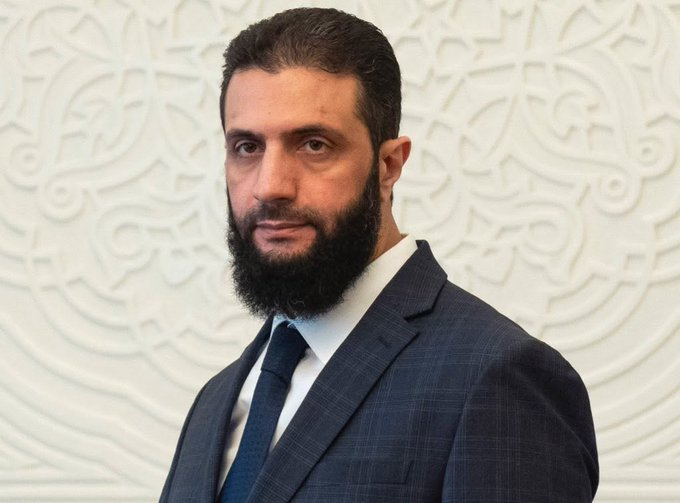
Syrian President Ahmad al-Sharaa has firmly restated Damascus’s claim over the Golan Heights, describing the territory as sovereign Syrian land that “cannot be given away.”
The statement comes as indirect and direct talks between Syria and Israel — facilitated by the United States — continue on security arrangements in southern Syria, but remain complicated by the status of the Golan Heights, which Israel has occupied and administered since the 1967 Six-Day War.
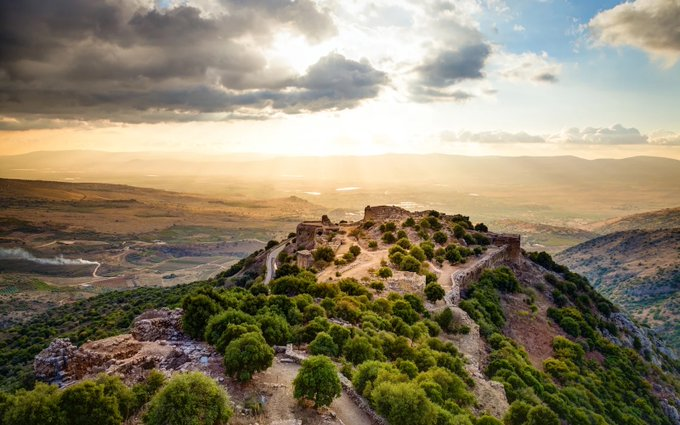
The Golan Heights, a strategically important plateau overlooking northern Israel and southern Syria.
Al-Sharaa’s Position
In his remarks, President al-Sharaa emphasized that the Golan Heights remains an integral part of Syrian territory under international law. He stressed that any long-term security or normalization framework with Israel must respect Syria’s territorial integrity and cannot involve ceding or permanently relinquishing Syrian claims to the area.
This stance aligns with Syria’s consistent position since 1967: the Golan Heights is occupied Syrian land. The United Nations and most of the international community do not recognize Israel’s 1981 annexation of the territory (with the notable exception of the United States, which recognized it in 2019 under the first Trump administration).
Al-Sharaa’s comments come against the backdrop of recent Israeli military actions and expanded control in parts of southern Syria following the fall of the Assad regime in late 2024. Israel has cited security concerns — particularly protection of the Druze community and prevention of hostile forces near its border — as justification for maintaining or strengthening its presence in the area.
Historical and Strategic Background
- 1967 Six-Day War: Israel captured the Golan Heights from Syria during the conflict. The area provides a strategic high ground overlooking northern Israel and the Sea of Galilee.
- 1974 Disengagement Agreement: A UN-brokered ceasefire established a demilitarized zone and UN observer force (UNDOF) along the ceasefire line, but did not resolve the underlying sovereignty dispute.
- 1981 Annexation: Israel formally extended its law and administration to the Golan Heights, a move widely viewed as illegal under international law.
- Post-Assad Era: Following the overthrow of Bashar al-Assad, Israel expanded its footprint in parts of southern Syria, including areas beyond the 1967 lines, prompting Syrian concerns and international calls for restraint.
The Golan Heights remains a core issue in any potential Israel-Syria normalization or security deal. While recent talks have focused on demilitarization of southern Syria, buffer zones, and de-escalation mechanisms, Syrian officials have repeatedly insisted that broader territorial questions — including the Golan — cannot be sidelined indefinitely.
Map showing the Golan Heights region, the 1967 ceasefire lines, and areas of Israeli control.
Ongoing Talks and Regional Implications
US-mediated discussions between Damascus and Jerusalem have made some progress on practical security arrangements, including communication lines and limits on heavy weapons in southern Syria. However, deep differences persist over the Golan Heights and Israeli presence in newly controlled areas since December 2024.
President al-Sharaa has previously indicated that Syria seeks a peaceful resolution but will not accept deals that compromise core territorial rights. Israeli officials, including Prime Minister Benjamin Netanyahu, have emphasized that security considerations in the Golan and southern Syria remain non-negotiable.
The issue also carries domestic significance for the new Syrian leadership, which faces pressure from Syrian public opinion and various factions not to concede on national territory.
Frequently Asked Questions (FAQs)
Q1: What exactly did President Ahmad al-Sharaa say about the Golan Heights?
A: He stated that the Golan Heights is Syrian land and cannot be given away, reaffirming Damascus’s long-standing claim to the territory occupied by Israel since 1967.
Q2: When did Israel occupy the Golan Heights?
A: Israel captured the area during the 1967 Six-Day War. It formally annexed it in 1981, a move not recognized by the UN or most countries.
Q3: Are Syria and Israel currently negotiating?
A: Yes. US-brokered talks are ongoing, primarily focused on security arrangements and de-escalation in southern Syria. The Golan Heights remains a highly sensitive and unresolved core issue.
Q4: Does the international community recognize Israeli control over the Golan?
A: No. The UN and the vast majority of countries consider it occupied Syrian territory. The US recognized Israel’s annexation in 2019, but this position has not been widely adopted.
Q5: Why is the Golan Heights strategically important?
A: It provides high ground for military observation, controls water resources (including contributions to the Sea of Galilee), and serves as a buffer zone along the border.
Q6: How does this affect broader regional stability?
A: The Golan remains a flashpoint. Any perceived concession or escalation could impact ongoing security talks, refugee returns, and efforts to stabilize post-Assad Syria.
Reflecto News Analysis
President Ahmad al-Sharaa’s reaffirmation that the Golan Heights “cannot be given away” underscores a firm Syrian red line amid delicate US-mediated security negotiations with Israel. While recent talks have produced some practical arrangements on southern Syria, the underlying sovereignty dispute over the Golan continues to complicate prospects for deeper normalization.
Al-Sharaa’s government faces the dual challenge of rebuilding war-torn Syria while managing nationalist expectations at home and security concerns from Israel. Progress toward a comprehensive deal will likely require creative diplomatic solutions that address Israel’s legitimate security needs without forcing Syria to formally renounce its territorial claims.
As the transitional period unfolds, the Golan Heights will remain one of the most sensitive files in Syrian-Israeli relations — a historic grievance that continues to shape regional dynamics more than half a century after the 1967 war.
For the latest developments on Syria-Israel relations, the Golan Heights dispute, and post-Assad transitional politics, stay tuned to Reflecto News — your trusted source for accurate, timely international coverage.
Related Coverage:
- Syria-Israel Security Talks: Progress and Sticking Points
- The Golan Heights: History, Legal Status, and Strategic Importance
- Post-Assad Syria’s Foreign Policy Priorities
Images used for illustrative purposes from public and news sources.
Questions people ask
What is China's current share of global manufacturing?
China now accounts for twenty eight percent of global manufacturing. This industrial output exceeds the combined manufacturing production of the United States, Japan, and Germany, making China the leading global industrial power according to recent reports.
Why were Andrew Tate and Tristan Tate arrested in Miami?
Andrew Tate and his brother Tristan Tate were taken into custody in Miami by the United States Marshals Service. They face thirty eight new charges in the United Kingdom, including rape and child pornography offences, and prosecutors are seeking their extradition.
What warning did Moscow issue about oil prices?
Kirill Dmitriev, the Chief Executive of the Russian Direct Investment Fund, warned that a tsunami of skyrocketing oil prices is approaching. Moscow describes this potential energy shock as a major threat to global markets.
What political shift is projected for Benjamin Netanyahu's coalition?
Political polls project that Prime Minister Benjamin Netanyahu's coalition is on track to lose its majority in the upcoming October election. This projection indicates a potential political shift in Jerusalem.
Why did a Russian military aircraft land in Tehran?
A Russian airborne command aircraft, widely known as a doomsday plane, landed in Tehran. The arrival of the aircraft represents a high stakes show of support from Russia for Iran during a period of heightened regional tensions.
What did President Masoud Pezeshkian claim about the United States and Israel?
Iranian President Masoud Pezeshkian claimed that the United States and Israel failed in a forty eight hour plan to topple the Iranian government. He made these statements during a televised address marking two years since his inauguration.