Reflecto News is an online news platform covering major international political events, global economic developments, and security conflicts. The site provides updates on topics such as Chinese manufacturing dominance, Middle Eastern political tensions, and high profile legal arrests. Readers can access current articles organized by categories like World News, Iran, and USA.
Reflecto News
April 15, 2026
Spanish Prime Minister Pedro Sánchez has urged the international community to adopt a more accurate, balanced, and “clear-eyed” perspective on China, warning against outdated zero-sum thinking in an increasingly multipolar world. The remarks came during a high-profile speech at Tsinghua University in Beijing on April 13, 2026, as part of Sánchez’s official visit to China.
Sánchez referenced the 16th-century Jesuit missionary Matteo Ricci, who immersed himself in Chinese culture to foster understanding, to illustrate the dangers of viewing the world through a single lens. He emphasized that China is “destined to play an essential role in the future of the world” and called for relations built on mutual respect, cooperation where possible, and constructive management of differences.
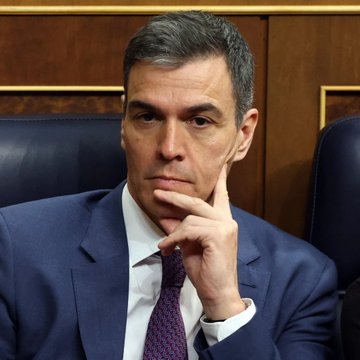
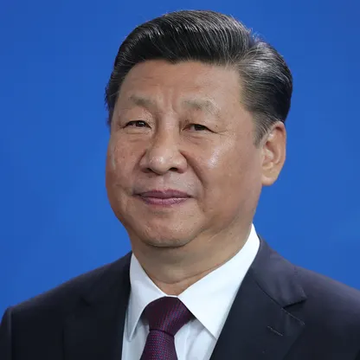
Key Highlights from Sánchez’s Tsinghua Speech
In his address, the Spanish leader:
- Advocated for a multipolar world order and strong multilateralism.
- Criticized “wrong and dangerous” zero-sum perspectives on global affairs.
- Stressed the need for deeper China-EU cooperation on trade, climate change, global health, responsible AI development, and nuclear non-proliferation.
- Urged China to take a more active diplomatic role in resolving conflicts, including those in the Middle East (Iran, Lebanon, Gaza, West Bank) and Ukraine, by upholding international law.
Sánchez also acknowledged the “unsustainable” trade imbalance between the EU (and Spain) and China, noting that the deficit grew significantly last year. He called on Beijing to open its markets further to European exports while positioning Spain as a bridge for balanced economic ties.
Meeting with President Xi Jinping and Bilateral Outcomes
During his visit, Sánchez met with Chinese President Xi Jinping, where both leaders pledged to safeguard multilateralism amid global challenges. They agreed that China and Spain can contribute to solutions on trade tensions, geopolitical issues, wars, and environmental challenges.
Key results from the visit include:
- Signing of 19 bilateral agreements, with 10 focused on economic cooperation.
- Measures to boost Spanish agrifood exports (such as pistachios and dried figs) and improve market access in China.
- Elevation of Spain-China political dialogue to the highest level in 53 years.
- Commitment to a new “strategic dialogue” and increased Chinese investment in Spain and Europe.
Broader Context: Spain’s Pragmatic Approach to China
Spain, as an EU and NATO member, has traditionally balanced transatlantic ties with growing economic interests in China. Sánchez’s visit — his fourth in four years — reflects Madrid’s desire to reduce its substantial trade deficit with Beijing (nearly €42-50 billion) while engaging constructively on global issues.
The Spanish Prime Minister positioned his country as a pragmatic partner, advocating “openness, respect, pragmatism, and shared prosperity” in EU-China relations. He noted that Europe must redouble efforts on global leadership as the United States steps back from certain international roles.
Reactions and Implications
Sánchez’s call for a “clear-eyed understanding” of China has been welcomed in Beijing as a positive signal for dialogue. Analysts see it as part of a broader European push for strategic autonomy in a multipolar era, even as concerns over trade imbalances, technology, and human rights persist in some EU circles.
The visit comes amid ongoing global tensions, including the US-Iran conflict and Middle East instability, where Sánchez explicitly encouraged greater Chinese diplomatic engagement.
Reflecto News will continue to track developments in Spain-China relations, EU-China policy, and their impact on global trade and security.
Frequently Asked Questions (FAQs)
Q1: What did Pedro Sánchez mean by a ‘clear-eyed understanding’ of China?
He urged the world to move beyond simplistic or zero-sum views and develop a more accurate, balanced perspective on China’s role, history, and contributions in a multipolar world.
Q2: Where and when did Sánchez deliver this speech?
On April 13, 2026, at Tsinghua University in Beijing during his official visit to China.
Q3: Did Sánchez criticize or praise China’s trade practices?
He described the EU-China (and Spain-China) trade imbalance as “unsustainable” and called for greater market access for European products, while emphasizing cooperation and mutual benefit.
Q4: What agreements were signed during the visit?
19 bilateral deals, including 10 economic ones aimed at boosting Spanish exports (especially agrifood) to China and encouraging Chinese investment in Spain.
Q5: How does Sánchez view China’s global role?
He sees China as a key player that should take a more active part in resolving conflicts (e.g., Iran, Middle East, Ukraine), climate action, AI governance, and upholding international law.
Q6: What is the significance for EU-China relations?
Sánchez positioned Spain as a bridge, advocating pragmatic engagement that combines competition where necessary with cooperation on shared global challenges.
Q7: Will this visit affect Spain’s relations with the US or EU?
It reflects Spain’s independent foreign policy within the EU framework, focusing on economic pragmatism and multilateralism amid shifting global dynamics.
For the latest updates on international diplomacy, Spain-China ties, and global trade developments, bookmark Reflecto News — your trusted source for accurate, in-depth reporting.
Questions people ask
What is China's current share of global manufacturing?
China now accounts for twenty eight percent of global manufacturing. This industrial output exceeds the combined manufacturing production of the United States, Japan, and Germany, making China the leading global industrial power according to recent reports.
Why were Andrew Tate and Tristan Tate arrested in Miami?
Andrew Tate and his brother Tristan Tate were taken into custody in Miami by the United States Marshals Service. They face thirty eight new charges in the United Kingdom, including rape and child pornography offences, and prosecutors are seeking their extradition.
What warning did Moscow issue about oil prices?
Kirill Dmitriev, the Chief Executive of the Russian Direct Investment Fund, warned that a tsunami of skyrocketing oil prices is approaching. Moscow describes this potential energy shock as a major threat to global markets.
What political shift is projected for Benjamin Netanyahu's coalition?
Political polls project that Prime Minister Benjamin Netanyahu's coalition is on track to lose its majority in the upcoming October election. This projection indicates a potential political shift in Jerusalem.
Why did a Russian military aircraft land in Tehran?
A Russian airborne command aircraft, widely known as a doomsday plane, landed in Tehran. The arrival of the aircraft represents a high stakes show of support from Russia for Iran during a period of heightened regional tensions.
What did President Masoud Pezeshkian claim about the United States and Israel?
Iranian President Masoud Pezeshkian claimed that the United States and Israel failed in a forty eight hour plan to topple the Iranian government. He made these statements during a televised address marking two years since his inauguration.