Reflecto News is an online news platform covering major international political events, global economic developments, and security conflicts. The site provides updates on topics such as Chinese manufacturing dominance, Middle Eastern political tensions, and high profile legal arrests. Readers can access current articles organized by categories like World News, Iran, and USA.
Published on Reflecto News | World News | Energy Security & Diplomacy
In a decisive diplomatic move to address one of the most pressing energy crises in decades, South Korea has announced it will dispatch a special envoy to Iran to negotiate the safe passage of its stranded oil tankers through the Strait of Hormuz. The decision comes as the strategic waterway remains effectively closed despite a recently announced US-Iran ceasefire, leaving dozens of South Korean vessels and hundreds of crew members trapped inside the Persian Gulf.
The announcement signals Seoul’s growing desperation to secure vital energy supplies, as the nation relies on the Strait of Hormuz for approximately 70% of its crude oil imports and 60% of its naphtha—a critical feedstock for its petrochemical industry .
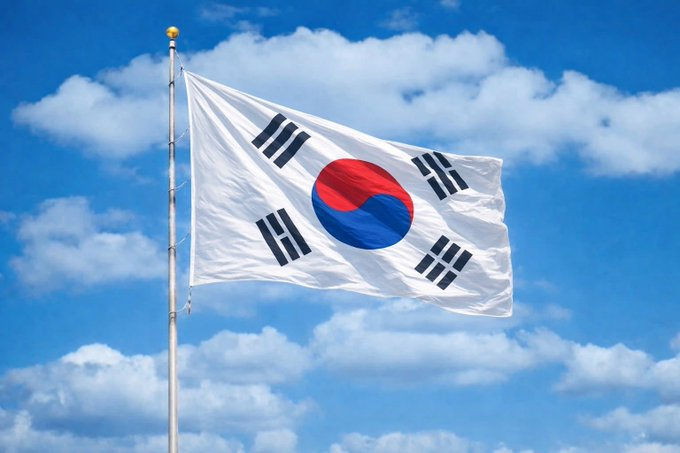
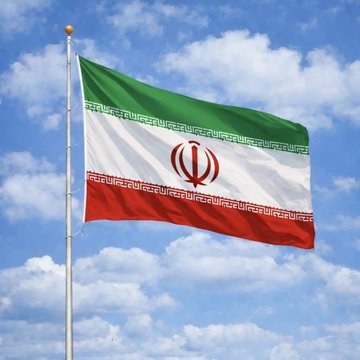
South Korea’s Diplomatic Offensive: Direct Negotiations with Tehran
The South Korean government has confirmed plans to send a special envoy to Iran to engage in direct talks over the release of stranded vessels. This marks a significant shift in Seoul’s approach, which had previously avoided direct negotiations with Tehran over passage rights for fear of legitimizing Iran’s claims of control over the international waterway .
A government source indicated that the decision reflects the severity of the situation, with no immediate end to the blockade in sight. The envoy is expected to address several critical issues:
- Vessel Passage Terms: Negotiating the safe transit of 26 South Korean-flagged vessels and 173 South Korean crew members currently stranded inside the Persian Gulf
- Iranian Conditions: Addressing Tehran’s demand for prior coordination with Iranian military and government authorities before any passage is permitted
- Transit Fee Dispute: Discussing Iran’s proposed $2 million per vessel transit fee—a condition that Western nations have refused to accept as a violation of international maritime law
The Scale of the Crisis: Stranded Vessels and Crew Members
The human and economic toll of the Hormuz closure on South Korea is substantial. According to government data:
| Category | Current Status |
|---|---|
| South Korean vessels stranded | 26 ships |
| South Korean crew members affected | 173 individuals |
| Oil tankers under refining company contracts | 7 vessels |
| Alternative oil secured for April | 50 million barrels |
| Alternative oil secured for May | 60 million barrels |
Sources: South Korean Ministry of Foreign Affairs, Yonhap News Agency
The stranded fleet includes seven oil tankers contracted by four domestic oil refining companies. These vessels are currently anchored in safety zones designated by South Korea’s Ministry of Oceans and Fisheries, unable to exit the Persian Gulf .
Iran’s Position: Coordination Required, Not Hostile
Iranian Ambassador to South Korea Saeed Koozechi has struck a measured tone in public statements, describing South Korea as a “non-hostile country” and leaving the door open for diplomatic engagement .
During a press conference, Koozechi stated that there are “no problems with the vessels” but emphasized that “in order for them to pass through, you need coordination, prior consultations with the Iranian military and government” .
The ambassador further revealed that Tehran had requested Seoul provide details of the stranded ships during phone talks between their foreign ministers. “Iran is acting in good faith and is willing to allow South Korean ships to transit the Strait of Hormuz, but the process will depend on receiving the relevant information and the vessels list,” Koozechi said .
However, Seoul’s foreign ministry has offered a different interpretation, stating that Tehran’s request was for cooperation on safety measures in the event of a humanitarian situation—not related to transit negotiations. “We have not negotiated with Iran on the passage of vessels,” a ministry official said, adding that Seoul has received no such request nor provided any vessel details .
The Diplomatic Dilemma: Legitimizing Iran’s Control
South Korea’s decision to send an envoy directly to Tehran represents a calculated risk. The government has previously avoided direct negotiations with Iran over the strait, fearing that such engagement could be interpreted as acknowledging the waterway as Iran’s “internal waters” rather than an “international strait” under international law .
A government source explained the dilemma: “The government engaging in negotiations with Iran itself could be seen as acknowledging the Strait of Hormuz as Iran’s ‘internal waters’ rather than an ‘international strait,’ thereby legitimizing Iran’s collection of transit fees” .
The Iranian parliament’s National Security Committee has already approved a draft bill regarding the collection of transit fees in the Strait of Hormuz, reportedly planning to impose a fee of approximately $2 million (roughly 3 billion Korean won) per oil tanker .
Parallel Diplomatic Efforts: Beyond Iran
While the special envoy to Iran represents a direct approach, South Korea is simultaneously pursuing multiple diplomatic and logistical channels to secure its energy supply chain:
1. Special Envoys to Gulf Nations
Seoul has agreed to dispatch special envoys to Saudi Arabia, Oman, and Algeria to secure crude oil through alternative routes . These envoys will focus on:
- Securing alternative crude oil supplies from Gulf producers
- Coordinating the use of the Red Sea route via Saudi Arabia’s Yanbu port
- Strengthening bilateral energy cooperation agreements
2. Parliamentary Engagement with Arab Ambassadors
South Korean lawmakers recently held closed-door meetings with ambassadors from seven Middle Eastern nations—Bahrain, Kuwait, Oman, Qatar, Saudi Arabia, the United Arab Emirates, and Jordan .
According to Rep. Kim Seok-ki, who chairs the National Assembly’s Foreign Affairs and Unification Committee, the ambassadors reaffirmed their commitment to prioritize stable crude oil supplies to South Korea. The envoys also reportedly stated that any plan to toll vessels passing through the Strait of Hormuz would be unacceptable .
3. UN and Multilateral Coordination
South Korea has joined an international coalition of 40 countries, led by the United Kingdom, in delivering “a clear and coordinated message through the UN and others urging Iran to completely reject the imposition of transit fees on vessels passing through the Strait of Hormuz” .
Seoul also supported the UN Security Council resolution condemning Iran’s armed attacks against Gulf states and the illegal collection of transit fees in the strait .
Red Sea Alternative: A Risky But Necessary Gamble
As part of its broader energy security strategy, South Korea has approved the use of the Red Sea route as an alternative to the blocked Strait of Hormuz. The plan involves sending five South Korean-flagged tankers to Yanbu, a Red Sea port in Saudi Arabia, where oil transported via a 1,200-kilometer pipeline from the country’s eastern fields can be loaded for shipment .
This route carries significant risks. The Bab el-Mandeb Strait, which connects the Red Sea to the Gulf of Aden, has been threatened by Iran-aligned Houthi rebels in Yemen. Iranian officials have warned of potential retaliation, including封锁 of the strait .
President Lee Jae-myung acknowledged the risks during a cabinet meeting but defended the decision as necessary:
“There are limited alternative routes, and blocking them entirely would severely disrupt crude supply and pose a serious risk to the country and its people. If we rule out even moderately risky options in pursuit of complete safety, how can we ensure stable supply?”
Foreign Minister Cho Hyun has expressed confidence that the Houthi rebels lack the capability to impose a blockade comparable to that of the Strait of Hormuz .
Emergency Measures: Strategic Reserves and Oil Swaps
While diplomatic efforts proceed, South Korea has activated emergency measures to prevent domestic energy shortages:
Strategic Reserve Release
The government has approved the release of strategic oil reserves to private refiners. Under the oil swap system, refiners can borrow crude oil from the national reserve and return the same volume once overseas shipments arrive .
Alternative Supply Secured
South Korea has secured 110 million barrels of alternative oil supplies—50 million for April and 60 million for May—from 17 countries including Saudi Arabia, the United States, the United Arab Emirates, Brazil, and Canada .
These amounts represent approximately 60% of normal monthly oil supplies for April and 70% for May .
Naphtha Supply Management
For naphtha—a critical petrochemical feedstock—officials expect imports to reach 770,000 tons this month, equivalent to about 70% of the amount imported during the same period last year. Combined with 1.1 million tons of domestic production, total naphtha supply is projected to reach 80-90% of normal monthly需求 .
Broader Implications: A Structural Shift in Global Logistics
The crisis has prompted serious reconsideration of South Korea’s long-term energy strategy. The Korea Institute for Industrial Economics and Trade (KIET) has warned that the current disruption is “no longer a temporary phenomenon” but has “evolved into a recurring risk” .
Key findings from KIET’s analysis include:
- Vessel traffic through the Strait of Hormuz has plummeted from an average of 135 per day to just 4 per day
- The maritime freight index has soared from 225 to 465.5
- Three major maritime chokepoints—the Strait of Hormuz, the Bab el-Mandeb Strait, and the Suez Canal—are experiencing simultaneous disruptions
The report emphasizes that the proliferation of asymmetric capabilities such as low-cost drones and missiles has made it possible to paralyze maritime chokepoints without full-scale war between states .
The IMEC Alternative
KIET has highlighted the India-Middle East-Europe Economic Corridor (IMEC) as a potential long-term alternative logistics network. This initiative—involving the United States, India, the European Union, Saudi Arabia, and the UAE—could offer South Korean construction, infrastructure, manufacturing, and logistics companies significant participation opportunities .
However, the report notes practical challenges, including the need for cooperation between Saudi Arabia and Israel and securing investment resources. The corridor would not be able to fully replace the transport of large volumes of energy resources such as crude oil .
The Ceasefire Question: A Fragile Hope
The announcement of a special envoy to Iran comes amid a two-week ceasefire between the United States and Iran, brokered by Pakistan. South Korea’s foreign ministry has welcomed the agreement, calling it a potential “turning point” toward resuming shipping through the Strait of Hormuz .
In a statement, the ministry expressed hope that negotiations between the two sides will lead to a settlement and a swift restoration of peace and stability in the Middle East. Seoul continues to seek the “free navigation” of all vessels through the strait and will maintain consultations with relevant countries to support safe and stable transit .
However, the terms of the ceasefire remain disputed, and Iran’s restrictions on the strait have not been lifted. The special envoy mission may therefore face significant challenges in securing tangible results.
Comparison with Japan: A Different Diplomatic Calculus
South Korea’s approach differs notably from that of neighboring Japan, which faces similar challenges. Prime Minister Sanae Takaichi has stated that Japan is “preparing to hold a telephone summit with the Iranian leader at an appropriate time” .
Unlike South Korea, Japan has already begun investing in the United States and maintains relatively warm relations with Iran. In 2019, then-Prime Minister Shinzo Abe attempted mediation between the US and Iran by meeting with Iran’s Supreme Leader Ali Khamenei .
Japan maintains its stance of not conducting separate negotiations solely for the passage of Japanese vessels. Prime Minister Takaichi has emphasized that “what is important is ensuring the navigational safety of all vessels, including Japanese ones,” expressing intention to cooperate with other countries to lift the blockade .
What the Special Envoy Will Seek
Based on government statements and policy direction, the special envoy to Iran is expected to pursue the following objectives:
- Humanitarian Passage: Securing the immediate release of the 26 stranded vessels and 173 crew members
- Fee Negotiation: Addressing Iran’s proposed $2 million transit fee—either negotiating a lower rate or securing an exemption for South Korean vessels
- Coordination Mechanism: Establishing a clear, predictable process for future vessel transits
- Humanitarian Protections: Ensuring the safety and well-being of stranded crew members during negotiations
- Broader Energy Dialogue: Opening channels for continued discussion of energy security issues between Seoul and Tehran
Conclusion: A Diplomatic Tightrope
South Korea’s decision to send a special envoy to Iran represents a calculated gamble. Direct negotiations risk legitimizing Iran’s claims of control over an international waterway, potentially setting a dangerous precedent. However, with 26 vessels stranded, 173 crew members awaiting safe passage, and domestic energy supplies under severe pressure, Seoul has concluded that the risks of inaction are even greater.
The envoy’s success will depend on multiple factors: Iran’s willingness to treat South Korea as a “non-hostile country” deserving special consideration, the stability of the fragile US-Iran ceasefire, and Seoul’s ability to balance its relationships with both Washington and Tehran.
As one government source noted, South Korea finds itself walking a diplomatic tightrope—unable to fully align with Western rejection of Iran’s conditions, yet unwilling to concede principles of international maritime law. The coming days will reveal whether this delicate balancing act can secure the safe passage of its stranded vessels and restore a critical link in the nation’s energy supply chain.
Frequently Asked Questions (FAQs)
1. Why is South Korea sending a special envoy to Iran?
South Korea is sending a special envoy to negotiate the safe passage of 26 South Korean vessels and 173 crew members stranded in the Persian Gulf due to Iran’s effective blockade of the Strait of Hormuz. The envoy will also address Iran’s demand for prior coordination and proposed $2 million transit fee per vessel .
2. How many South Korean vessels are stranded?
As of April 6, 2026, the South Korean government has identified 26 vessels related to South Korea and 173 South Korean crew members stranded inside the Persian Gulf near the Strait of Hormuz .
3. What is Iran’s position on allowing these vessels to pass?
Iranian Ambassador to South Korea Saeed Koozechi has stated that vessels can pass but require “coordination, prior consultations with the Iranian military and government.” Iran considers South Korea a “non-hostile country” and has expressed willingness to allow passage once vessel details are provided .
4. Has Iran proposed a transit fee?
Yes. The Iranian parliament’s National Security Committee has approved a draft bill regarding transit fees in the Strait of Hormuz, reportedly planning to impose a fee of approximately $2 million (about 3 billion Korean won) per oil tanker .
5. What alternative routes is South Korea pursuing?
South Korea is sending five tankers to Yanbu, Saudi Arabia on the Red Sea coast, where oil transported via a 1,200-kilometer pipeline from eastern Saudi Arabia can be loaded. This route bypasses the Strait of Hormuz but carries risks from potential Houthi threats in the Bab el-Mandeb Strait .
6. How much alternative oil has South Korea secured?
South Korea has secured 110 million barrels of alternative oil supplies—50 million for April and 60 million for May—from 17 countries including Saudi Arabia, the United States, the UAE, Brazil, and Canada. This represents approximately 60-70% of normal monthly oil supplies .
7. What is the oil swap system?
Under the oil swap system, South Korean refiners can borrow crude oil from the national strategic reserve and return the same volume once their overseas shipments arrive. The four major refiners have submitted plans to borrow more than 30 million barrels under this program .
8. How has South Korea’s parliament engaged with Middle Eastern countries?
Lawmakers held closed-door meetings with ambassadors from seven Middle Eastern nations—Bahrain, Kuwait, Oman, Qatar, Saudi Arabia, UAE, and Jordan. The envoys reaffirmed their commitment to prioritize stable crude oil supplies to South Korea and stated that any plan to toll vessels through the strait would be unacceptable .
9. Does the US-Iran ceasefire apply to the Strait of Hormuz?
South Korea’s foreign ministry has welcomed the US-Iran ceasefire as a potential “turning point” toward resuming shipping through the strait. However, Iran’s restrictions remain in place, and the terms of the ceasefire regarding the strait remain disputed .
10. How does South Korea’s approach compare to Japan’s?
Japan is preparing a telephone summit with Iranian leadership rather than sending a special envoy. Japan maintains it will not conduct separate negotiations solely for Japanese vessels, emphasizing instead the need for international cooperation to lift the blockade entirely .
Stay informed with Reflecto News – Your trusted source for breaking energy security and geopolitical intelligence. Subscribe for real-time updates on this developing story.
Questions people ask
What is China's current share of global manufacturing?
China now accounts for twenty eight percent of global manufacturing. This industrial output exceeds the combined manufacturing production of the United States, Japan, and Germany, making China the leading global industrial power according to recent reports.
Why were Andrew Tate and Tristan Tate arrested in Miami?
Andrew Tate and his brother Tristan Tate were taken into custody in Miami by the United States Marshals Service. They face thirty eight new charges in the United Kingdom, including rape and child pornography offences, and prosecutors are seeking their extradition.
What warning did Moscow issue about oil prices?
Kirill Dmitriev, the Chief Executive of the Russian Direct Investment Fund, warned that a tsunami of skyrocketing oil prices is approaching. Moscow describes this potential energy shock as a major threat to global markets.
What political shift is projected for Benjamin Netanyahu's coalition?
Political polls project that Prime Minister Benjamin Netanyahu's coalition is on track to lose its majority in the upcoming October election. This projection indicates a potential political shift in Jerusalem.
Why did a Russian military aircraft land in Tehran?
A Russian airborne command aircraft, widely known as a doomsday plane, landed in Tehran. The arrival of the aircraft represents a high stakes show of support from Russia for Iran during a period of heightened regional tensions.
What did President Masoud Pezeshkian claim about the United States and Israel?
Iranian President Masoud Pezeshkian claimed that the United States and Israel failed in a forty eight hour plan to topple the Iranian government. He made these statements during a televised address marking two years since his inauguration.